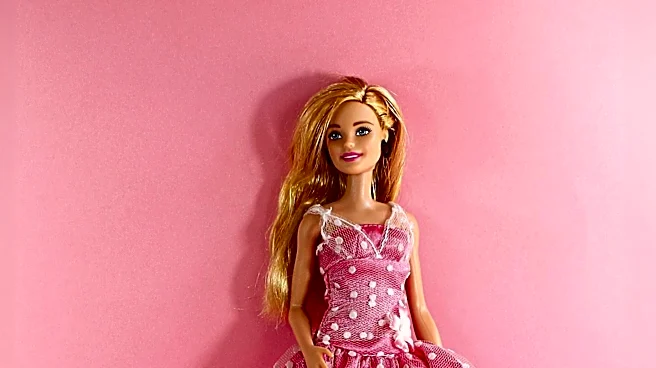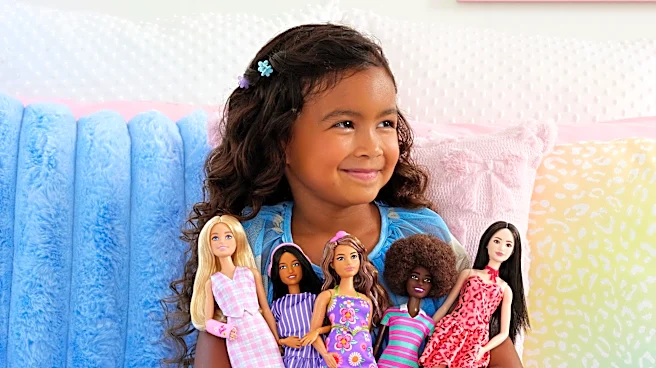






For decades, Mattel’s biggest creation, Barbie, has been a symbol of aspiration. With the recent release of autistic Barbie, this variation of the iconic doll is sparking controversy among autistic adults, parents, advocates and even college students about disability representation.
The doll, created by Mattel in collaboration with the non-profit Autistic Self Advocacy Network, is riling up discourse among advocates, educators, and the autistic community about representation and inclusion. These conversations circle around what it means for autistic children in Northeast Florida, who rarely see representation of themselves reflected in toys. The doll features sensory friendly elements that are meant to represent autism and is part of Mattel’s
larger effort to expand diversity in its Barbie collection.
While some say the doll leads to paths for acceptance and understanding, others in the autistic community say representation goes beyond a single product to accurately represent the full spectrum. Some people have started discourse online saying that this Barbie enforces a narrowed stereotype, and there is no singular way to represent autism because it’s a spectrum. Some commentators have gone as far as saying Mattel is trying to commercialize and commodify autism, along with other disabilities and neurodiversity traits to make a quick profit.
“You cannot tell this Barbie is physically autistic. There’s clues to her, like her eyes slightly looking to the side or her wrists and elbows being able to bend for stimming and her support items,” said Sam Sandate, 34, a mother on the spectrum who created Helping Hand Creations, a blog that offers free resources, like workshops and tutoring, to help provide support for autism and other aligning disabilities. She and her business reside currently in south Texas. “Autism isn’t determined by looks; it’s determined by needs. Whether you use support items or people accommodate to you, you’re navigating what you need to kind of do your daily things.”
Sandate said she realized she was different after graduating high school. She felt increasingly overwhelmed by daily life, struggling with work, relationships, sensory overload and anxiety that years of medication could never fix. At 25, she was diagnosed with autism and ADHD. This was a realization that saved her life by showing her she wasn’t broken; she just needed to live differently.
Autistic Barbie has also been praised for normalizing using supports and expressing traits. It not only inspiring to kids, but adults as well. In response to a Reddit post regarding autistic Barbie, one user wrote, “The fact her eyes are meant to not look directly at you meant more to me than I thought it would. I’m a millennial dude and this literally inspired me to use a new LinkedIn picture that’s more of my natural state (not looking directly at you).”
As much as there has been positive remarks from different types of people involved in the community about autistic Barbie, there are still some who fear it isn’t enough or not executed correctly at all. Another user, in response to the same Reddit post wrote, “I kind of thought it was silly autism was reduced to that. I think for me I had rather have had them release stim and sensory accessories set to help Barbies be able to cope better. I don’t fully know how to feel about the situation as I’m not one of those people who care too much about representation, but I haven’t quite seen myself represented yet.” As much as autistic Barbie has been praised for its inclusivity, some people in the community overall believe Mattel has narrowed autism down to one stereotype.
Yajaira Hausman, a Jacksonville therapist who works with young kids, teens and adults at Discovery Mental Health Services believes the opposite. She works with many autistic clients.
“As a therapist that works with the younger generation, I see that autistic barbie is a step in the right direction, especially with emphasizing the younger autistic community locally in Jacksonville," she said. "It can help kids, or others in the community feel seen and open beneficial conversations about self-acceptance and identity.”
Other people who are part of the autistic community have also felt like Mattel has been commodifying disabilities to make a profit, instead of trying to promote diversity and inclusion.
“If people don’t like it or feel it doesn’t represent their hyper specific autism challenges and attributes, then don’t buy it,” one Reddit user wrote, criticizing autistic Barbie. “Autism Barbie reads less as representation and more as parasitic corporatism. A multinational toy company does not develop moral insight; it identifies a socially approves marginalized group and turns that approval into a product.”
Autism Barbie isn’t the first Barbie Mattel has released being inspired by a disability. Mattel created its first disabled Barbie, “Share-A-Smile Becky,” in 1997, which featured a brunette Barbie in a wheelchair.
Since 2019, Barbies with disabilities like blindness and down syndrome have been released, with autism Barbie being the latest edition.
From students and coordinators, autism doesn’t have a specific look like how Mattel’s autistic Barbie presents. The autistic community varies, there is no specific look like how autistic Barbie makes it seems Autistic Barbie has also won over experts such as psychologists and therapists. Many experts believe autistic Barbie can be a valuable tool in group settings, or with one-on-one therapy because it helps normalize autism in a non-clinical way while encouraging connection and sparking conversation. According to the ABA Centers of America website’s article on autistic Barbie, inclusive toys can be used to help children build various skills. The website reads, “Just as inclusive toys encourage growth through play, play-based Applied Behavior Analysis (ABA) uses a child’s natural interests to support meaningful skill development.”
Kelly Stevens, a DBT therapist at Discovery Mental Health Services who resides locally in Jacksonville, is one of these experts.
“The doll can support emotional regulation and social skills for autistic clients who may resonate with them being reflected for the first time,” Stevens said. “For non-autistic individuals who may have autistic loved ones, this Barbie can create peer understanding by developing an approachable way to learn about neurodiversity.”
This article originally appeared on Florida Times-Union: Why 'Autistic Barbie' is sparking debate