
Recently, I read a blog post by county agent Guiseppe DiGiacinto in Brevard County. It so delighted me that I wanted to share it with you.
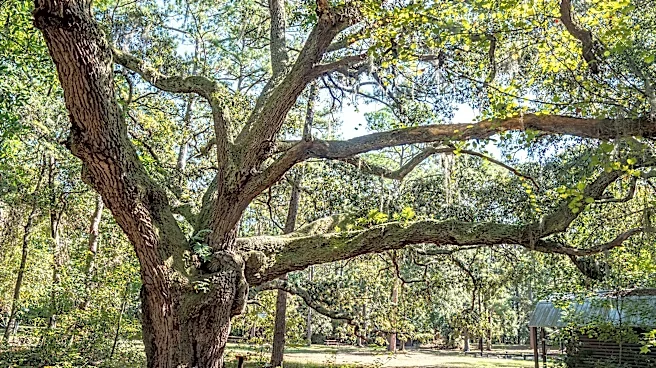
His statement was simple: Roughly, a live oak tree by itself is a neighborhood
of birds, insects, squirrels, lichens, Spanish moss, resurrection fern and microscopic creatures that live together.
Have you ever thought of a tree that way? I don’t think I had.
The birds not only nest there during nesting season, but they also hide their seeds in the bark, and small as their brains may be, they remember to come back to find them.
Noisy Blue Jays like the high branches to scan their territory and grab acorns in the fall. Titmice nest in the branches. All species of songbirds hunt insects when they are nesting to feed their young birds the necessary proteins and fats for rapid growth.
![A large live oak looms over some cabins in Camp Chowenwaw Park, a Clay County public park that served for decades as a Girl Scout for over 70 years as a summer camp, October 16, 2025. The park sits on Black Creek in Green Cove Springs, Fla. [Doug Engle/Florida Times-Union]](https://www.gannett-cdn.com/authoring/authoring-images/2025/10/16/NFTU/86731037007-hidden-gems-life-camp-chow-chowenwaw-034.JPG)
Many birds also hunt insects on the tree bark, which may be a large or small part of their adult diet.
Insects may live on the tree to eat the leaves, or to hatch inside the branches. The small branch tips you find on your ground are sometimes the result of the twig girdler beetle. To reproduce, she lays her eggs near the tip of the branch, and then moves back closer to the tree, and makes a beautifully precise cut that almost severs the branch. If she left the branch completely attached to the tree, the force of the sap might flush her eggs out. This way, when a strong wind comes, the branch will break off. After the branch falls, the larvae will hatch and grow further in the ground. You can foil her plan by picking up the branches and throwing them in the yard waste. But really, she does little harm with her pruning of a few branch tips.
Sometimes people get concerned about a group of insects called tree cattle or bark louse. A tiny group of insects, they sometimes cover themselves with a fine silk as they clean the surface of your tree bark. They clean your tree bark of lichen, dead insects, fungi, pollen and mold. While they look suspicious, they are harmless and kind of fun. They are called cattle because you can make them stampede. If you gently tap your finger near them, they will run away from you as a group. Of course, you will let them get back to their work and soon they will move on.
The live oak attracts the Tussock Moth and is the source of food for her caterpillars, the tussock moth caterpillars. Unfortunately, these tiny caterpillars sting and if they drop down on homeowners, it can be painful. They are only present at the time of oak pollen season. Oak leaves toughen quickly and caterpillars do not have strong teeth. Their season is short.
Squirrels aren’t my favorite residents of the tree condo. They can do a lot of damage if they get into your attic or porch. But they do have a place in the ecosystem. They hide a lot of acorns and other seeds and only go back for some of them. The ones they leave behind grow to be trees. They are part of the food chain out there, feeding the hawks, owls and snakes. They eat mushrooms and spread the spores which then grow and help nourish the soil and form a network of mycelium that connects plant roots.
Squirrels actually eat insects and grubs which works to control their numbers. So, our swishy tailed friends might be benefitting us as long as they don’t rob the bird feeder.
Spanish Moss is a symbol of the south. Neither Spanish nor a moss, it gets blamed for all kinds of things. It is a bromeliad and great bird nest material.
It used to be used as furniture stuffing, for mattresses and couches. Hanging clumps of Spanish moss make a good place for bats to roost during the day. The bats are champion insect eaters at night and good pollinators.
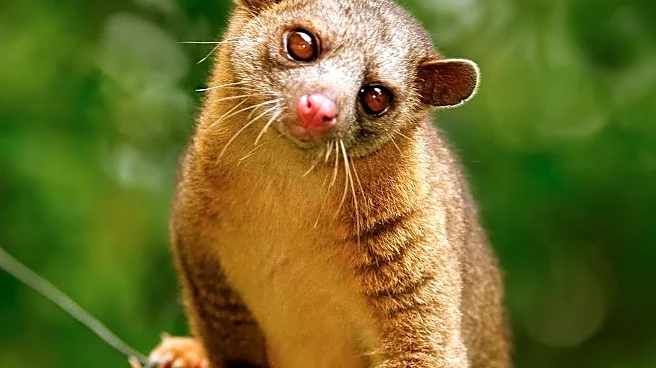
Opossums rest high in the branches of the live oak. The opossum is often underappreciated. They eat ticks, rats, snakes (including venomous snakes), roaches, and other insects. Even though they are a mammal, their low body temperature makes it difficult for them to sustain rabies, so it is rare for them to get rabies.
Raccoons will also find shelter high in the oak tree. A cavity makes a fine nest for them.
Contrary to popular opinion, it doesn’t take a lifetime to grow a live oak. With water and some fertilizer, live oaks will grow at a moderate rate once they get past their sapling age.
And there are quite a few newer varieties of live oaks that will grow to a less bulky shape and are better suited to the smaller lot sizes that we have now days. Live oaks can live for hundreds of years. A well-placed tree shading your house can provide shade that will save you money on your air conditioning. Are live oaks alone in their value for your yard? Of course not!
Stay safe, gardeners.
This article originally appeared on Florida Times-Union: Your live oak tree is a secret neighborhood of life