




During my tenure as the library media specialist at Ridgeview High School from 2014 to 2023, the library was the beating heart of our school. Teeming with students before and after school, and packed through all three lunch periods, it was a comfortable, safe and vibrant space.
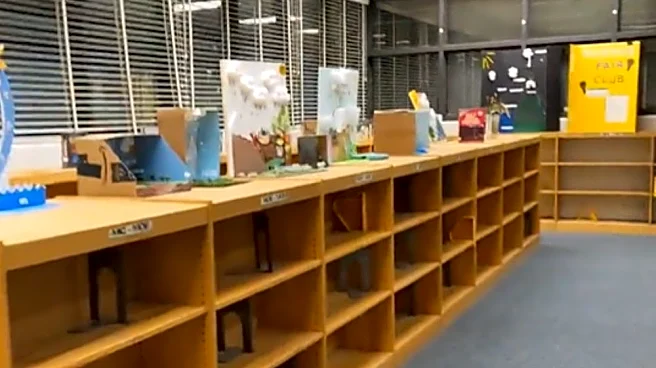
Teachers regularly booked the library for lessons on database research, proper source citation and evaluating resources. We offered a welcoming environment, a 3D printer, a makerspace and access to elite scholarly databases that are crucial for our advanced program students. It was an essential intellectual hub.
Yet today, Clay County school district leadership is questioning whether traditional high school libraries are even necessary, floating proposals to replace books
with "school stores" or "digital-only research hubs." Chief Academic Officer Roger Dailey recently justified this by pointing to low physical book circulation among high schoolers.
To anyone who has worked in public education, this is a classic "failing by design" strategy. It is the exact same playbook used by state legislators who starve public schools of funding and resources, and then point to their resulting struggles as proof that public education is failing. Of course circulation is down in Clay County school libraries.

Consider what has been done to our libraries over the last four years:
Systematic starvation — The district froze all library book purchases in March 2022. For over four years, secondary school libraries have been prohibited or severely limited from buying new books or even replacing worn-out copies of classics.
Ransacked shelves — Under a weak district policy that mandates pulling books from shelves within three days of a challenge, hundreds of beloved novels and foundational texts have vanished into "purgatory" or been permanently banned.
Gutted staffing — Five of Clay’s seven high school libraries are no longer run by certified, degreed library media specialists, but are manned by solitary media assistants (paraprofessionals).
Locked doors — Libraries are frequently closed to students to accommodate endless rounds of standardized testing.
Declining circulation isn't a "digital preference," but a manufactured crisis. When you strip a library of its professionals, funding and accessibility, you ensure its decline.
[LETTERS LINK]
This censorship isn't grassroots. In Clay County, 94% of book challenges are tied to a single extremist. In contrast, only four parents out of 38,000 signed up for the district's library opt-out system in 2024. Our community clearly trusts educators and values literature access.
District leadership has allowed this erosion for five years, but we cannot afford to be complacent. This isn't just about books; it's about the integrity of public education itself.
To save our schools, we must act — organize, attend school board meetings and support our educators. Most importantly, vote for candidates who will prioritize well-funded, well-staffed and accessible libraries. We must stand together to ensure our public schools remain vibrant centers of learning for every child.

Featured in the Emmy-nominated PBS documentary "The Librarians," Julie Miller spent nine years serving as a high school librarian in Clay County. Over the course of her career, she twice achieved Florida Power-Library School status and was honored with the 2023 Amanda Award by the Florida Association for Media in Education. Currently, she is a library manager in Jacksonville.
This guest column is the opinion of the author and does not necessarily represent the views of the Times-Union. We welcome a diversity of opinions.
This article originally appeared on Florida Times-Union: Why Clay County schools are losing their libraries | Opinion