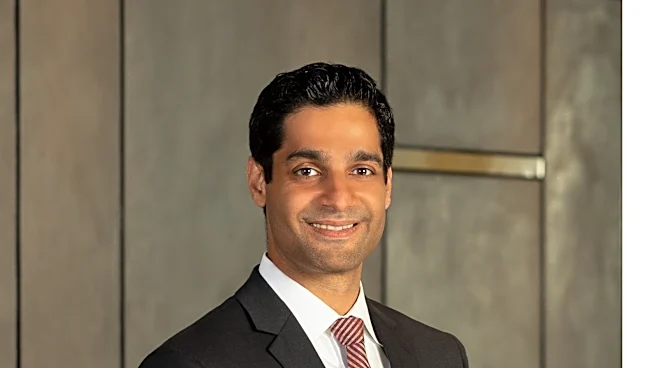





Asghar Syedis more familiar with nonprofits and their struggles than most Jacksonville attorneys.
So when his wife, Sabeen Perwaiz, CEO of the Jacksonville-based Florida Nonprofit Alliance, asked him and his law firm, Gunster, to offer "heavily descounted" legal services to the state's nonprofit sector, they agreed. And based on that commitment, she was able to raise funds to cover the cost.
Syed, president of theJacksonville Bar Association and a Baptist Health board member, and his team of about 10 other Gunster attorneys have provided legal counsel to the alliance and 29 of its members. Their practice is called Low Bono, a twist on the term pro bono, which means free professional work done for the public.
"Most Florida nonprofits do not have
a dedicated budget line item for legal services," he said. "Small and mid-size nonprofits were either going without counsel or, in an emergency, absorbing full-rate bills they cannot afford. Fundamentally, nonprofits are small businesses and, as with any business, compliance missteps, when overlooked or ignored, can turn into expensive problems."

Recently, such duties have become even more complicated by changes in the "legal landscape."
"Guidelines for federal grants have always been complex, but Washington’s policy objectives have shifted," Syed said. "Nonprofits in the education sector have worked hard to maintain compliance with state legislation. Nonprofits that serve indigent communities have evaluated whether their clients include undocumented immigrants. As a result, legal resources and robust compliance measures are now part of the capacity building nonprofits need. They are no longer a 'nice to have.'"
In recent years, according to Perwaiz, nonprofits have "faced increasing uncertainty around federal funding, heightened regulatory and compliance requirements, challenges related to employment law and growing scrutiny of organizations engaged in advocacy and public policy work. At the state level, we've also seen changes that require nonprofits to stay more engaged in legislative and regulatory issues than ever before. I could see that many organizations — especially smaller and mid-sized nonprofits — needed affordable access to legal expertise."
Low Bono could transform Florida nonprofits, particularly those with financial struggles.
"Legal support is often something nonprofits know they need but simply cannot afford until a crisis emerges," Perwaiz said. "Having access to knowledgeable attorneys at no cost can help our member organizations address issues proactively."
"Nonprofits are asked to solve some of society's toughest challenges, often with limited resources," she said. "Knowing that this program could help remove barriers and strengthen the organizations doing that work makes me incredibly proud of both the mission and the person leading it."
Nonprofits have enthusiastically welcomed the opportunity for legal help. Since 2025, Gunster's Low Bono practice has provided about 727 hours of time at lower rates, which represents over $400,000 in legal services at its standard rates. In 2025, many alliance members asked the firm to review their policies and handbooks, while this year they sought corporate governance reviews.
Also, Gunster has created free resources for nonprofits, such as webinars, compliance checklists, self-assessment tools and forms.
"Demand has outpaced our expectations … and demand remains high," Syed said.
Helping those who help others

One of Low Bono's nonprofit clients is We Care Jacksonville, a volunteer network that provides free primary and specialty care for uninsured Duval County adults.
"It was a terrific experience and through it we are able to move into our first strategic marketing partnership with a company that is creating backpacks for newly diagnosed cancer patients as they begin treatment," Executive Director Angela Strain said. "This project aligns with our objective to raise awareness about screening, prevention, and cancer care for all, with a focus on access for our uninsured neighbors."
Thanks to the Gunster program, "we were able to undertake a contract process that would have been well out of reach for us," she said.
She already knew Perwaiz through the alliance and met Syed when they were both in the Leadership Jacksonville Class of 2018.
"He is uniquely positioned through his work and his leadership role on the board of Baptist Health to understand many of the challenges facing patients accessing care through the safety net," Strain said. "He is thoughtful, patient and a wonderful guide through processes most small nonprofits like us rarely navigate."

Nonprofits apply for legal services through the alliance and Syed reviews their need and potential conflicts. They each have to be separate projects that "can fit within a narrow and well-defined scope," do not require litigation and have a predictable time commitment, he said.
Once approved, the nonprofits get legal services for a "fraction of our attorney and paralegal standard rates," with the discounted bills paid by the alliance, he said. But the attorneys' "legal obligation is to the member," not the alliance, Syed said.
"The rates are well below those paid by Gunster’s other clients and they are, by design, not sustainable rates for our law firm," he said. "Gunster treats this project as an extension of its commitment to Florida and an investment in our community."
100 years of commitment
Syed has practiced law for 16 years in Jacksonville, focusing on complex business and employment litigation. A shareholder at Gunster, he has been recognized among The Best Lawyers in America annual directory.
But he also dedicated to public service and community initiatives, including helping to launch TEDxJacksonville, a daylong Jacksonville conference focusing on technology, entertainment and design.
Giving back to the community is a foundation for Syed and Gunster, which celebrated its 100th anniversary last year with 1,925 hours of volunteer time. The firm also has a "robust pro bono program," Syed said.
As the current Jacksonville Bar Association president, he has contributed free hours on heirs’ property, which is land passed down by inheritance without legal documentation proving ownership. He has represented indigent clients in probate matters and in the preparation of estate plans.
The Low Bono program, he said, "is part of the firm’s broader commitment to our community. Being able to help and serve our neighbors, in any meaningful way, reinforces our sense of purpose as a law firm."
Beth Reese Cravey has been a reporter for The Florida Times-Union for 45 years, currently specializing in nonprofits and health. She can be reached at bcravey@jacksonville.com.
This article originally appeared on Florida Times-Union: Law firm's 'Low Bono' legal help aids Florida nonprofits