






Four measles deaths have been reported so far this year, all in Pennsylvania, but as of Sept. 23, the Centers for Disease Control and Prevention lists only one.
The agency initially listed two deaths when the state first reported them, but later removed them after Health and Human Services Secretary Robert F. Kennedy Jr. questioned the reports.
After a public battle through social media and speeches when Kennedy, a noted vaccine skeptic, accused Pennsylvania Gov. Josh Shapiro of "fabricating" the deaths, while Shapiro said Kennedy was "downplaying the severity of measles," the Trump administration announced that the CDC would no longer rely on state and local health department reports on measles-related deaths.
The U.S. is seeing a resurgence in the
incurable, once nearly eliminated disease. Florida health data show 162 reported cases this year as of Sept. 19, more than the state has seen in the last 30 years combined. A new victim, aged 20-24, was reported in Duval County last week.
The four deaths in Pennsylvania mark the highest number of measles-related fatalities in the United States since 1991. The state has reported 835 cases as of Sept. 23, with 111 new cases added since the previous week.
Measles cases hit three-decade high
U.S. measles cases have hit their highest level in more than three decades under the Trump administration, which has attempted to change the childhood vaccine schedule and promoted the idea that vaccines, including the combined measles, mumps and rubella shot, are more dangerous than the diseases they prevent, despite decades of scientific evidence saying otherwise.
In 2025, the CDC under Kennedy changed its vaccine safety webpage to question whether vaccines could cause autism despitedecades of evidence showing they are safe. The site also stated that health authorities had "ignored" studies supporting a vaccine-autism link.
In Florida, Surgeon General Joseph Ladapo and Gov. Ron DeSantis have opposed vaccine mandates and vowed in 2025 to eliminate vaccination requirements for public school children. The Florida Legislature has also targeted vaccine mandates as part of a broader push to give parents more control over their children's education.
As of Sept. 17, the CDC is reporting 3,471 confirmed cases of measles in 45 states and the District of Columbia, with 39 new outbreaks this year. In 2025, the CDC reported 2,289 confirmed cases from 48 outbreaks. John Hopkins' measles tracker lists 3,568 U.S. cases for 2026.
The CDC reports that 95% of the 2026 measles victims were either unvaccinated or their vaccination status was unknown, compared to 93% in 2025.
What is measles?
The measles virus is a highly contagious infectious disease. It spreads through the air, can remain in a room for up to two hours after an infected person leaves, and 90% of unvaccinated people who are exposed end up contracting it. One in five of those people end up hospitalized, according to the CDC.
It is especially dangerous for young children, and infected millions before a vaccine was developed.
The incurable disease was declared eliminated in the United States in 2000 due to widespread vaccination efforts. Measles vaccination averted nearly 59 million deaths globally between 2000 and 2024, according to the World Health Organization, while nearly 95,000 unvaccinated or under-vaccinated people died of it last year. Most were children under the age of five, WHO said.
Since 2000, Florida has averaged 3.6 cases per year, but widespread vaccine skepticism from parents, influencers, and some Republican politicians has led to lowered vaccination rates and a new resurgence.
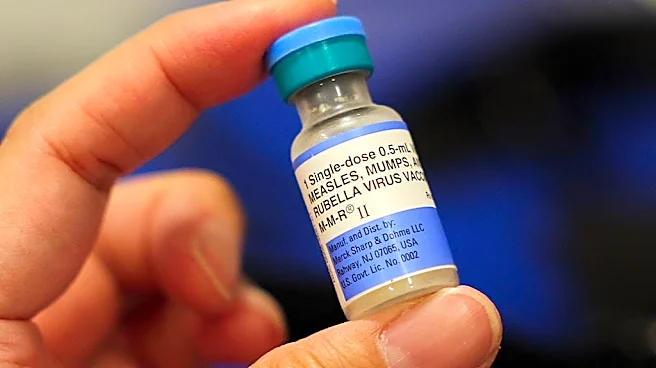
The MMR vaccine (measles, mumps, and rubella), which protects against measles with 97% efficacy, is typically administered to children as part of the regular vaccine course at ages 12 to 15 months for the first dose and ages 4 to 6 years for the second.
Florida's vaccination rates increased slightly for the MMR vaccine, according to the latest CDC estimates, reaching an estimated 88.9% coverage, up from 88.8% the previous year.
A decade ago, Florida reported a 94.1% vaccination rate among children. Health officials generally recommend a measles vaccination rate of at least 95% to maintain herd immunity and help prevent outbreaks.
What do measles symptoms look like?
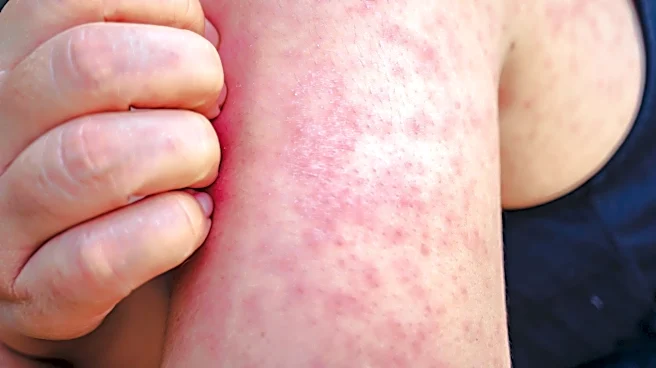
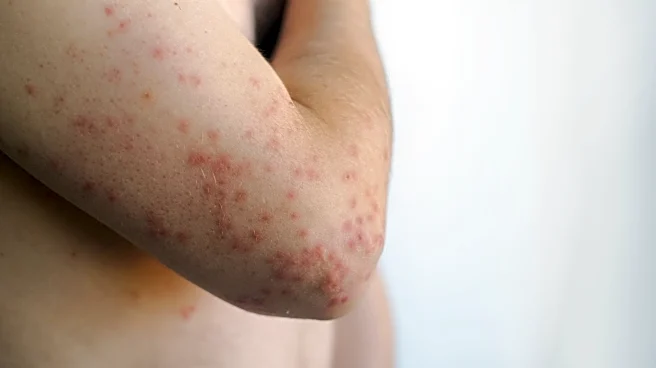
Symptoms typically begin with a high fever, cough, runny nose, and red, watery eyes. They may not develop for up to a week after infection, although the victim is immediately contagious to others. A rash usually develops three to five days later, starting on the face before spreading to the rest of the body.
Health officials recommend that anyone who believes they or their children have measles first call a health care provider before seeking help in person, to help prevent exposing others.
The CDC continues to recommend the MMR vaccine as the most effective protection against measles.
C. A. Bridges is a journalist for the USA TODAY Network-Florida's service journalism Connect team. You can get all of Florida’s best content directly in your inbox each weekday by signing up for the free newsletter, Florida TODAY.
This article originally appeared on Florida Times-Union: Florida measles still rising as Trump administration changes reporting