



State Rep. Kim Daniels joined a group of Jacksonville City Council members exploring ways at the local and state level to safeguard children with autism from wandering into retention ponds and drowning as happened twice this month in Jacksonville.
Research by City Council member Reggie Gaffney Jr.'s office found that since April 2021, six children with autism have drowned in manmade ponds used for flood control in Jacksonville.
"I think it's a public safety matter right now and I feel as the city, we don't have enough protections and restrictions in place to prevent this from happening," Gaffney said Aug. 25 during the meeting he convened at City Hall.
Daniels, D-Jacksonville, said her office has begun researching the possibility of state legislation.
She said the cost of adding safety-related requirements for ponds shouldn't prevent creating such regulations.

"I believe whatever we have in place is not working and I really think that while we're approaching this situation, lives are more important than money," she said. "You know, I hear 'money' and I think about the families that have lost their babies."
She said it's not just a problem in Jacksonville.
"This is happening all over Florida," Daniels said.
In Jacksonville, five of the deaths since April 2021 were in retention ponds and one was in a detention pond. Retention ponds have water in them year-round while detention ponds are dry between rainstorms.
Slope of pond determines if fencing is required around it
Regulations by the St. Johns River Water Management District and the city of Jacksonville do not always require fences around ponds. The trigger for the fences is if the slope of the pond increases the depth by more than 1 foot for each 4 feet away from shore.
That means if the pond is designed so someone walking 4 feet into it will be at a 1-foot depth, going another 4 feet increases the depth to 2 feet and so on, then the slope is not great enough to require fencing. If the slope in the pond is steeper than that, then the developer must include fencing around the pond.

The city has taken an additional step for ponds it owns and maintains by allowing vegetation to grow along the shoreline that acts as a buffer discouraging children from continuing past it into the water.
A 7-year-old boy and a 3-year-old girl who died after wandering into different ponds on the Northside this month were at privately-owned ponds. Both children had autism, a condition that brings a higher risk of being drawn to water such as retention ponds located across the Jacksonville and throughout the state.
"One life is too many," said City Council member Mike Gay, who along with Gaffney represents fast-growing areas of the Northside where development is bringing more of the ponds. "There's no money that ever could account for that and so what we do is critical."
The meeting did not result in any recommended regulations but will have follow-up sessions. The next steps will involve researching what other cities in Florida and nationally have done, legal reviews of what options the city has to create regulations that go beyond what is already in state law, and differences between creating regulations for future construction of ponds versus requiring the retrofit of existing ponds.
City Council member Ron Salem told Gaffney he should "determine the path and I think the rest of us will follow because I do think this is an issue that needs to continue. We can't stop today."
Council members and speakers in the audience also raised ways to make a more immediate impact. The Florida Department of Health offers a program where eligible Florida residents can get vouchers for free swim lessons for children ages 1 through 7 by going to FloridaHealth.gov/WaterSmart.

Mayor Donna Deegan's office will work with Gaffney and City Council on proposed changes, Deputy Chief of Staff Joe Inderhees said.
"A parent should never have to bury their child," Inderhees said. "It is out of the natural order of things. It offends us and that is why I think we are all here today because that offense binds us together."
He said the meeting took "the idea of doing nothing off the table and will not let 'perfect' prevent progress."
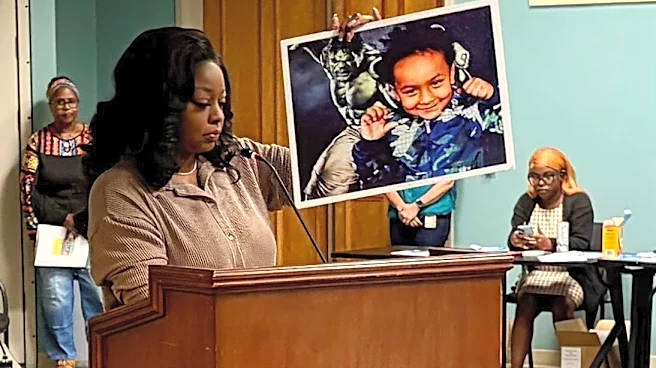
Jacksonville resident Tarina Akbari, whose 3-year-son died in an unfenced retention pond at an Orlando resort hotel, said she left the meeting encouraged it will lead to actual changes at the ponds.
"It was devastating to lose my son in a retention pond drowning so to see other children drowning after my son passed away in 2024, something has to be done and you know, they're putting their foot down," she said.
This article originally appeared on Florida Times-Union: Drainage ponds can be deadly for kids with autism. What can be done?