





Florida, like the rest of the United States, has a "graduation gap." That is, the state has a high graduation rate (around 90%), but only about 44% of graduates can complete minimum proficiency exams in math.
According to The Education Scorecard, a collaborative effort between Harvard University and Stanford, Florida ranks 24th out of the 38 states tested in math proficiency among high school graduates. We rank dead last — 38th — in reading.
The current administration brags about the graduation rate and being ranked very highly in education. However, that ranking is based on high school graduation rates, as well as the access to (and affordability of) a college degree. It's not about how well graduates can perform.
I am old enough to remember the
days when what was good for General Motors "was good for America.” The American automotive industry was the best in the world, and the backbone of the economy. We made good, solid cars that would run forever and were affordable.
Then things changed, and the quality of the work went down. It opened the door to cheaper, better made imports, which have only gained market share over the years.
The quality of our education is going down. Our high school graduates are at a disadvantage when they compete in college with students from other countries, and they will be at a disadvantage when they enter the workforce. In addition, companies who hire them will also be at a disadvantage.
As one frustrated manager recently told me, “They can’t think outside the box; they can’t even find the box.”
Despite what some politicians might say, ignorance is not something to be celebrated, it is a problem to be fixed. We have to start investing real money in K-12 education, teacher’s salaries and in schools.
If we don’t, the trend will continue to get worse. This is one problem that won’t fix itself, because there is no herd immunity from ignorance.
Mike Lawrence, Avondale
Campaign donations from AIPAC a concern

As elections approach, Floridians should understand who is contributing to the campaigns of American representatives. The American Israel Public Affairs Committee’s website states the following: “The mission of AIPAC is to encourage and persuade the U.S. government to enact specific policies that create a strong, enduring and mutually beneficial relationship with our ally Israel.”
The following information is from Track AIPAC, which shows combined pro-Israel lobby contributions to local congressional and senatorial candidates.
- Sen. Rick Scott, $574,767
- Sen. Ashley Moody, $373,032
- Rep. Aaron Bean, $80,921
- Rep. John Rutherford, $84,288
Angie Nixon, running for United State Senate, has pledged not to take money from any political action committees. She is one of only a few candidates who have vowed not to take contributions from the pro-Israel lobby.
When representatives accept contributions from the pro-Israel lobby, they will continue to support a foreign government that is committing a genocide per scholars Raz Segal, Omer Bartov, Amos Goldberg, the Lemkin Institute for Genocide Prevention and Israeli human rights organization B’tselem.
Since the October 2025 so-called ceasefire, Israel has killed more than 1,300 Palestinians, including 301 children per the BBC. In the Occupied West Bank, over 1,000 Palestinians have been killed by Israel, including over 200 children since October 2023 per the Red Cross.
The Trump administration approved a $2.8 billion heavy bomb transfer to Israel, financed by U.S. taxpayers through military aid.
In the U.S., $2.8 billion could build over 110 modern elementary schools, employ over 37,500 public school teachers and provide 4-year public university tuition for nearly 65,000 students. In addition, it could pay the annual net health insurance premiums for about 1.3 million Americans and cover full employer-sponsored health care plans for more than 3,600 families.
I hope that voters will support candidates who prioritize such domestic issues in Florida and not succumb to the interests of a foreign lobby.
Chris Conner, Jacksonville
Troubling social reaction to Clancy trial

The Lindsey Clancy trial has forced a civic reckoning that goes beyond the particulars of one case. At its best, public life is held together by shared norms and mutual respect; when a high-profile legal proceeding exposes power imbalances, sensationalism or institutional brittleness, our first impulse should be to diagnose the damage to social trust.
This trial, its coverage, the partisan framing and the whispered moral judgments reveals how fragile the scaffolding of civic solidarity can be when institutions are viewed through the lens of identity and grievance, rather than common purpose.
What troubles me is less the verdict than the social reaction — a rush to weaponize the courtroom as a proxy for cultural score-settling. When citizens treat trials as public theater to confirm preexisting narratives, we corrode confidence in due process and in one another.
Healthy communities require humility and a willingness to sit with uncertainty; too often, however, collective judgment hardens into tribal certainty that crowds out careful inquiry and the cultivation of character. That erosion harms not only those directly involved in the case, but also the civic habits that make democratic life possible.
The right response is not despair but renewal of the virtues that sustain public life — temperance in our media consumption, respect for fact-based institutions and an ethic of personal responsibility that resists the easy gratification of public shaming.
If we want law to serve as a true arbiter (rather than a cudgel), we must recommit to deliberation, to procedures that protect fairness and to civic education that teaches citizens how to evaluate complex events without collapsing into binary moralism.
Only by rebuilding those habits can we ensure that our democracy endures. It won't happen by stripping respect or concern from any group, but by strengthening the character and institutions that make rights meaningful.
Robyn Goode, Jacksonville
Candidate donations up, accountability down
As a nonpartisan citizen (aligned in sentiment with George Washington), I have not been impressed by the party politics in Florida, and particularly not in Duval County. Every day we are bombarded by email and text messages to contribute to a candidate that we never meet in person and do not see in debate or working for the betterment of our community in our news media.
Without meeting and knowing a candidate, how can we assess if this person is worthy of a donation? Let's see politics in America be based on deeds, not words. Let's see candidates in town halls, listening to their constituents and addressing the issues. Then donations can be solicited to address those issues and get them resolved.
This is true participatory democracy. Giving donations to a person is not supporting true democracy. We have to expect better of our candidates by demanding that they earn our votes through transparent and active effort on behalf our citizens and the planet.
With the daily bombardment of requests to donate to candidates, will our constant donations somehow equal those of the 1% — the so-called oligarchs?
We know that money in politics is not conducive to good governance; in fact we see just the opposite.
This drift toward soliciting money (just to out-raise the other guy) has contributed to a downward slide in accountability, as well as a lack of enforcement of our laws and regulations. It results in a tainted food supply and polluted earth from the disregard for the laws and regulations that would prevent these. It needs to stop.
Robin Castle, Jacksonville
$5K payouts should go to national debt

A recent letter to the editor, “Bipartisan effort needed for debt crisis” — written in response to a previous letter about the enormous national debt — stated: “Our government has a huge imbalance between spending and tax revenue.” I totally agree.
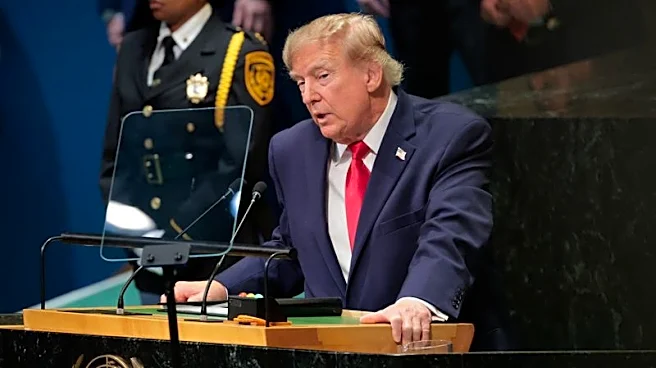
A cringe moment for me was when President Donald Trump, whom I have supported, recently announced his proposal to give every American adult $5,000. What is he thinking? With our national debt now above $40 trillion, adding another trillion or more in spending seems difficult to reconcile with the urgent need to get our nation’s finances under control.
I would much rather see that money used to reduce the national debt or strengthen Social Security finances. Our government simply cannot continue spending at this pace as though there will always be more money available.
At some point, we must recognize that every dollar the government spends ultimately has to come from taxpayers, borrowing or some combination of the two. While some suggest that we should simply tax millionaires and billionaires more, taxes alone will not solve a spending problem of this magnitude.
We need an honest bipartisan effort to address both sides of the equation — revenue and spending. I support responsible government, regardless of which party is in charge. It’s time for our elected officials to put politics aside, confront the debt honestly and start making the difficult decisions necessary to leave a stronger financial future for the next generation.
Lina Ingraham, Southside Jacksonville
LETTERS POLICY: Letters should be no more than 350 words, with an average preferred length of 200 words. All letters are edited for space, clarity and newspaper style. Submissions must include name, phone number, address and occupation. To submit, email letters@jacksonville.com.
This article originally appeared on Florida Times-Union: Florida has high graduation rate, proficiency another matter | Letters