







Every election, thousands of Floridians reach the judicial section of their ballot and face names they may never have encountered before. It is often tucked near the bottom, with little context and no easy way to answer a basic question: Who are these judges, and what should voters know before deciding whether to elect or retain them?
Voters want to make informed choices, but judicial races are among the hardest to research. On Aug. 18, Florida Rising tested a simple proposition: Judicial races do not have to remain the forgotten section of the ballot. We endorsed three county court candidates: Latoya Williams Shelton for Duval County Court, Group 1; Melina Buncome for Duval County Court, Group 13; and Veronica Walker for Broward County Court, Group 11.
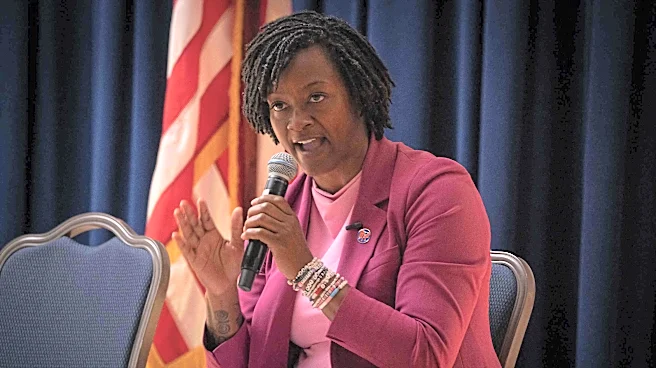
Judge Walker's victory was encouraging. She calls County Court the People’s Court, and that statement matters. For thousands of Broward residents, County Court is the part of the justice system they are most likely to encounter directly.
Her win also reinforced something larger: When voters are given meaningful information about judicial candidates, they can and will engage.
Florida Rising is taking an unusual step for a statewide progressive organization: treating judicial elections as an organizing priority rather than an afterthought. That means helping voters understand not only who is on the ballot, but how Florida's judicial selection system works and what power voters actually have within it.
Now comes an even bigger test — merit retention.
Florida doesn't elect its appellate and Supreme Court justices the way it elects a governor or state representative. When a seat opens, a Judicial Nominating Commission sends a list of finalists to the governor, who then makes the appointment.
After serving an initial term, judges and justices face voters through merit retention. There is no opponent on the ballot. Instead, voters get a single up-or-down question: Should this judge remain in office? A “yes” gives the judge another six-year term. A “no” creates a vacancy that is filled through the same nominating and appointment process.
In practice, retention elections have rarely produced meaningful public scrutiny. No Florida appellate judge or Supreme Court justice has ever been removed through a retention vote. District Court of Appeal judges, in particular, have historically faced little organized opposition.
Judges also operate under campaign rules very different from those governing traditional political candidates. They cannot campaign in the same way elected officials do, and merit-retention judges may engage in expanded campaign activity only after certifying that they face active opposition.
This year, Florida Rising hired a researcher who is a member of The Florida Bar to evaluate all 22 appellate judges up for merit retention. Separately, Florida Rising member leader Beth Carpenter, who was active in the 2024 Yes on 4 campaign, researched Florida Supreme Court Justice Carlos Muñiz.
The research examined judicial records, appointment histories, professional affiliations, political influence and other publicly available information. Across the 23 seats, the findings raised serious concerns about ideological alignment, independence from political influence, and the broader appointment pipeline shaping Florida's courts.
Florida Rising evaluates judicial candidates using five criteria: diversity, qualifications, fairness, independence from political influence and alignment with our commitment to social, racial and economic justice.
Taken together, the records pointed to a larger pattern — a judiciary increasingly shaped by political and ideological networks rather than a process that consistently produces public confidence in judicial independence. That is why Florida Rising recommends a “no” vote on all 23 retention seats and is launching Sweep the Bench.
Sweep the Bench is a coordinated effort to educate voters, district by district, about who these judges are, how they reached the bench, what their records show and what a retention vote actually means.
The Aug. 18 primary gave us an early glimpse of what is possible when judicial races are treated as real democratic contests rather than ballot fine print, and Veronica Walker's victory was one result. More importantly, voters were invited to think differently about who sits on the bench and how judicial power affects their lives.
Between now and November, we intend to keep building on that work.

Letitia Harmon is the senior director of policy and research at Florida Rising. She lives in Jacksonville.
This guest column is the opinion of the author and does not necessarily represent the views of the Times-Union. We welcome a diversity of opinions.
This article originally appeared on Florida Times-Union: Florida’s judicial election challenge? Sweep the Bench | Opinion