





Cyclosporiasis continues to spread across Florida, but the latest numbers bring some encouraging news for Northeast Florida.
Across the greater Jacksonville area, health officials reported just four new cases
across Duval, Nassau and St. Johns counties, bringing the region’s total to 22 confirmed infections. Duval added one case, St. Johns added two and Nassau added one. Clay County remains at zero.The increase is relatively small compared with the sharp rise being seen statewide. As of Aug. 13, the Florida Department of Health reported 407 cases between May 1 and Aug. 8, up 19% from the previous week. The illness has now been reported in 43 of Florida’s 67 counties.
For Northeast Florida, however, the latest numbers suggest new infections remain
limited, with only a handful of additional cases reported across the region over the past week.
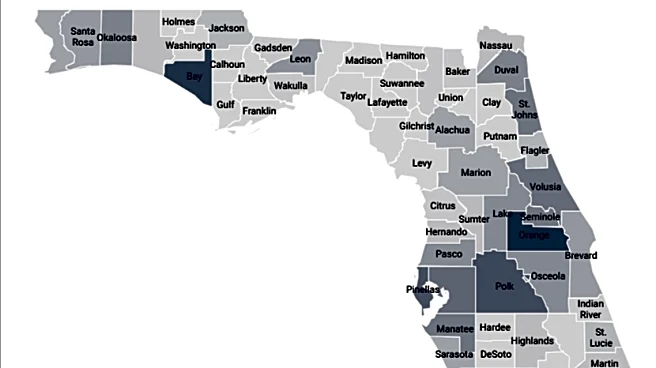
Here’s a look at the latest case counts across Northeast Florida, along with a nationwide map showing where infections have been reported.
What's the latest count of cyclosporiasis across the U.S?
In an Aug. 11 update, the Centers for Disease Control and Prevention (CDC) reported 13,895 confirmed cases in 47 states, up from 10,468 the week before. Cases have now been reported in 47 states, Washington, D.C., and Puerto Rico.
In comparison, just 1,180 cases were reported in the United States between May 1 and August 31, 2025, the CDC said, adding that at least 10,455 additional cases this year have not yet been confirmed by laboratories.
Two deaths have been reported in Michigan, one of the hardest-hit states.
The largest outbreak of the parasitic infection linked to iceberg lettuce distributed to restaurants and sold in packaged salad products by California-based Taylor Farms has led to staggering numbers of cases in nine states: Arkansas, Illinois, Indiana, Iowa, Kansas, Kentucky, Michigan, Missouri, Nebraska, New Hampshire, North Carolina, Ohio, Oklahoma, Pennsylvania, and West Virginia. The Food and Drug Administration is also investigating smaller outbreaks around the country.
What's the latest count of cyclosporiasis across Duval, Clay, St. Johns and Nassau counties?
According to theFlorida Department of Health's latest report on confirmed and probable cases, the Jacksonville area has recorded 22 cases of cyclosporiasis as of August 14.
- Duval County: 9
- Nassau: 2
- St. Johns County: 11
- Clay County: 0
Cyclosporiasis cases in Florida
Florida continues to see a surge in reported cyclosporiasis cases, with state health officials reporting 407 probable and confirmed cases between May 1 and Aug. 1, out of a total of 417 reported cases this year.
Cases by county since May 1, with last week's increase:
- Alachua County: 5 (+1)
- Baker County: 1
- Bay County: 24 (+8)
- Brevard County: 6
- Broward County: 34
- Charlotte County: 2 (+1)
- Citrus County: 1 (+1)
- Collier County: 7
- Columbia County: 1
- Duval County: 9 (+1)
- Escambia County: 5 (+2)
- Flagler County: 3
- Gadsden County: 1
- Hernando County: 2 (+1)
- Highlands County: 2
- Hillsborough County: 13 (+3)
- Indian River County: 1
- Jackson County: 3 (+1)
- Lake County: 8 (+2)
- Lee County: 33 (+3)
- Leon County: 7 (+2)
- Manatee County: 11 (+3)
- Marion County: 11 (+6)
- Martin County: 2
- Miami-Dade County: 53 (+6)
- Monroe County: 2 (+1)
- Nassau County: 2 (+1)
- Okaloosa County: 9 (+2)
- Orange County: 28 (+3)
- Osceola County: 8
- Palm Beach County: 22 (+8)
- Pasco County: 8 (+3)
- Pinellas County: 17 (+1)
- Polk County: 18 (+8)
- Santa Rosa County: 6 (+1)
- Sarasota County: 5 (+1)
- Seminole County: 11
- St. Johns County: 11 (+2)
- St. Lucie County: 3
- Sumter County: 2
- Volusia County: 12 (+1)
- Wakulla County: 1
- Walton County: 3
Cyclosporiasis by the numbers
CDC numbers are reported weekly and include only cases that are laboratory-confirmed, acquired domestically, and occurred since May 1. CDC numbers tend to experience a six-week lag, according to the agency.
Since May 1, the CDC has confirmed reports of:
- 13,895 laboratory-confirmed domestic cases of cyclosporiasis
- 740 hospitalizations
- 2 deaths
- 47 states reporting cases, plus the District of Columbia and Puerto Rico
What are the symptoms of cyclosporiasis?
Symptoms of cyclosporiasis may vary, according to the CDC, but the most common sign is persistent, watery diarrhea.
Others include loss of appetite, weight loss, cramping, bloating, increased gas, nausea, and fatigue.
Some people may also experience vomiting, body aches, headaches, low-grade fever, and other flu-like symptoms. Others may show no symptoms at all.
Symptoms can begin to show from two days to two weeks or more after infection, the CDC said. Without treatment, symptoms can last anywhere from a few days to a month or longer.
If symptoms persist, contact your health care provider.
How to avoid cyclosporiasis
The single best way to avoid the illness is not to eat food connected with an outbreak, the CDC said. Buy your produce from local growers, or grow it yourself.
Fightbac.org offers more tips on avoiding foodborne illnesses:
- Wash your hands. Before and after handling food, wash your hands with warm water and soap for at least 20 seconds.
- Discard outer layers. When possible, throw away the outer layer of fruits and vegetables, such as the outer two to three layers of leafy greens.
- Rinse produce thoroughly. Rinse all fresh fruits and vegetables under clean running water, even if you plan to peel them. Use a clean vegetable brush to scrub firm produce. However, Cyclospora parasites are resistant to rinsing.
- Be cautious with pre-washed or pre-cut produce. Commercial washing processes may not be sufficient to remove the parasite. Many of the Taylor Farms products that were recalled were pre-cut lettuce in bags, such as salad kits.
- Avoid cross-contamination. Clean kitchen countertops, cutting boards, utensils, etc. with hot, soapy water.
- Prioritize cooking. If the produce can be cooked, heating it to a temperature of at least 158 degrees is the safest option, as the parasite is resistant to routine chemical disinfection and washing alone cannot guarantee its removal. Cyclospora cannot survive at these elevated temperatures.
This article originally appeared on Florida Times-Union: Cyclosporiasis cases climb to 22 across Jacksonville area