
An Upper Southampton public official failed to properly disclose his conflict of interest involving the nearly $1 million sale of his properties to the municipal authority he sits on, a potential violation
of state law.
Records obtained through Right to Know also raise questions about other potential ethics violations with the sale, including whether Paul Angermeier, an authority board member since 2014, inappropriately benefited from the sale and a subsequent rental arrangement.
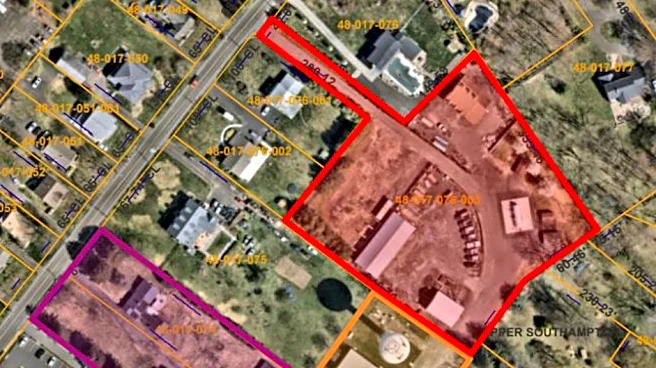
Last year, the authority quietly purchased two Churchville Road properties from Angermeier for $915,000, then leased back part of the property where hisplumbing business has operated since 2006.

Through its solicitor, the authority maintains the purchase followed the law and provided a rare opportunity to buy land adjacent to its headquarters for potential future expansion, while providing immediate rental income from two single-family homes and two freestanding garages.
The Pennsylvania Ethics Act generally allows public officials and employees and the agencies they serve to do business together, but it imposes restrictions to preserve public trust and ensure no self-dealing or other improper financial benefit occurs.
The authority maintains the ethics law wasn’t violated because Angermeier did not participate in sales discussions, negotiations or votes involving the property and any apparent errors were simply oversights, its solicitor, Bryce McGuigan said.
But this news organization found three times where it raises questions whether Angermeier may have crossed the line, according to a review of public records involving the sale.
At a minimum, the overall transaction shows a lack of good judgement and careful consideration of the law, said Harrisburg Attorney Robert Davis Jr., a recognized expert in professional and government ethics.
“It’s the totality of circumstances, it’s pretty compelling. At some point it stops being simple mistakes. It’s mistake, after mistake after mistake. At some point, it’s intentional,” he added.

No public record of a potential conflict of interest in Churchville Road property sale
For real estate transactions, the Ethics Act doesn’t require a public bid process, but there needs to be public disclosure and notice of all proposals considered or awarded contracts, according to Pennsylvania Ethics Commissioner Director Mary Fox.
But there is no record that Angermeier or the board publicly documented his conflict of interest with the Churchville Road sale in the 2025 authority board meeting minutes. There is also no record the board announced or voted on a lease it entered into with Angermeier for part of a garage and parking for his business, another potential conflict-of-interest.
Potential direct or indirect conflict-of-interests involving a public official and the government agency must “publicly announce and disclose the nature of his interest as a public record in a written memorandum filed with the person responsible for recording the minutes of the meeting at which the vote was taken,” under the Ethics Act.
A public official with a potential direct or indirect conflict also must avoid participating “in any way” in discussions, negotiations or votes on the conflicted matter— unless there is a tie, under the law.
Meeting minutes show that Angermeier left the meeting room during executive sessions in November and December 2024 and January, April and June 2025, where property was discussed in executive session. It was not disclosed if the Churchville Road properties were discussed.
Angermeier was listed in minutes as abstaining from the April 2025 vote, which set the expiration date on the USMA offer to purchase his properties. But the vote approving the property purchase and another later vote involving the sale are both listed in board minutes as unanimous.
McGuigan reiterated that Angermeier abstained on all votes involving the sale; if meeting minutes reflect otherwise it was an oversight, he said.
Since Angermeier is on record as leaving the meeting when the board discussed the real estate sale, he clearly knew he had a conflict of interest, said Davis, the ethics expert. He added there is no gray area in the law with documenting public disclosure of potential conflicts.
"We strongly advise the client that you get anything related to you and your personal interest on the record that you are recusing yourself,” he said. “Get it in the minutes.”

Lease with authority appears to give Paul Angermeier more favorable terms than other tenants
In July 2025, Angermeier signed a six-month lease with the municipal authority to rent two garage bays and four parking spaces effective once the sale was finalized.
Angermeier was charged a flat $500 a month under the lease, which expired in September, but includes an option to continue on a month-to-month basis.
As of July, though, the authority had collected no money from Angermeier; instead he was given credit for rent in exchange for used plumbing equipment valued at $6,325, though there is no language in the lease allowing for in-lieu-of payments, according to documents provided under Right to Know.
McGuigan did not confirm if Angermeier intends to continue the lease and Right to Know requests are pending for additional financial records and any lease agreement extensions.

The Angermeier lease also excluded fees and costs that are charged to the tenants renting the single-family homes.
The home renters each paid a one-month rent security deposit, they are financially responsible for a $100 deductible toward any home repairs, “minor interior maintenance” costs, and all utility costs, according to copies of the leases.
They are also charged a monthly stormwater management fee based on the impervious surface area of their individual properties, which the authority implemented this year.
Angermeier’s rent includes all utilities: gas, electric and water and sewer, according to a copy of the lease obtained through Right to Know.

The electric service is included because it would be too difficult to charge individual tenants since one meter serves all six garage bays and the office, McGuigan said.
The authority is currently using the detached two-bay garage, and the remaining two garage bays and office at the second garage are vacant.
Water and sewer service is included for the garage rental for similar reasons, McGuigan added.
“Mr. Angermeier did not plan to use water service within his leased space at 739 Churchville, and the authority similarly did not require service on its garage area, he said.
The authority confirmed that 739 Churchville Road has never been billed for water and sewer service because there is no water meter installed.
The authority disconnected the water line serving the garages after the sale, McGuigan added. But if a future tenant of the vacant garage and office requested water service a meter will be installed at that time, he said.
“The authority also has the option to install separate meters for Mr. Angermeier’s space as well as the vacant space, if both tenants would like water service at some point,” he added.

Churchville Road sale and lease left out of mandatory public disclosure paperwork
Public officials and employees must file an annual Statement of Financial Disclosure with the Pennsylvania Ethics Commission by May 1 for the previous calendar year.
The filling documents an individual’s income sources, creditors, business interests, and gifts and travel reimbursements.
Since he holds two public roles —as an authority board member and elected Upper Southampton constable —Angermeier files statements with the Pennsylvania Ethics Commission and the Upper Southampton Municipal Authority.
Angermeier didn’t disclose any real estate interest transactions for 2025, according to copies of his statements filed in January and Aprilrespectively.
He also did not disclose the authority rental agreement signed in July 2025 and effective after the property sale, according to copies of the record. He is required to disclose it under the ethics law.
The Churchville Road purchase was finalized Nov. 20, 2025, and it should be included in the 2025 disclosure statement, according to the ethics commission.
Angermeier made conflicted real estate interest disclosures in annual statements filed with the authority in 2022, 2023 and 2024 and the state ethics commission in 2020, 2021 and 2023, according to copies. But the transactions are not required to be reported before they are finalized, under the law.
It is unknown what the earlier real estate interests involved since the law does not require officials to disclose the specific agencies involved or other details.
But the earlier statements all listed the same address, 739 Churchville Road, where Angermeier's plumbing business was located, and not 737 and 747 Churchville Road, the properties he sold, according to the statements.
Angermeier included the property in previous statements because he was in negotiations with the authority and wanted to be “transparent about the ongoing nature of the transaction,” McGuigan said.
“The property inclusion should have been carried over on the 2025 statement as well, which was an oversight in light of the disclosure for the prior years,” McGuigan added.
In July, McGuigan said that Angermeier would file an amended disclosure statement. A Right to Know request is pending with the authority seeking the most recent 2025 copy.
An amended 2025 disclosure form for Angermeier has not been filed with the state ethics commission as of Sept. 8, according to a review of its online database.
A Right to Know request is pending for any amended or updated 2025 statement of financial interest for Angermeier.
Under the ethics law, officials are instructed to include the address of the property involved in a direct or indirect real estate transaction interest on disclosure forms, Fox said.
The ethics commission does not typically scrutinize disclosure statement information beyond confirming it was filed and filled out correctly, Fox said. When mistakes are discovered, amended statements can be filed without a penalty.
Errors in financial disclosure statements are not unusual, said Davis.
The purpose of the statement is providing the public with adequate information so the “average person” can understand potential and actual conflicted activities involving public officials, Davis said.
In his opinion, the stated reasons for Angermeier’s 2025 error are “highly suspect” given he included the real estate interest in his previous statements.
“While it is difficult to credit the technical explanation that was provided, particularly in light of the fact that the authority member had legal advice or at least an understanding of the law when he first listed the conflict (in prior statements), one has to respect the creativity of the excuse given,” Davis added.
Crime and Courts Reporter Jo Ciavaglia can be reached at jciavaglia@gannett.com
This article originally appeared on Bucks County Courier Times: No record Upper Southampton official disclosed conflict | Exclusive