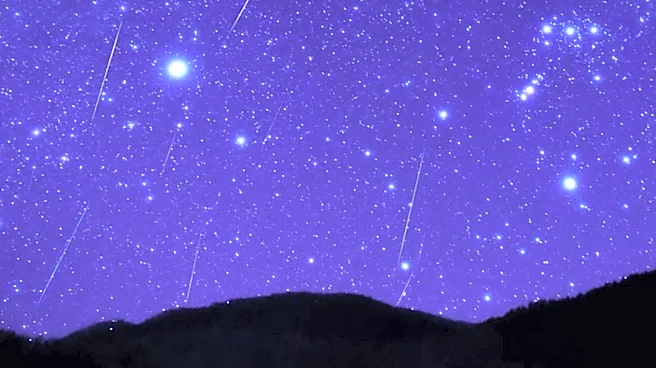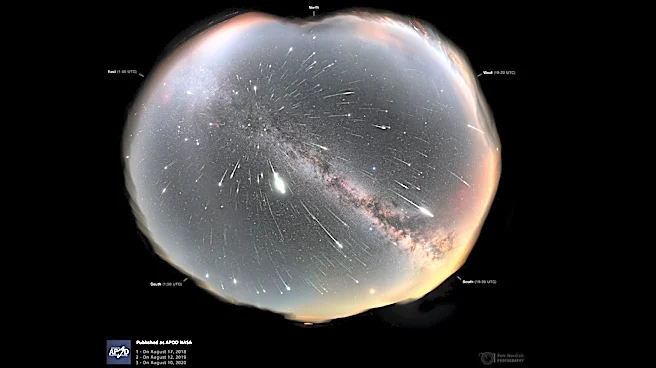







Viewing conditions are expected to be favorable to view tonight's Draconid meteor shower, thanks to reduced moonlight from a waning crescent moon ahead of Saturday's new moon.
The darker skies and October's longer nights bring us one of the month's best skywatching opportunities as the Draconids peak tonight.
The annual shower peaks on the night of Oct. 8 into Oct. 9, giving skywatchers across Pennsylvania a chance to see shooting stars streak across the sky. Unlike the more famous Perseids and Orionids, the Draconids are unusual because they're often best viewed during the evening hours rather than before dawn.
What time is the meteor shower tonight?
The Draconid meteor shower peaks on the night of Oct. 8-9. Experts recommend watching after darkness falls, when the shower's radiant
point in the constellation Draco is highest for evening viewers.
Where can you see the meteor shower?
The best viewing locations are parks, beaches, rural areas and other spots away from city lights.
Skywatchers don't need to look directly at Draco. Meteors can appear almost anywhere in the sky, so a wide-open view is often best.
How can you watch the Draconids?
No telescope or binoculars are required. For the best chance of spotting meteors:
- Get away from bright lights.
- Give your eyes 20 to 30 minutes to adjust.
- Look up and scan a broad section of sky.
- Be patient and stay outside for at least an hour.
How many shooting stars could be visible?
Under ideal conditions, observers may see about five to 10 meteors per hour, though the Draconids are known for occasionally producing surprise bursts of activity.
What moon phase is it tonight? October 2026 moon phases
The moon is currently in its waning crescent phase, meaning only a thin sliver remains illuminated before the new moon arrives Oct. 10. The darker skies created by the shrinking moon should help viewing conditions for tonight's Draconid meteor shower peak.
Here are the moon phases for October 2026:
🌑 New moon: Oct. 10
🌓 First quarter: Oct. 18
🌕 Full moon (Hunter's moon): Oct. 26
🌗 Last quarter: Nov. 1
When is the next meteor shower?
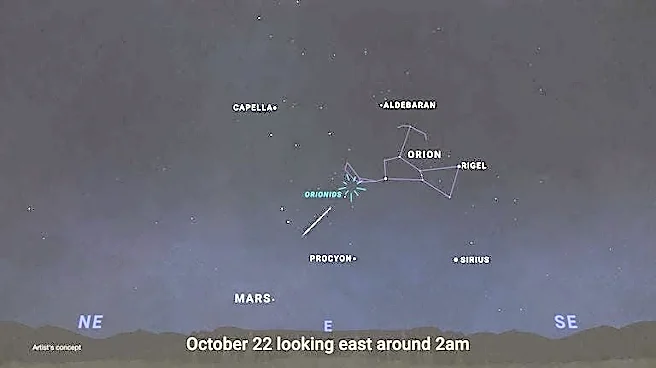
After the Draconids, theOrionid meteor shower is expected to reach its peak on Oct. 21-22. The Orionids are created by debris left behind by Halley's Comet and are typically one of the year's most popular meteor showers.
Maria Francis is a Pennsylvania-based journalist covering trending and breaking topics across the Mid-Atlantic and Northeast regions for USA Today Network. Reach her at mfrancis@usatodayco.com.
This article originally appeared on Bucks County Courier Times: Here's when, where and how to watch the Draconid meteor shower tonight