

As Bucks County gets another taste of summer this week, with temperatures climbing well above normal to begin October, a sharp drop is expected this weekend, according to the National Weather Service, reminding us that winter isn't far off.
As temperatures fluctuate this week, many Pennsylvanians are already wondering what the 2026-27 winter forecast has in store and whether this season could bring more snow
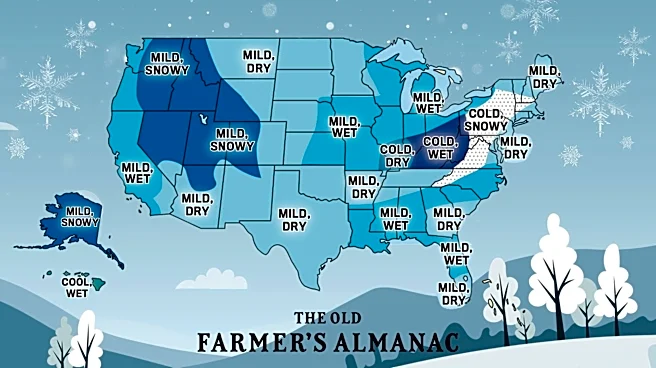
than normal.The latest outlook from NOAA's Climate Prediction Center favors a milder-than-normal winter across much of Pennsylvania and the Northeast. But a strengthening El Niño remains a major wildcard that could influence storm tracks and snowfall opportunities in the months ahead.
Forecasters caution that seasonal outlooks don't predict
individual snowstorms or snowfall totals. Instead, they identify broad temperature and precipitation trends over three months, meaning Pennsylvania could still experience significant winter weather even during a warmer-than-average season. Forecasters caution that seasonal outlooks don't predict individual snowstorms or snowfall totals. Instead, they identify broad temperature and precipitation trends over three months, meaning Pennsylvania could still experience significant winter weather even during a warmer-than-average season.
What does NOAA's winter forecast say for Pennsylvania?
The latest outlook from NOAA's Climate Prediction Center favors above-normal temperatures across Pennsylvania and much of the Northeast during the December-through-February period. Forecasters currently do not see a strong statewide precipitation signal, making snowfall forecasts difficult months in advance.
A milder winter does not mean Pennsylvania will avoid snow. Rather, temperatures are expected to average above normal over the course of the season. The state could still experience Arctic outbreaks, winter storms and periods of heavy snowfall.
What does El Niño mean for Pennsylvania's winter forecast?
Much of this winter forecast revolves around El Niño, a climate pattern caused by warmer-than-normal ocean temperatures in the tropical Pacific.
NOAA says El Niño is expected to strengthen through fall and winter and could become a very strong event. Historically, stronger El Niño winters can alter storm tracks across the United States and create more opportunities for storms in parts of the East.
The challenge is that more storms do not automatically mean more snow. Even during active winter patterns, Pennsylvania's snowfall depends largely on temperature. A storm tracking through the state can produce heavy snow in one region while bringing rain or a wintry mix to another.
Will Pennsylvania get more snow this winter?
It's too early to know for certain, although the strongest signal right now is for a milder winter overall. But forecasters say a strengthening El Niño could support a more active storm pattern than normal. Whether those storms produce snow will depend heavily on the availability of cold air.
If colder air arrives at the same time as major winter storms, portions of Pennsylvania could end up with above-normal snowfall. If temperatures run warmer, some of those storms could fall primarily as rain or mixed precipitation.
How much snow does Pennsylvania typically get each year?
Pennsylvania's average snowfall varies dramatically depending on location.
Based on NOAA/NCEI-based climate normals:
- Philadelphia averages about 23 inches of snow annually.
- Harrisburg averages about 29 inches.
- Allentown averages about 33 inches.
- State College averages nearly 44 inches.
- Pittsburgh averages about 44 inches.
- Scranton/Wilkes-Barre averages about 45 inches.
- Erie averages more than 104 inches thanks to lake-effect snow.
Pennsylvania as a whole averages roughly 24 inches of snow annually. The wide range reflects the state's diverse geography, from the snowbelt regions influenced by Lake Erie to the milder southeastern corner of the state.
How much snow did Pennsylvania get last winter?
Snowfall totals during the 2025-26 winter season also varied significantly across the state.
Preliminary National Weather Service seasonal totals show:
- Erie recorded roughly 100 inches of snow.
- Scranton finished near 40 inches.
- Williamsport received around 30 inches.
- Harrisburg finished near 20 inches.
- Allentown recorded about 25 inches.
- Philadelphia ended the season near 20 inches.
Those numbers highlight just how different winter can be across Pennsylvania. While some lake-effect and higher-elevation locations measured snowfall in feet, parts of southeastern Pennsylvania finished much closer to seasonal norms.
Which parts of Pennsylvania get the most snow?
Northern Pennsylvania, the Poconos, higher elevations and western Pennsylvania often receive significantly more snow than the southeastern part of the state. Lake-effect snow near Erie can produce some of the highest snowfall totals in Pennsylvania during a typical winter.
Meanwhile, southeastern Pennsylvania, including the Philadelphia region, frequently sits closer to the rain-snow line during winter storms. That can result in rain, sleet and mixed precipitation even when snow is falling elsewhere in the state.
When will Pennsylvania see its first snow?
The timing varies depending on location. Higher elevations in the Poconos and northern Pennsylvania often see accumulating snow earlier in the season, while southeastern Pennsylvania typically waits longer. In Philadelphia, the first measurable snowfall usually occurs around mid-December, though some years see snow arrive much earlier or much later.
Forecasters say it's far too early to predict the exact date of the first snowfall this season, but the difference between a snowy winter and a mild one may come down to a few degrees. Northern and higher-elevation communities typically have a better chance of cashing in on winter storms, while southeastern Pennsylvania is more vulnerable to rain and mixed precipitation during marginal events.
Maria Francis is a Pennsylvania-based journalist covering trending and breaking topics across the Mid-Atlantic and Northeast regions for USA Today Network. Reach her at mfrancis@usatodayco.com.
This article originally appeared on Bucks County Courier Times: What NOAA predicts for PA snow in winter 2026-2027, forecast released