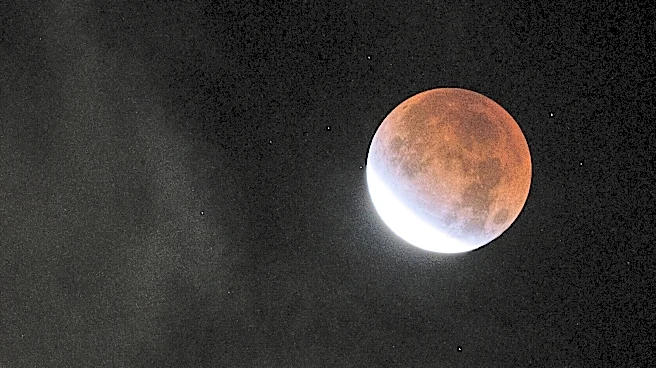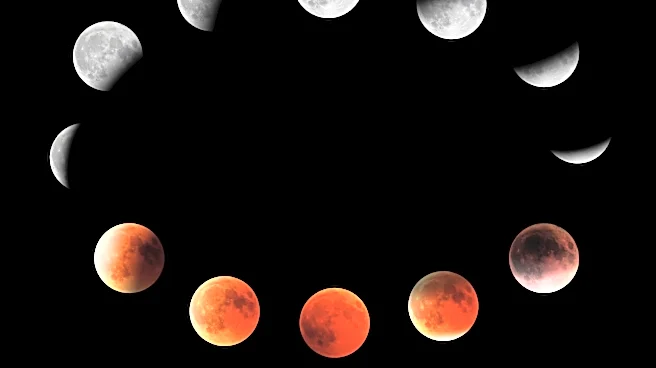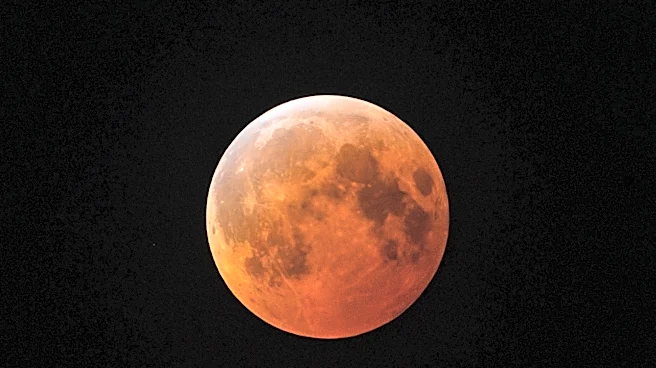






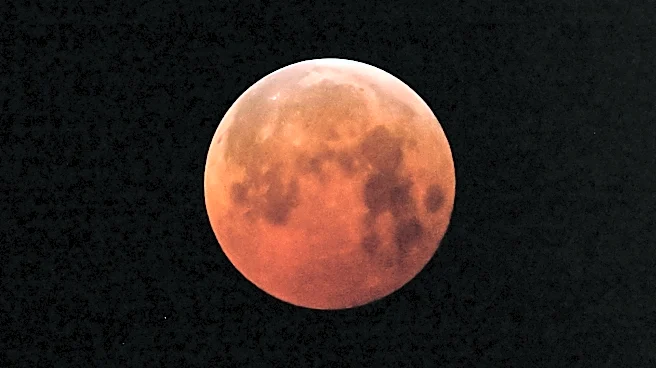
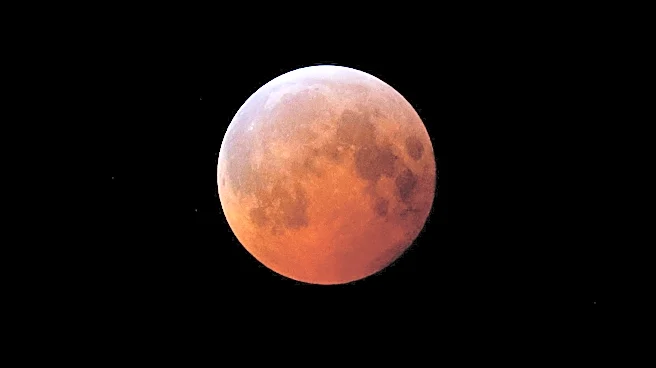
The major astronomical event skywatchers have eagerly awaited is finally arriving tonight. A deep lunar eclipse will turn tonight's full moon, also known as the August sturgeon moon, a rusty red color, creating what's called a blood moon.
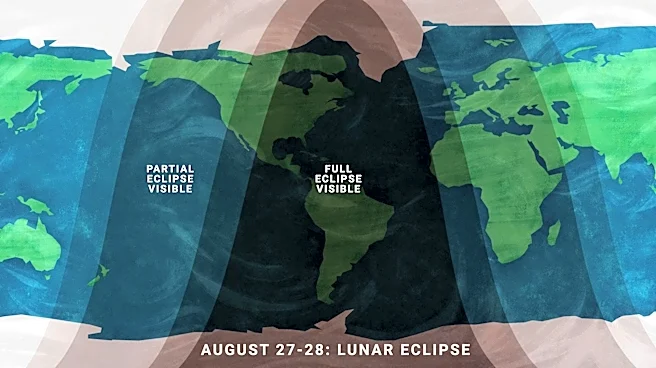
But as you look out the window this evening, you might be asking ''will we be able to see it?" Nasty weather is still moving across Bucks County late Thursday afternoon and will leave behind intermittent cloud cover this evening. Skywatchers are likely to catch a break as clouds should lift periodically, allowing a look at the August sturgeon full blood moon when the eclipse reaches maximum coverage shortly after midnight on the East Coast, taking on shades of red, orange and copper as a deep lunar eclipse unfolds
across much of North America.
The event, commonly called a blood moon, occurs when Earth's shadow covers most of the moon. At its peak, more than 96% of the moon will slip into Earth's shadow, making it appear remarkably close to a total lunar eclipse.
The eclipse reaches its maximum point shortly after midnight on the East Coast, but the event will be visible for hours before and after the peak.
If you're wondering why the moon turns red, what causes a lunar eclipse, when the next blood moon will occur or why August's full moon is called the sturgeon moon, here's what to know.
Why is the moon red? What is a blood moon?
The blood moon is a trick of the light.
During a lunar eclipse, the moon can turn shades of red, orange or copper as sunlight passes through Earth's atmosphere before reaching the moon. The atmosphere filters out much of the blue light, allowing red and orange wavelengths to bend toward the lunar surface, creating the reddish glow that gives a blood moon its name.
A blood moon typically occurs during a total lunar eclipse. Tonight's event is technically a partial lunar eclipse, but more than 96% of the moon will be inside Earth's shadow at maximum eclipse, making it appear very similar to a total blood moon.
The phrase blood moon may also be used to describe a moon that appears reddish because of dust, smoke or haze in the atmosphere, although the term is most commonly associated with a lunar eclipse.
What causes a lunar eclipse?
A lunar eclipse occurs when Earth moves directly between the sun and the moon, casting its shadow on the moon.
Unlike a solar eclipse, which can only be seen from a narrow path, a lunar eclipse is visible from anywhere on the nighttime side of Earth. Lunar eclipses can occur only during a full moon, when the sun, Earth and moon briefly align.
Tonight's eclipse is technically a partial lunar eclipse, but more than 96% of the moon will be covered by Earth's dark inner shadow at maximum eclipse.
When is the next blood moon?
A blood moon will be visible during the overnight hours of Aug. 27-28, 2026, as a deep lunar eclipse covers more than 96% of the moon. The eclipse reaches its greatest point at 12:12 a.m. EDT Friday, when the moon is expected to take on its deepest red and copper colors.
After tonight's event, skywatchers may have to wait years for another lunar eclipse of similar depth visible from North America.
How long will the lunar eclipse last?
The eclipse lasts more than five and a half hours from beginning to end. The partial eclipse phase, when Earth's shadow is clearly visible on the moon, lasts about three hours and 18 minutes.
For viewers in Delaware and elsewhere in the Eastern Time Zone:
- Penumbral eclipse begins: 9:23 p.m.
- Partial eclipse begins: 10:33 p.m.
- Maximum eclipse: 12:12 a.m. Friday
- Partial eclipse ends: 1:51 a.m.
- Penumbral eclipse ends: 3:01 a.m.
Will the blood moon be visible in Pennsylvania?
Yes, weather permitting.
Pennsylvania is positioned to see the eclipse from start to finish, giving skywatchers a front-row seat as Earth's shadow slowly moves across the moon and turns it shades of red and copper.
The best views will come from locations away from bright city lights with a clear view of the sky. And if clouds cooperate, the blood moon may be one of the most memorable sights of the year.
When is the next full moon?
The next full moon is tonight.
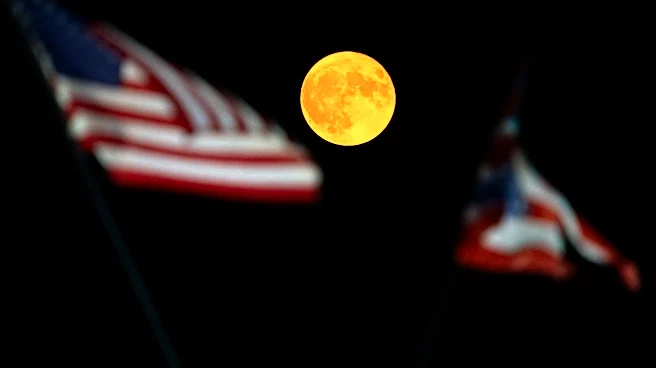
August's full moon, known as the sturgeon moon, reaches its full phase as a deep lunar eclipse unfolds across North America. Because lunar eclipses can occur only during a full moon, skywatchers will be treated to both events at the same time.
The sturgeon moon is also the final full moon before the start of astronomical fall in September.
Why is it called the sturgeon moon?
August's full moon is traditionally known as the sturgeon moon.
The name comes from Native American and colonial-era traditions tied to the giant sturgeon fish that were historically easier to catch in the Great Lakes and other major waterways during late summer. Like other full moons, the Sturgeon Moon has accumulated different names over generations depending on region and culture.
What phase is the moon tonight?
Tonight's eclipse occurs during a full moon, specifically the August sturgeon moon. Lunar eclipses can occur only during a full moon, when Earth passes directly between the sun and moon.
Moon phases for August - September 2026
🌕 Full moon: Sept. 26
🌕 Full moon: Aug. 28
🌗 Last quarter: Sept. 4
🌑 New moon: Sept. 10
🌓 First quarter: Sept. 18
When is the first day of fall 2026? Autumnal equinox date
The first day of fall, also known as the autumnal equinox, arrives on Sept. 22, 2026.
The autumnal equinox marks the moment when the sun crosses the celestial equator heading south, bringing nearly equal amounts of daylight and darkness across much of the world. It also signals the official start of astronomical fall in the Northern Hemisphere.
When is the September full moon?
The harvest moon, the full moon closest to the autumnal equinox, arrives on Sept. 26, 2026. The moon reaches peak illumination at 12:49 p.m. EDT that day.
This year's September full moon arrives just four days after the autumnal equinox on Sept. 22, making it the official harvest moon of 2026.
Maria Francis is a Pennsylvania-based journalist covering trending and breaking topics across the Mid-Atlantic and Northeast regions for USA Today Network. Reach her at mfrancis@usatodayco.com.
This article originally appeared on Bucks County Courier Times: Will clouds clear over Bucks County in time to see tonight's blood moon?