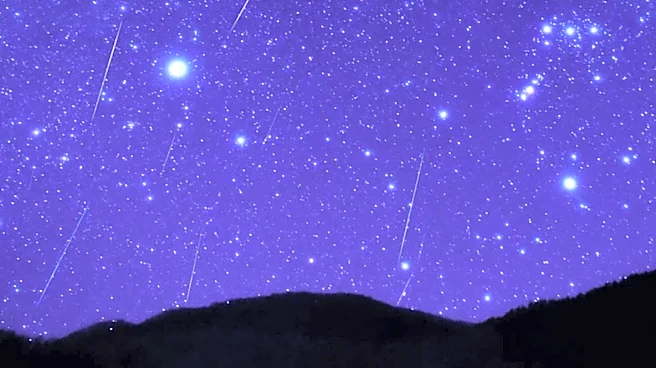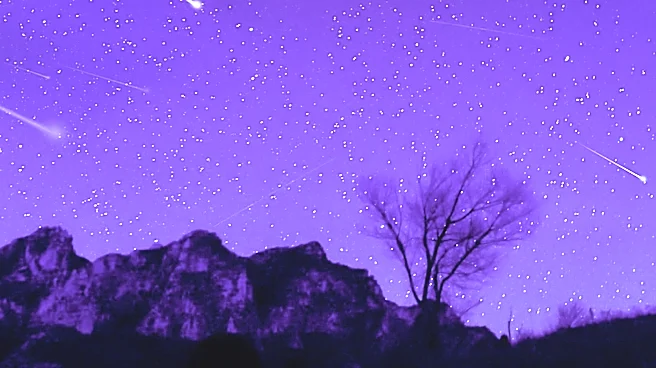

The next full moon is just days away and skywatchers will see one of summer's brightest full moons dazzling the night sky at the same time three meteor showers are active.
The annual buck moon coincides
with the peak of the Alpha Carpicornids and the Southern Delta Aquariids meteor showers.
The July buck moon reaches peak illumination on July 29, while the Southern Delta Aquariids and Alpha Capricornids are expected to be near their strongest around July 30, giving us a rare chance to enjoy both a full moon and a meteor shower in the same week.
While both the Southern Delta Aquarids and the Alpha Capricornids will reach their peaks, meaning they will produce the most meteors or shooting stars, on the day after the full moon, backyard astronomers hoping to catch a glimpse of the showers will have a harder time viewing them due to the moon's light. The Perseids meteor shower is also ongoing, but won't reach its peak until August. Meaning, light from the moon will have very little interference with people's view of the shower, which is considered one of the best meteor showers of the year.
This full moon will also take place just nine days after the anniversary of the historic Apollo 11 mission, when Neil Armstrong became the first person to ever set foot on the moon on July 20, 1969, per the Old Farmer's Almanac.
Here's what else to know about this year's Buck Moon.
When is the Buck Moon?

The full moon occurs roughly every 29.5 days, according to NASA. The Buck Moon will peak on Wednesday, July 29, at 10:36 a.m. ET, according to the Farmer's Almanac.
While the moon does peak in the morning, it will still look full for a day or two before and after it peaks.
Why is it called the Buck Moon?
Full and new moons' names are traditionally used to track the seasons, according to the Old Farmer's Almanac. And July is no different.
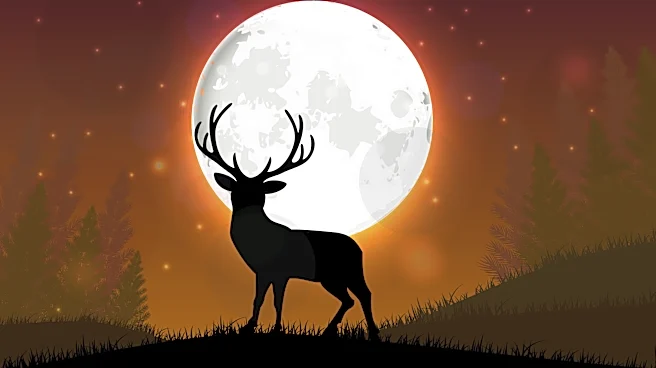
It's called the Buck Moon because male deer, which are known as bucks, will see significant growth in their antlers throughout this time, according to the almanac.
While their antlers begin to grow between April and May, bucks will begin their peak growth season and their antlers can grow as much as 2 inches each week throughout June and July, according to Mississippi State University.
Bucks will regrow their antlers every year ahead of mating season, and then shed them during the late winter, after mating season is over, the university stated on its website.
The moon's nicknames, like April's Pink Moon, May's Flower Moon, or June's Strawberry Moon, originated from Native Americans', Colonial Americans', and other cultures' names for the moon.
Other names for the Buck Moon
July's moon is known by multiple names, including the following, according to the Farmer's Almanac and Earth Sky:
- Thunder Moon
- Hay Moon
- Salmon Moon
- Halfway Summer Moon
- Raspberry Moon
How to get the best view of the full moon
To get the best view of the moon, check local weather forecasts in your area to make sure there won't be heavy cloud coverage or storms.
If you're going to go stargazing the night of the full moon, make sure to do the following:
- Bring a blanket, a sleeping bag or a chair to sit or recline on.
- Check the weather and cloud cover in your area to ensure conditions are optimal for viewing the moon.
- Dress appropriately for the weather.
- Use bug spray to avoid mosquito bites.
List of remaining full moons for 2026
Here are the rest of the full moon dates for 2026, according to the Farmer's Almanac:
- Sturgeon Moon (partial lunar eclipse): Peaks Aug. 28, at 12:18 a.m. ET
- Harvest Moon: Peaks Sept. 26, at 12:49 p.m. ET
- Hunter's Moon: Peaks Oct. 26, at 12:12 a.m. ET
- Beaver Moon (super moon): Peaks Nov. 24, at 9:53 a.m. ET
- Cold Moon (super moon): Peaks Dec. 23, at 8:28 p.m.
What else is in the night sky this month?
The buck moon isn't the only celestial attraction in July. There will be three active meteor showers this month, including the Perseids kicking off this week, active July 17 through Aug. 24. The Alpha Capricornids and Southern Delta Aquariids are also active this month into mid-August, though they will peak around the time of this month's full buck moon.
Mars, Saturn and Venus also remain visible during portions of the month, offering additional reasons to look up after sunset.
When is the best time to see the Southern Delta Aquariid meteor shower?
The shower runs from July 18 through Aug. 21 and may be at its strongest around July 30. Under ideal conditions, skywatchers could see 15 to 20 meteors per hour.
When is the Alpha Capricornids meteor shower?
The Alpha Capricornids are active from July 3 through August 15 and will peak on the night of July 30 and can be seen from both sides of the equator. While it is not very strong and rarely produces over 5 meteors per hour, the number of bright fireballs it produces is notable.
When is the Perseid meteor shower 2026 peak?
The Perseid meteor shower becomes active in July but reaches its peak on the night of Aug. 12-13. Considered one of the year's most popular meteor showers, the Perseids can produce 30 to 50 meteors per hour under favorable conditions and are best viewed after midnight. The shower's activity begins shortly after the full buck moon and continues well into August.
When is the next full moon 2026?
The next full moon will be the July full moon, known as the buck moon on July 29, 2026, followed by the August sturgeon moon on August 28.
Julia Gomez is a Trending reporter for USA TODAY and covers space phenomena, scientific studies and natural disasters. Connect with her on LinkedIn, X, Instagram, and TikTok: @juliamariegz, or email her at jgomez@gannett.com.
Maria Francis, a Pennsylvania-based journalist covering trending and breaking topics, contributed to this story.
This article originally appeared on Bucks County Courier Times: When does July's Buck Moon arrive? Full moon 2026 date, time, meaning