







PORTLAND — San Patricio County residents are pushing back against a proposed expansion of Cheniere Energy Inc.'s liquefied natural gas export facility in Gregory.
Citing increased global demand, Cheniere, the largest liquefied natural gas exporter in the U.S., is seeking Texas Commission on Environmental Quality approval for multiple air quality permits and the amendment of six active permits that could increase flaring and emission output at its Corpus Christi Liquefaction facility.
The facility, along the La Quinta Ship Channel, has operated in San Patricio County since 2018, and many residents have expressed frustration about air emissions stemming from the plant.
The new air permits, if approved, will authorize construction and operation of
the Stage 4 expansion. The permits were pending as of Sept. 9.
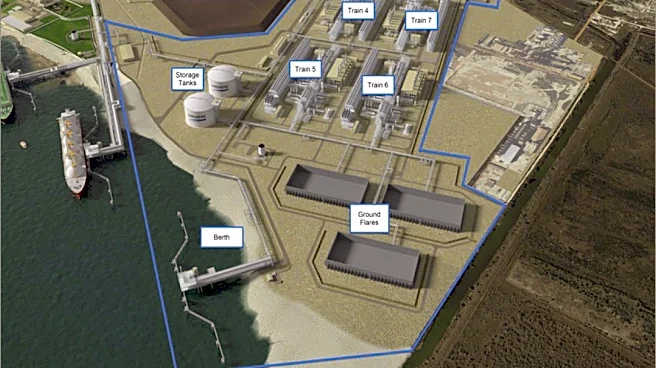
The Stage 4 expansion plans include four large-scale liquefaction trains, two LNG storage tanks, three ground flares and one marine berth.

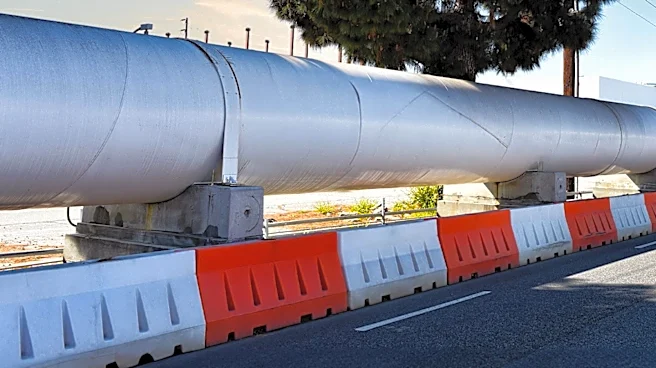
Cheniere Corpus Christi Pipeline LP is separately seeking to construct a 25.8-mile-long, 42-inch-diameter interstate natural gas pipeline loop to produce more LNG, according to Cheniere's website.
Matt Barr, vice president of state and local government affairs and community engagement for Cheniere, said the company expects the LNG market to double by 2040 as countries want to move away from coal power to lower their carbon dioxide emissions.
Bernardo Fallas, communications director for Cheniere Energy, said Stage 4 is projected to create thousands of construction jobs and more than 300 permanent jobs. Cheniere currently has an estimated 1,150 personnel on site daily.
If the permits are approved, funding for the expansion is projected to be decided on by late 2027, Fallas said in an email.
The public comment period for this project opened in early February and ended on Sept. 3.
San Patricio County residents' concerns
At a public hearing held by TCEQ on Sept. 3, the majority of residents urged TCEQ to deny the permits.
They asked questions including how TCEQ monitors air emissions in the area, how the permit application process works and how Cheniere is ensuring compliance of its emissions of greenhouse gases and particulate matter.
Many residents said they were frustrated with flares beaming from the LNG plant at various hours of the night and expressed anger about environmental effects.
Encarnacion Serna, a 74-year-old resident of Portland, lives less than a mile away from Corpus Christi Liquefaction and said he doesn’t believe that residents' concerns were taken seriously.
“This is just a dog and pony show to satisfy their requirements," Serna said of Cheniere. "They don’t address the communities; they’re going to steamroll our communities.”
Taft Mayor Elida Castillo raised concerns about ratepayer energy costs and said that robust industrial expansion is heading for San Patricio County.
“Our communities are prime locations, and so as people move away or as people pass away, those homes stay vacant because their kids don’t want to live by the refineries, then you have these entities scooping up land for cheap.” Castillo said.
“It’s getting a lot more difficult to find where your water, your utilities aren’t high and where your health isn’t going to be compromised.”
TCEQ’s Title V operating air permit requires Cheniere to self-report any emission incidents on a semiannual basis.
The most recent reports show two emission incidents from June, one lasting 11 hours and another lasting 44 hours.
Air quality in the Gregory-Portland area is also monitored by the University of Texas at Austin with funding from Cheniere and Gulf Coast Growth Ventures.
Jessica Muennick, health, safety and environment director for Cheniere, said that the company has seen a 40% reduction in emission deviations since 2018.
“A deviation doesn't necessarily constitute a violation of your permit,” she said. “It could be something as minor as one drop of oil to a secondary containment, or it could be an emission event to the flare.
“We are working actively to make sure that we're managing flaring, that we're managing spills, leaks, anything that is out of compliance with that air permit.”
Muennick also said the company has implemented a dashboard for operators to monitor trends of flare emissions and that it uses visual indicators that alert operators of any noncompliance.
Joel Stanford, TCEQ expedite team leader for the Air Permits Division, said the agency does not consider Cheniere to be a poor performer in compliance. The company was given a compliance history rating of 12.84; 55 would be a poor rating, Stanford said.
Though the natural gas industry supports the livelihoods of many residents in San Patricio County and is a big economic driver, residents are calling for health investments.
Hector Gonzales, community outreach coordinator for Coastal Watch Association, said his main concern with the expansion and more industrial development in the county is the need for more community health resources.
“For having the No. 1 oil export, the No. 1 LNG export, all these major industry partners in the area, we don’t even have a general hospital in San Pat County,” he said.
“That’s just one of the ways where we need to implement balance. We have this wonderful economic activity that’s bringing money and tax dollars into our community. … We just need to make sure our community's concerns are truly heard.”
Felicity Guajardo covers breaking news and public safety. Contact her at felicity.guajardo@caller.com.
This article originally appeared on Corpus Christi Caller Times: Residents largely oppose planned Corpus Christi Liquefaction expansion