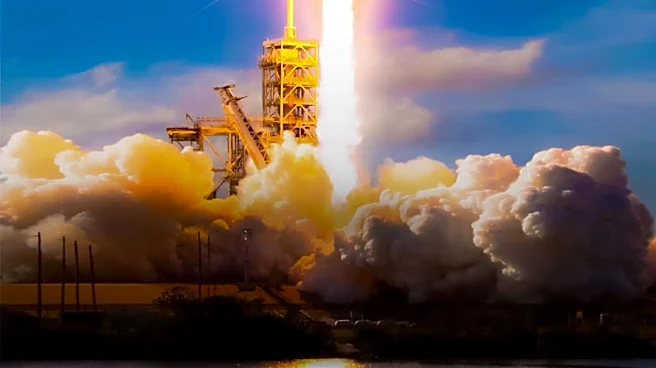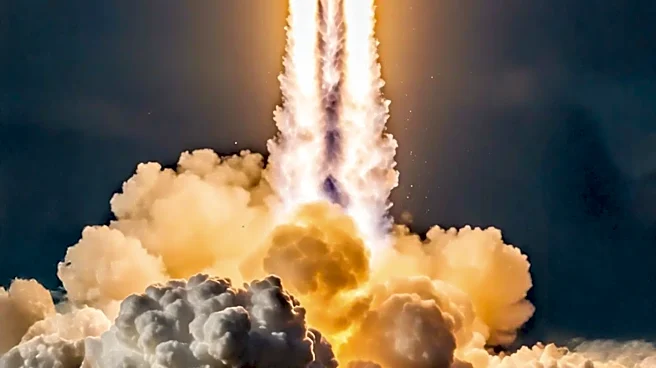





In April, the world watched in awe as four intrepid astronauts were launched into space toward the moon atop NASA's most powerful rocket ever.
That mission, known as Artemis II, captivated the public for 10 days as three Americans and one Canadian made a trip around the moon and back to Earth. To many observers, Artemis II signified the dawn of a new era of space exploration as NASA aims to return Americans to the lunar surface for the first time in more than 50 years.
But while the mission has without a doubt been the most high-profile launch of 2026 – reigniting public interest in human spaceflight in a way not seen since the Apollo era – it hardly stands alone.
By now, rockets are launching almost every day from U.S. soil – most without people
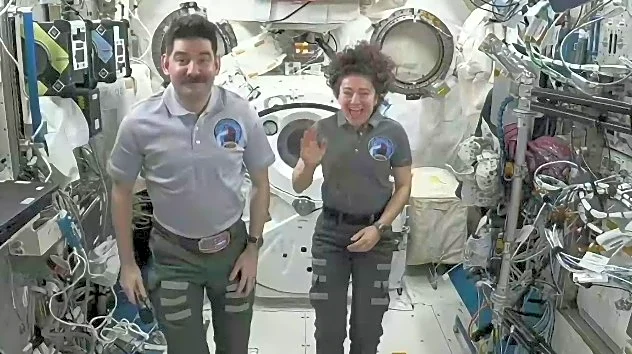
aboard. In fact, just one other mission so far in 2026 – a joint NASA and SpaceX mission launched Feb. 13 to the International Space Station known as Crew-12 – sent astronauts to space.
Texas by no means keeps up with the dizzing launch cadence of states like Florida and California, but the Lone Star State has still become a central player in the U.S. spaceflight industry – largely thanks to SpaceX and its Starship megarocket.
Here's why rocket launches are predicted to dramatically increase across the United States, and what that means for South Texas, where SpaceX is active.
FAA predicts commercial rocket launches to spike in next decade
As NASA increasingly cedes spaceflight missions to commercial companies that were once the realm of government space agencies, those sorts of missions have steadily been increasing year after year.
For instance, SpaceX, the commercial spaceflight company founded by tech mogul Elon Musk, has launched its Falcon 9 rocket hundreds of times – making it by far the most active rocket in the world. The two-stage 230-foot rocket is not only used to deliver SpaceX's Starlink internet satellites to Earth orbit, but is also used to propel astronauts to the space station and is contracted for a variety of commercial, civil and military payload deployments.
Now, the Federal Aviation Administration – which licenses commercial rocket launches – says the rate of rocket launches across the United States is only expected to grow in the next decade.
The FAA is predicting nearly 4,300 launches between fiscal 2026-2036, with spaceflights increasing annually from more than 200 a year to more than 500, according to the agency's 10-year forecast released in July.
America's launch dominance grows
The projection should be no surprise to even casual observers of the spaceflight industry in the United States.
SpaceX's pioneering method to recover and reuse rocket boosters has not only made manufacturing spacecraft cheaper, but has also led to faster turnaround times between missions. For years, SpaceX has taken advantage of the breakthrough in reusability to launch its Falcon 9 rocket from both Florida and California to build up a massive constellation of more than 10,000 Starlink satellites in a region nearer the atmosphere known as low-Earth orbit.
The Falcon 9 has helped usher in an era of American dominance in the spaceflight industry, with both coasts seeing record years in 2025 for rocket launches, largely thanks to the rocket. The Vandenberg Space Force Base in Santa Barbara County in Southern California hosted a record 71 rocket launches last year, while in Florida – where rockets launch from NASA's Kennedy Space Center and the nearby Cape Canaveral Space Force Station in Brevard County – a record 109 rocket launches were conducted in 2025.
Elsewhere, President Donald Trump and his Republican administration have sought to strip away regulations on the commercial spaceflight industry, while NASA is ramping up its objective of returning Americans to the moon under its Artemis program.
South Texas home to SpaceX's Starbase, Starship flight tests
Rockets don't exactly fly regularly from Texas, but the Lone Star State has still managed to establish itself as a mecca for America's spaceflight ambitions.
In South Texas near the U.S.-Mexico border, for instance, SpaceX has rapidly expanded its company town and headquarters known as Starbase into a bustling hub.
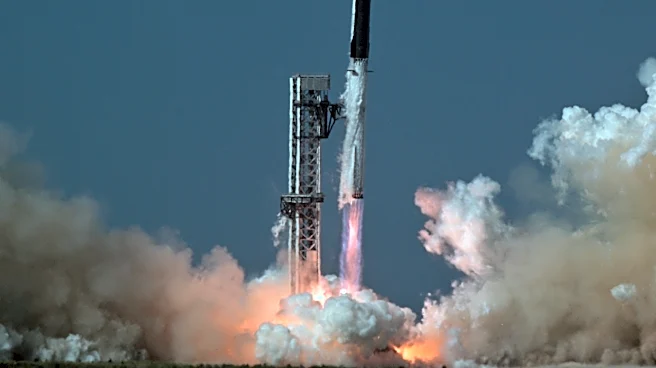
Since April 2023, Starbase in Cameron County – about 180 miles south of Corpus Christi – has been the exclusive location for test flights of SpaceX's mammoth Starship rocket – the last of which came July 24. Standing at more than 400 feet tall when fully stacked, the two-stage rocket is considered the largest and most powerful spacecraft ever launched – even surpassing NASA's iconic Saturn V of the Apollo era.
A social media post suggests SpaceX is readying the rocket for what would be its 14th flight test.
Starship completed a single engine static fire demonstrating a deorbit burn for upcoming orbital missions pic.twitter.com/vVI6giAlCM
— SpaceX (@SpaceX) August 20, 2026
SpaceX is developing the rocket to be the first fully reusable spacecraft ever, with both its upper-stage vehicle and lower-stage booster capable of returning to the launch site instead of being expended during the flight. In the years ahead, Starship is due to be crucial to NASA's plans to land Artemis astronauts on the moon, while Musk also envisions using it to send humans to Mars.
Elon Musk, SpaceX, eye Starbase expansion
Starbase, located about 23 miles from Brownsville, was incorporated as its own city in May 2025 following approval by Cameron County voters – most of whom are SpaceX employees.
The move, which gave greater municipal control to SpaceX, has repeatedly rankled longtime residents, environmental groups and others opposed to what they see as Musk's attempts to assert control over the Texas area.
Starbase, which houses a landing pad, launch facility, launch control center and tracking station for SpaceX, already has its own commissioners and mayor. Now, the city is in the process of establishing its own police department.
Starbase is also seeking to annex 7,133 acres of land near Boca Chica Beach – a popular 7-mile stretch of coastline in South Texas.
What does this mean for Texans? More rocket launches to watch
If you want to experience the Starship rocket getting off the ground and thundering overhead, you'll have plenty of opportunities. Though SpaceX is expanding Starship operations to Florida, Texas's Starbase will remain a crucial launch site as Musk has grand visions of launching Starship multiple times a day in the years ahead to the moon and Mars.
Texas is home to a nearby locale known as South Padre Island that has become a popular spot among spectators, while livestreams are almost always readily available for most rocket launches across the United States.
So, sit back, relax and enjoy the rise of what NASA often refers to as "the golden age of innovation and exploration."
Eric Lagatta is the Space Connect reporter for the USA TODAY Network. Reach him at elagatta@usatodayco.com
This article originally appeared on Corpus Christi Caller Times: America's launch boom could reshape Texas as SpaceX develops Starship