




One of the questions I get asked more than any other is, "What do you do with everything you find on the beach?" Most people imagine my house looking like a pirate museum, overflowing with seashells and driftwood.
The truth is, they're not entirely wrong.
How much I bring home depends on how I'm traveling that day. If I'm riding my electric bike, space is limited. If I'm in a truck, I can haul larger items.
Even then, I try to leave as much as possible where I found it. Shells, sea beans, driftwood and other natural treasures are best left behind for the next beachcomber to discover or for wildlife to use. Empty shells become homes for hermit crabs, and many natural materials continue to play a role in the coastal environment.

The things I almost
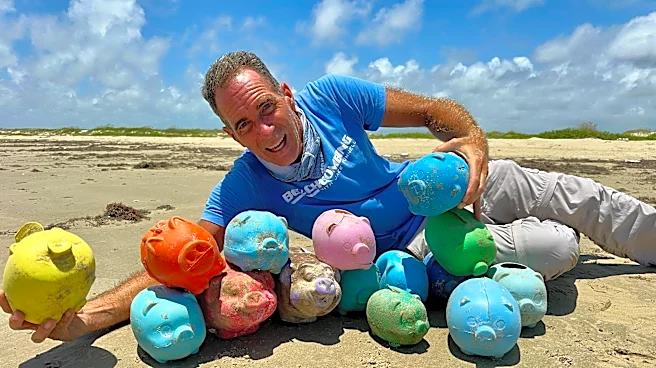
always bring back are hazards to wildlife, such as fishing line, hooks, netting and other marine debris. I also rescue unusual finds that have educational value or simply tell an incredible story. Messages in bottles, creepy dolls, sea pig piggy banks, glass and metal fishing floats, and other oddities often end up in my collection.
For years I convinced myself I wasn't bringing much home. Then I started looking around my house, garage, backyard, office and the Harte Research Institute. Apparently, I was wrong.

Today, my collection includes more than 200 pounds of coral that has washed ashore, over 60 messages in bottles, more than 80 sea pig piggy banks, hundreds of sea beans that I give to students, and eight mysterious witch bottles that may, or may not, still contain their original spells.
Every shelf tells the story of a different beach adventure. Every bottle has a mystery. Every odd object sparks a conversation.
That's one of the things I love most about beachcombing. You never know what the Gulf will deliver next, and you never know which discovery will inspire the next generation of coastal explorers.
Jace Tunnell is the director of community engagement for the Harte Research Institute at Texas A&M University-Corpus Christi. His Beachcombing series appears in newspapers, as a weekly video on YouTube and KEDT PBS, and as a weekly feature on KEDT NPR. Follow Jace at harteresearch.org, Facebook (@harteresearch) and Instagram (@harteresearch).
This article originally appeared on Corpus Christi Caller Times: Dolls, shells, piggy banks: What does Tunnell do with beach finds?