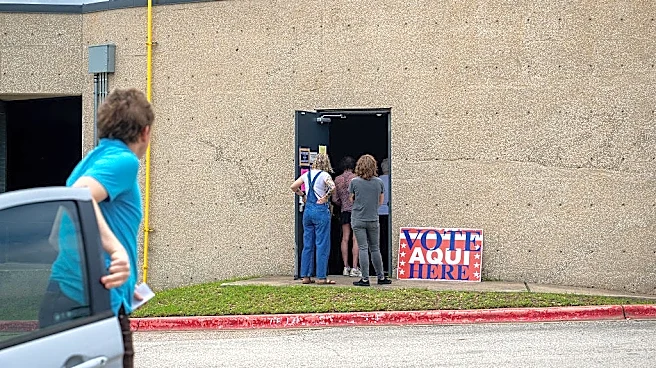





Nueces County takes little say in local, state and federal government, compared to other large counties in the state.
A Caller-Times analysis of 10 years of data for presidential and midterm elections available through the Texas Secretary of State shows registered voter participation in Nueces County as regularly ranking in 15th place among the state’s top-20 most populated counties.
Although the exact rankings may change some from year-to-year, the 14 counties with consistently higher registered voter participation numbers are Williamson, Collin, Mongomery, Fort Bend, Denton, Travis, Tarrant, Brazoria, Galveston, Lubbock, Hays, Harris, Dallas and Bexar counties.
The remaining counties with data consistently showing lower voter registration turnout
are Hidalgo, Bell, El Paso, Cameron and Webb counties.
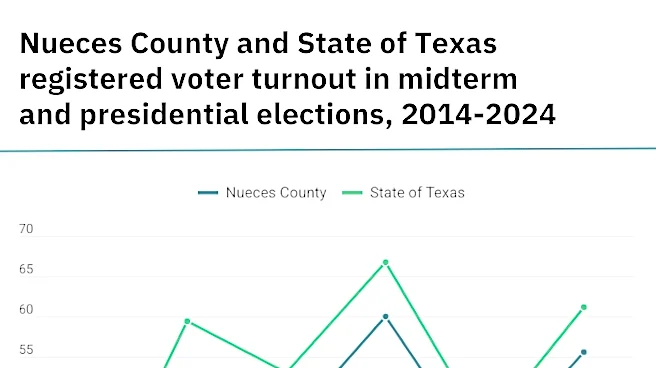
Nueces County turnout percentages show similar ebbs and flows as those in statewide trends for registered voter participation between 2014 and 2024, but still several several paces behind – between about 4% to 7% lower turnout compared to state turnout over the years, according to the data.
The greatest gaps observed are in the 2016 presidential election – with about 52% registered voter turnout in Nueces County compared to 59% in the state – as well as the 2018 midterm election, with Nueces County registered voters turning out at about 46% compared to the state’s 53%, the data shows.
At its worst over the six election cycles, Nueces County in the 2018 midterm election ranked as 17th among the 20-most populous counties in the state.
Travis County and Williamson County – the latter claiming the top spot for four of the six election cycles – are consistently shown as having the highest registered voter turnout in the 10 years of data reviewed by the Caller-Times.

The contrast between the highest-voting county in a given midterm or presidential election and Nueces County can be dramatic – Nueces County falling on average 14% lower in registered voter turnout compared to the other 19 counties reviewed.
The gap between registered voter turnout in Travis County compared to Nueces County in the 2018 midterm election was the most stark – Nueces County registered voter turnout 17% lower than Travis County, with Nueces County turnout at about 46%, and Travis County at about 63%.
The findings aren’t surprising, political experts told the Caller-Times, listing age, income and education as among key indicators of who is most likely to vote.
The difference in voter participation has impact, said Bill Chriss, an independent political and legal historian.
“The impact that it has is that because suburban voters and elderly voters, older voters, and higher-income voters tend to vote at a higher frequency, they are overrepresented in state, local and federal government operations,” he said. “So poor people, people with a lower education level, lower wage-earners and younger people are not represented as well in government.”
What the political experts said
Generally speaking, communities with higher incomes, older populations and more advanced educational attainment correlate with higher percentages of voter participation; and conversely, lower-income areas with a younger population and less education are typically tied to lower voter turnout, Chriss said.
Lower-income populations tend to work jobs that have lengthier, less-flexible hours, and often have fewer transportation options, he said, while younger people “tend to be less politically connected and less interested in politics than older people.”
“You combine that with the fact that our current state administration seems to be not very interested in making it easier to vote but rather make it harder to vote,” he said.

Geography also appears to play a role.
It’s notable that the highest-turnout counties topping the list are suburbs of major metropolitans, Chriss said – with the exception of Travis County.
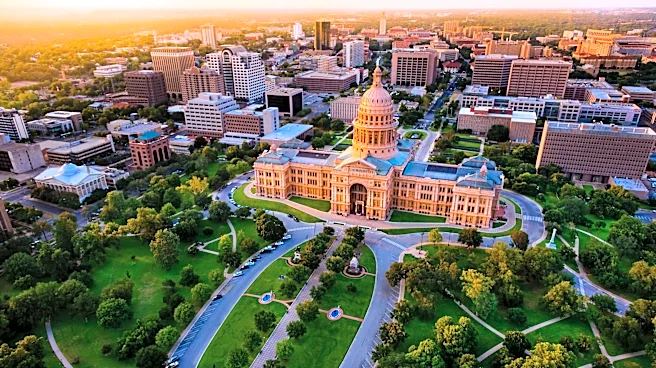
The state’s capitol is home to major educational institutions, such as the University of Texas, as well as St. Edward’s University and Austin Community College, he pointed out, but there’s another distinguishing factor.
“Travis County is the political center of the state of Texas,” he said. “So you have a massive number of governmental employees who tend to vote at a much higher rate because they’re more directly impacted by activities of the state and federal governments.”
Nueces County doesn’t have a major educational institution with high enrollment similar to some of the other counties, Chriss said, and features a population with a younger median age and lower-income.
Educational level can affect how a resident may view voting, according to Paul Gottemoller, political science professor at Del Mar College. “Generally, people who are more educated tend to have more feelings of political efficacy in that their votes matter and they usually come from backgrounds that they’re socialized to voting so they are more likely to vote,” he said. “You tend to see people with less education (have) much lower feelings of political efficacy and they don’t feel their votes really matter so they tend to vote at much lower rates.”
The fact that Nueces County’s ranking hasn’t shifted since 2014 “is meaningful in that we still have a large portion of the population that are not participation regularly,” Gottemoller said.
What increases voter participation
Data shows voter registration increases year-over-year throughout the 20 most-populated counties, with the exception of Bell County, where voter registrations dipped slightly between the 2016 and 2018 elections.
The registration increases are likely a combination of a growing number of residents becoming of voter age, high-interest elections and population growth, political experts said.
Conor Rice, Nueces County Democratic Party Chair, said there have been increases in voter registrations throughout the state, which will likely also be reflected in Nueces County.
The upcoming 2026 election has similar “energy” to the 2018 midterms, and there is a similar uptick of younger people registering to vote, Rice said.
“Obviously they’re claiming some ownership and realizing the power in which they have in being a larger (voting) bloc that can really sway an election,” he said.
The local GOP encourages voter participation by employing multiple platforms, said Carmen Calderone, Nueces County Republican Party chair – emails, texts, phone calls, direct mail and social media.
“The biggest thing is just reaching out to the voters and letting them know the importance (of voting), especially in local elections and the impact it has on their everyday lives,” he said. “Trying to get that message out, I think, will help increase voter participation.”
Bumping up voter participation numbers “really comes down to trying to get people socialized into voting,” Gottemoller said, naming the best approach as “at the individual level, where people can encourage their friends, kind of normalize the act with people who generally don’t vote.”
“People who have friends that vote, people who are engaged in civic communities and other organizations… have a higher likelihood of voting and being involved,” he said. “Most of the time we learn our voting behaviors from our parents, and if you don’t get it from them, we then get our voting behaviors through our peers.”
What will turnout be this year?
Local political experts are predicting a modestly higher-than-average registered voter turnout in Nueces County for the upcoming 2026 election, although what that number will look like is a question – some identifying the gubernatorial race as a draw, as well as Congressional races under new redistricting.
But the Corpus Christi City Council races may also increase ballot-casting, some said.
All nine seats are up for election.
Calderone was among those who suggested the City Council as a likely driver in participation.
“There’s been so much attention on the City Council… with the water issues and the back-and-forth and the way the council has been… at each other,” he said. “I think a lot more people paying attention to that.”
In general, Rice predicts there will be more voting on down-ballot items – such as those for school districts and City Council – and particularly noted heavy media coverage of the council.
“It has been in the forefront of people thoughts,” Rice said. “They’re feeling it, whether driving down the street, turning on your water faucet – it is the closest government that needs to be functioning for us.”
Kirsten Crow covers city government and water news. Have a story idea? Contact her at kirsten.crow@caller.com.
Consider supporting local journalism with a subscription to the Caller-Times.
This article originally appeared on Corpus Christi Caller Times: Nueces County voters take less say in national, state and local issues