







One of my favorite things about beachcombing is finding something I have never seen before. No matter how many years I spend searching the Texas coast, there is always something new waiting to wash ashore.
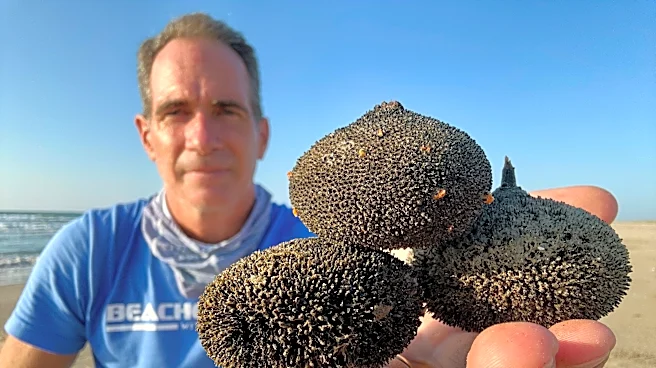
During my weekly beach survey, I started finding strange, round objects covered with hundreds of little projections. My first thought was that they looked like the ends of toilet scrubbers. After finding several, though, I realized these weren't pieces of trash. They were some type of seed or fruit.
Then I found one with part of its stem still attached, and something clicked. I had seen these before while flipping through my sea bean reference guides.
They were monkey combs.

Monkey combs are the fruits from a tropical tree called Apeiba sp., native
to Mexico and Central America into South America. The unusual woody fruits can grow several inches across and are covered with flexible bristles, giving them their distinctive appearance and name. Inside are numerous small, oil-rich seeds.
I ended up finding around 10 monkey combs, which made this an especially exciting survey. Sea beans and other drift seeds fascinate me because they show just how connected the Texas coast is to distant tropical environments.
Fruits and seeds can enter rivers, reach the ocean and then be transported by currents before eventually washing ashore. We may never know exactly where these monkey combs started their journeys or how long they spent at sea.

Monkey combs also have a history of human use. Their seeds have been used traditionally for oil and hair treatments, while fibers from the tree have been made into rope, baskets and other useful items.
Finding something new still gets me excited. That's what keeps beachcombing interesting. You never know what the next wave will deliver.
Sometimes, what looks like a toilet scrubber turns out to be a tropical traveler.
Jace Tunnell is the director of community engagement for the Harte Research Institute at Texas A&M University-Corpus Christi. His Beachcombing series appears in newspapers, as a weekly video on YouTube and KEDT PBS, and as a weekly feature on KEDT NPR. Follow Jace at harteresearch.org, Facebook (@harteresearch) and Instagram (@harteresearch).
This article originally appeared on Corpus Christi Caller Times: Toilet scrubbers washed ashore? These objects are tropical fruit