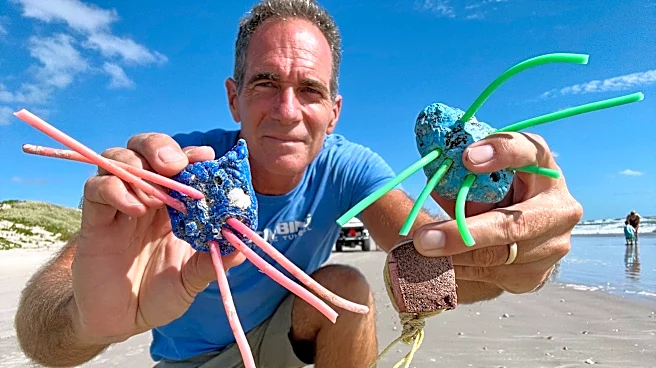









Some beach finds raise more questions than others. Over a couple of weeks, I found three strange objects washed ashore along the Texas coast. Two were plastic, while the third was made from a piece of float with yellow rope attached like crab legs.
They were octopus fishing lures, little imitation crabs designed to fool an animal known for its intelligence.
Last week, while in Mexico, I photographed an octopus fishing boat with long bamboo poles extending from the front and back. Those poles helped connect the unusual objects on our beaches to a fishing tradition across the Gulf.

The poles are called jimbas, and they support multiple fishing lines. Fishermen use a method called drift fishing, allowing wind and currents to move the boat while weighted
bait or lures travel near the seafloor.
Octopuses love eating crabs. When one grabs the bait with its arms and suckers, the fisherman pulls the line toward the surface. The traditional method can work without hooks, although some fishermen add them to keep octopuses from escaping.
Real crabs have long been used as bait, but artificial versions offer a reusable alternative. Fishermen make them from plastic, wood, resin, and other materials, adding colorful strips or cord to imitate legs. My float and rope find shows just how creative these designs can be.

Reusable lures can save fishermen money and reduce the need to harvest wild crabs for bait. But when a lure is lost, its durable materials can become marine debris.
The designs I found match lures used in Mexico’s Yucatán octopus fishery, although I cannot confirm exactly where these three entered the water.
That is part of what makes beachcombing so interesting. A strange piece of plastic can reveal a story about marine life, fishing traditions, and the connections between coastlines.
Jace Tunnell is the director of community engagement for the Harte Research Institute at Texas A&M University-Corpus Christi. His Beachcombing series appears in newspapers, as a weekly video on YouTube and KEDT PBS, and as a weekly feature on KEDT NPR. Follow Jace at harteresearch.org, Facebook (@harteresearch) and Instagram (@harteresearch).
This article originally appeared on Corpus Christi Caller Times: Have you seen artificial crabs washed ashore? Here's what they're for