



Anglers and biologists observed fish kills and discolored water near Galveston earlier this month. This health and safety concern is caused by a harmful algal bloom known as red tide.
Down in the Coastal Bend, local researchers have kept an eye out for any signs that red tide was spreading. So far, they haven't seen any threat to the region and no local fish kills have been reported.
Here's what to know about red tide in Texas:
What is red tide?
Red tide is a harmful algal bloom of karenia brevis.
It doesn't occur often near Texas waters, but when it does, the toxins produced by microscopic algae can kill fish, make shellfish dangerous to eat and make the surrounding air difficult to breathe, according to the National Oceanic and Atmospheric Administration.
Ominously,
the algal bloom makes the water appear red. The wind, currents and tides can cause algal blooms to spread.
Where has red tide been found in Texas?
The Texas Parks and Wildlife Department began receiving reports of a red tide bloom off the coast of Galveston on Sept. 8, according to a Sept. 14 news release.
Water samples indicated moderate to high concentrations of red tide cells, with beachgoers reporting mild to severe respiratory irritation. Fish kills of Gulf menhaden and striped mullet were observed, with other common species affected in smaller numbers.
Affected areas included Bolivar Peninsula, Crystal Beach and near Galveston Island, though concern has faded. By last week, fish kills and respiratory symptoms were mild to nonexistent in the upper coast region near Galveston.

What about the Coastal Bend?
No fish kills were reported in Matagorda or San Antonio bays or in the Coastal Bend. A low concentration of red tide cells was reported in Freeport, with very low concentrations in the Coastal Bend.
The last status reports from the Texas Parks and Wildlife Department date to fall 2023, with fish kills or moderate concentrations of red tide reported near Galveston and South Padre Island.
But like now, local researchers found no red tide near Corpus Christi and only very low or background concentrations in the Port Aransas ship channel and in the gulf inlet of Aransas Pass.
In 2018, there was a gizzard shad fish kill in the Packery Basin in Nueces County, with respiratory irritation reported in the area. Low concentrations of red tide were found at Padre Island National Seashore and near Bob Hall Pier and Mustang Island State Park.
There is currently no immediate concern for the Coastal Bend, according to a Sept. 21 news release from the Harte Research Institute at Texas A&M University-Corpus Christi.
How is red tide being monitored?
Researchers across the coast keep an eye out for red tide.
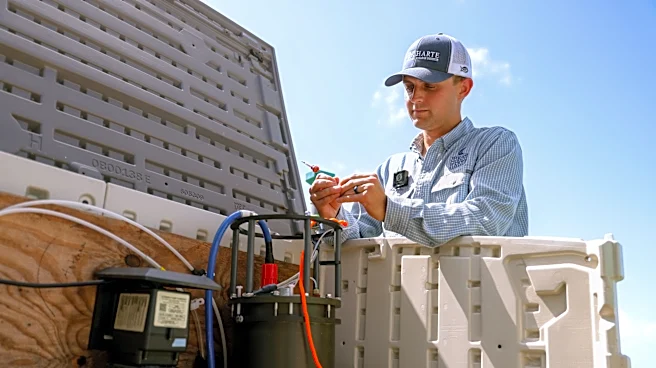
The Harte Research Institute shared information about its early warning network designed to detect red tide and other harmful algal blooms.
“Many times, the presence of red tide isn't known until people start seeing dead fish or experience respiratory irritation along the beach,” Michael Wetz, institute chair for Coastal Water Health, said in the news release. “What makes our monitoring network different is that it serves as a first line of defense, helping us detect the presence of red tide early and giving communities more time to prepare.”
Red tide blooms "can move with changing currents, which is why having an instrument positioned between our region and affected areas is so important," Laura Beecraft, associate research scientist for Coastal Water Health at the institute, said in the news release. "If conditions change, we have a much better chance of detecting it early."
The institute uses Imaging FlowCytobots near Port O'Connor and deploys additional instruments in collaboration with Texas Parks and Wildlife in Flour Bluff and Rockport and in collaboration with the Texas State Aquarium in Corpus Christi.
The Port O'Connor system has only detected low abundances of the red tide algae since the bloom was reported near Galveston.
Funding for this network comes from the Texas OneGulf Center of Excellence and the Coastal Bend Bays & Estuaries Program. Past support has come from Matagorda Bay Mitigation Trust and 1PointFive.
What should I do if I encounter red tide blooms?
Anglers and beachgoers can report blooms by calling the Texas Parks and Wildlife Department at 361-825-3244.
The department posts status updates when there is a bloom online.
In the event of a bloom, fish, shrimp and crabs that are caught alive and acting normal are safe to eat. Shellfish including oysters, clams, mussels and scallops can accumulate toxins in their body tissues, making them toxic to people if caught during or in the months after red tide.
Fish or shellfish that have washed ashore or are floating "belly up" in water are also not safe to eat.
Neurotoxic shellfish poisoning can cause abdominal pain, nausea, vomiting, diarrhea, progressive paresthesia, vertigo, malaise, generalized muscle weakness, ataxia, incoordination, chills, headache and myalgia.
Just walking on the beach when there is a red tide can cause respiratory, mucous membrane and skin irritation, according to the Texas Department of State Health Services.
Olivia Garrett reports on education and community news in South Texas. Contact her at olivia.garrett@caller.com.
This article originally appeared on Corpus Christi Caller Times: How Corpus Christi experts watch for red tide spread, fish kills