
Seventy years ago this fall, Clinton High School in neighboring Anderson County for weeks became almost the center of the news universe, as 12 Black students successfully enrolled at the formerly all-white
school.
It was not easy amid the threats, taunts and violence from many white students and local and out-of-town citizens who protested. Only two of the 13 Black students - Bobby Cain and Gail Ann Epps - would later graduate. But Clinton High became the first school in the South to be successfully integrated following a court order.
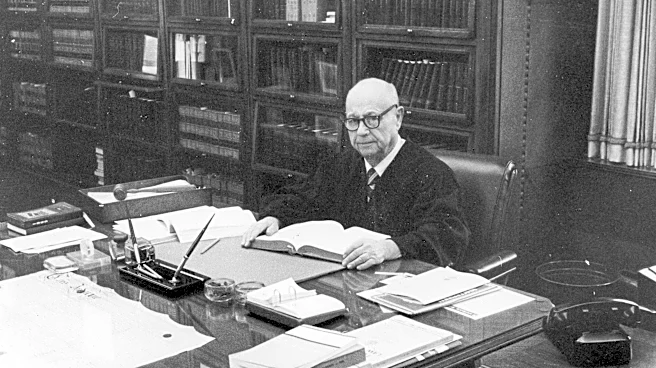
Also at the center of the storm was Knoxville federal Judge Robert Love Taylor, who ruled on the ongoing case several times from his courtroom in the Post Office and former Federal Building at 501 E. Main St. in downtown Knoxville.
This man who lived for decades in Sequoyah Hills in 1952 initially ruled against a suit to desegregate the school. His argument, according to historical documentation, was that it did not violate the separate-but-equal doctrine at the time and that students in Anderson County were not inconvenienced by having to travel to places like Austin High in Knoxville to school.
But after the U.S. Supreme Court in 1954 ruled in favor of integration nationwide in the famous Topeka v. Board of Education case, he would soon reverse himself and be on the right side of the law - and, some might say, history and compassion. And he would continue to rule in favor of desegregation in the case as well, including when noted white supremacist John Kasper and others tried to disrupt the process.
The Shopper News plans to take several looks over the next few weeks at the famous case on its anniversary, with this story highlighting Judge Taylor and his life during and beyond the famous case.
The story has been brought to light in recent years by the James Earl Jones-narrated documentary of 2006, “The Clinton 12,” and the 2023 detailed historical book, “A Most Tolerant Little Town,” by Rachel Louise Martin.
Looking back at the school year 1956-57 shows that it was not an easy time for Judge Taylor or anyone, as periodic acts of violence and harassment continued. That happened even though many white teachers and white students, including football player Jerry Shattuck, tried to support the Black students. White Baptist minister Paul Turner tried to escort the Black students to class one day and suffered violence from white protesters as a result. Gov. Frank Clement sent the National Guard to help.
Taylor seemed destined to be in the spotlight or public arena from a young age, although maybe not in so much of a life-changing way as a judge. He was one of 10 children of Gov. Alf Taylor and the nephew of former Gov. Bob Taylor, who had once campaigned against his brother in an amicable race.

According to his obituary by Carson Brewer in the Knoxville News Sentinel after his death in 1987 at the age of 87, Taylor was said to possess traits of both his more serious father and his fun-loving uncle. Both characteristics likely helped in the sometimes stressful world of legal decisions.
Spending his younger years in the Johnson City area, he was an athlete at Milligan College and Vanderbilt, the team he later pulled for as a sports fan, and he played professional baseball. After studying law at both Vanderbilt and Yale, he began practicing in 1924 in Johnson City, where he was later buried.
In 1949, he was named to the federal judiciary in East Tennessee and moved to Knoxville with his wife, Florence, whom he had married when he was 33. They had two children, Robert Taylor Jr., who became a longtime history professor at Middle Tennessee State University, and Ann Taylor, who was a well-known news announcer for National Public Radio after starting at WATE in Knoxville.
According to information provided by the staff at the McClung Historical Collection, the family lived at 3567 Talahi Drive SW in Sequoyah Hills near Cherokee Boulevard for decades. The medium-sized, Mediterranean-style home apparently from before World War II is still standing. Taylor also attended Sequoyah Hills Presbyterian Church.
Taylor’s other famous cases included one involving the Tellico Dam and its threat to the snail darter species, a Scott County coal workers case that brought testimony from noted United Mine Workers leader John Lewis, and a 1961 tax evasion trial against colorful Knoxville grocer and politician Cas Walker.
He also presided over two special corruption trials outside Knoxville against former Illinois Gov. Otto Kerner Jr. in 1973 and Maryland Gov. Marvin Mendel in 1977.
But the Clinton school ruling probably brought him the most lasting attention. In a newspaper interview years later, Taylor said he had not forgotten the stress and emotion of presiding over such an important case. “I thought someone would have to admit me to the hospital,” he had recalled.
He continued to serve into his 80s with basically no vacation time until taking senior status after breaking his hip in 1984.
As a judge, he was known to get through his dockets in a timely manner with quick rulings, and most were upheld by the higher courts. That had come about, he said, because he had inherited a vastly overloaded docket when he began serving, and he never wanted to be behind again.
Although he was a little slow initially to approve of desegregation before the Supreme Court ruling of 1954 that changed the legal landscape, he soon did so with deliberate speed there, too.
This article originally appeared on Knoxville News Sentinel: The judge who navigated the Clinton High crisis