


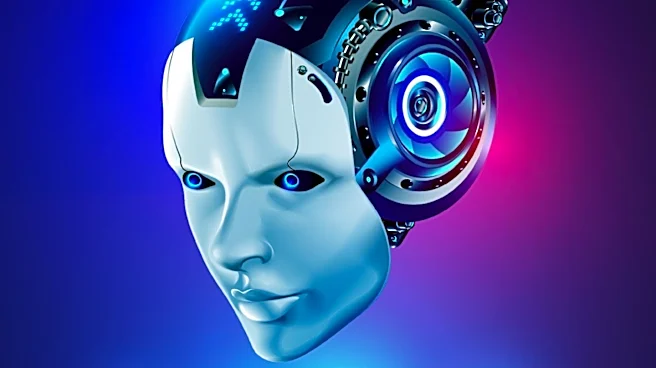
After some serious scares, Anthropic CEO Dario Amodei called on AI companies to slow down, set safety standards, and seek international cooperation in taming the latest technology beast. Fellow AI magnates Elon Musk and Sam Altman agree.
Today’s tech leaders aren’t modern-day Dr. Frankensteins, but they have created a beast that could turn on its creators and the rest of us. That same creation - not so much a beast as a constant, all-knowing companion - can also do great things for humanity. Can the bad be separated from the good?
There is God and the Devil, Heaven and Hell, Jekyll and Hyde, and good and bad in just about everything. That is the nature of our universe, and AI is no exception. Yet it acts with an amoral, non-human ruthlessness
that, as one tech leader warned, could kill us all.
Technology has wrought wonders on its journey since the first tech leader invented the wheel. It’s always changed things, mostly for the better, but not without collateral cultural damage.
In my almost eight decades on this planet, I’ve experienced a whole raft of breakthroughs. My first encounter with an electronic screen came in 1952, when my father proudly brought home a 17-inch, black-and-white DuMont television. When I first saw Howdy Doody, it felt like a miracle; images arrived through invisible waves from somewhere beyond our home. In our household, television quickly displaced radio as the center of family entertainment.
I witnessed the computer revolution in its entirety: using punch cards to feed mainframes, learning to program simple statistics, welcoming the dumb terminal, moving to dedicated word processors, and owning one of the first Apple IIs in my hometown. Later, graphical interfaces placed files into folders and commands into icons, democratizing computing and opening it to millions.
I welcomed BITNET, the forerunner of email, before the internet revolutionized everything. It is possible to imagine life without it in some dystopian "Mad Max" future, but short of an apocalypse, it is a permanent fixture of life on Earth. Then there’s the dark side - fittingly called the dark web - where an army of criminals uses scams to rob people of their money and dignity.
I welcomed social media, with its connections that were never possible before, linking family members separated by hundreds of miles. Yet it also connects networks of predators, spreading both good cheer and toxic hatred. It dominates the lives of young people in deeply unhealthy ways. Still, it’s here to stay; while regulation at the margins may be possible, it isn't going away.
Of course, these benefits have come at a cost. People often say things online they would never say face-to-face, as social media rewards outrage and impulsiveness. Families sit together in restaurants while each member stares into a separate screen. Children increasingly encounter the world through displays before they encounter it directly. Video meetings allow collaboration across continents, yet anyone who has spent hours on Zoom understands that a two-dimensional image cannot replace physical presence.
Technology is neither a savior nor a villain. It invariably makes life easier, more entertaining, or more efficient, sometimes all three, like when I ask Alexa to find the last movie starring Dolly Parton and play it on my 75-inch TV.
In this interconnected world, everything eventually relates to everything else. Every breakthrough creates countless consequences, some intended, but many more unexpected. The overarching challenge is to understand these consequences and manage their effects, while recognizing that absolute control is beyond our reach, especially in a free society.
The call for a slowdown is overdue. Achieving it in a competitive global economy will be next to impossible. However, genies rarely return to their bottles, and technology is no exception.
At the very least, we must approach these new tools with resolve and clear vision: protect children, maintain spaces where human interaction comes first, and continue teaching critical thinking rather than encouraging blind dependence on machines and large language models.
William Lyons is Professor Emeritus of Political Science and Associate Director of The Institute of American Civics at the Howard Baker School of Public Policy and Public Affairs at the University of Tennessee. He also served as Chief Policy Officer for Knoxville Mayors Bill Haslam, Daniel Brown and Madeline Rogero. The opinions expressed are those of the author and do not necessarily reflect the official policy or position of the Institute of American Civics or the University of Tennessee.
This article originally appeared on Knoxville News Sentinel: Can the AI genie be put back in the bottle? | Opinion