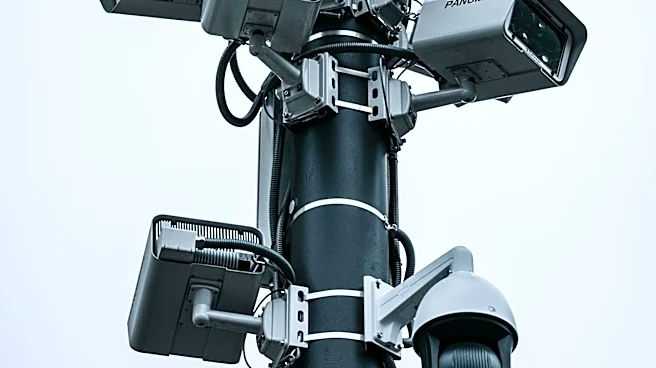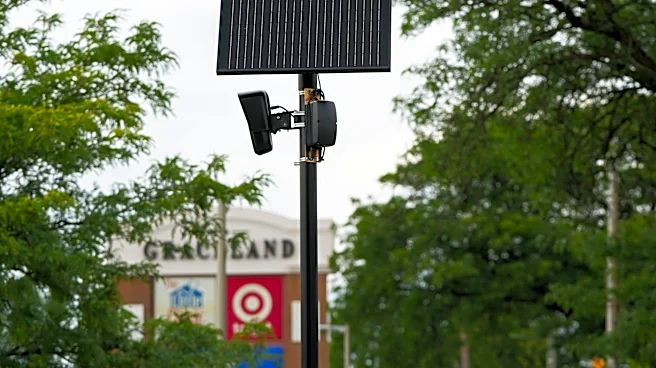







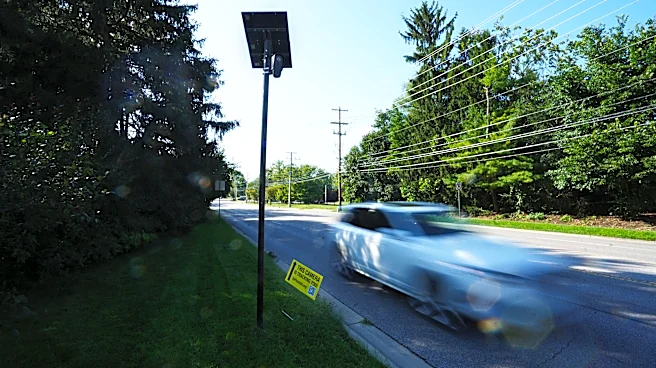

The Knox County Commission unanimously voted to ban fixed license plate readers, a blow to the sheriff's office that just spent $800,000 to order Flock Safety cameras to set up a real-time surveillance system.
Commissioner Adam Thompson fought the cameras and brought the ordinance, saying he believes they violate residents' civil liberties. Commissioner Larsen Jay signed onto the ordinance after criticizing the sheriff's office for not being transparent and added a provision that expressly prohibits surveillance centers in general, not just the cameras that supply the data.
"Knox County does not want to be watched by their government," Jay said. "It's not a perfect fix right now, but its our job to clean up somebody’s mess. This entire program
is poison fruit from a really rotten tree. We have to start at zero. I don't mind cutting checks back. There's so much more than fiscally a detriment to our county. This wasn't done in the right way."
No one from the sheriff's office attended the Aug. 31 commission meeting to defend Sheriff Tom Spangler's planned surveillance center. Spangler is fighting terminal cancer and other leadership positions are vacant because the department has been hobbled by a corruption scandal.
A chaotic informational meetingwith the Knox County Sheriff's Office last week didn't help, either. Department representatives who spoke did not have much of the basic information commissioners demanded about the cameras, protections around the data they produce and the contract with Flock.
The ordinance bans fixed license plate readers that can be used to track suspects – or anyone the sheriff's office employees are allowed to track under their own rules – as they move through the county. The sheriff's office purchased the cameras through a grant from the state, but didn't fully disclose their plans to commissioners or Mayor Glenn Jacobs.
Flock Safety has come under fire for not setting up enough protections in their nationwide system after police officers used the cameras to track women. KCSO does not have a public policy for how it will use the data the cameras collect, including who can use it to track cars or whether outside agencies can access Knox County data.
KCSO now has 143 Flock Safety license plate reader cameras, Capt. Tony Chamberlain said Aug. 24. He and KCSO procurement director Hugh Holt were repeatedly unable to provide specific details to commissioners as they questioned department leaders about their plans.
Under the ordinance, KCSO is required to remove the fixed license plate readers by Sept. 16, engineering and public works director Jim Snowden told Knox News. If they don't, county staff will do it for them.
"It felt that Flock and KCSO were terribly unprepared," said Tom Ruggles, a resident who regularly speaks out about police accountability issues. "If it were me, I'd feel it was an outright form of disrespect or an indication of the level of dysfunction in KCSO right now. There's clearly a lot of misconduct happening here. You all have the chance today to reverse this today. Do not pass this mess onto the folks coming behind you."
Banning fixed license plate readers
The ordinance bans Knox County from purchasing, leasing and installing automated license plate reader systems, including Flock cameras. It also bans automatized license plate readers on county-owned property, rights-of-way, buildings, buildings, traffic infrastructure and utility poles.
Jacobs, whose office oversees county rights of way, told county engineering and public works staffers to remove cameras that were still up.
License plate readers attached to KCSO squad cars are allowed
The ordinance carves out an exception for license plate readers attached to sheriff's office vehicles as long as a deputy is present in or operating the vehicle and the camera doesn't collect information while the vehicle is unattended.
Limiting drones
The ordinance caps the number of drones KCSO can own, lease and operate at 10.
Drones can be used for:
- Search and rescue
- Emergency response
- Natural disasters
- Hazardous-material incidents
- Fire investigations
- Tactical incidents involving imminent threats to life
- Crime-scene documentation
- Missing or endangered persons cases
- Lawful criminal investigations
- Other public-safety missions authorized by state or federal law
Drones can't be used for:
- Generalized or suspicionless surveillance
- Continuous monitoring of individuals or private property without legal authority
- Monitoring political activity, religious activity, peaceful assemblies or other constitutionally protected activity without individualized legal justification
- Persistent intelligence-gathering surveillance unrelated to a criminal investigation or emergency response
- Facial recognition or biometric identification technology unless specifically authorized by state or federal law
Questions over whether Flock cameras were legally procured
Knox County Commissioners made their decision a week after sales representatives from Flock Safety attempted to convince commissioners not to ban their fixed license plate readers. As Flock staffers defended against jeers and heckling from spectators, commissioners grew exasperated at KCSO officials' inability to answer their questions.
Spangler planned to have a surveillance center operating in August but agreed he would leave it up to his successor, Brent Gibson. Gibson has not said whether he plans to follow through on Spangler's efforts, which the ordinance prevents.
Jacobs, whose term ends Sept. 1, further complicated commissioners' decision Aug. 12 when he and Law Director David Buuck said the sheriff's office is operating the Flock cameras without an agreement.
KCSO has used Flock license plate readers since 2020, when it bought five through a service agreement. The contract allowed KCSO to build on the purchase in small increments, which kept the price under a threshold that requires approval from Jacobs or the county commission.
Over time, according to an Aug. 12 letter from Jacobs to Flock, KCSO spent $274,720 on its agreement, which is over the threshold required to receive county approval. Jacobs told the company its current contract is invalid. KCSO procurement director Hugh Holt told commissioners when the previous agreement expired, the cameras "were rolled into the current agreement." The agreement Holt referenced is not a service agreement, he admitted, which is what Jacobs and the county think it needs to operate them.
Allie Feinberg is the politics reporter for Knox News. Email: allie.feinberg@knoxnews.com; Reddit: u/KnoxNewsAllie
This article originally appeared on Knoxville News Sentinel: Knox County bans Flock cameras amid surveillance backlash