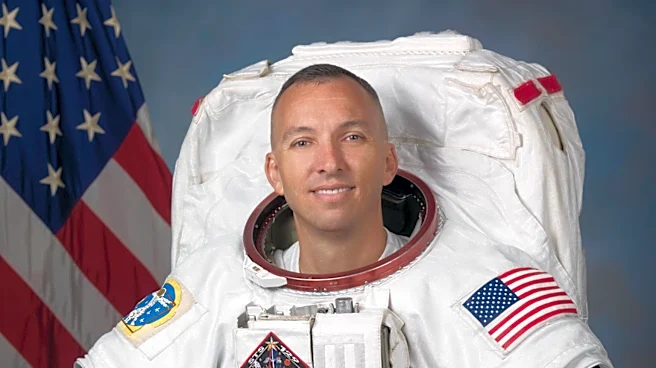




Astronaut Randy Bresnik is a University of Tennessee alumnus even though he only spent one day on campus. His postsecondary education as a Volunteer played a role in landing the position of commander of the moon mission test flight Artemis III.
Bresnik, 58, is leading the four-person crew for Artemis III, a high-stakes 2027 mission designed to test the systems needed to return humans to the moon.
He's one of 10 UT System graduates who have been to space, as Bresnik graduated from UT's Tickle College of Engineering in 2002 with a master's degree in aviation systems from the University of Tennessee Space Institute. He completed a distance learning program through the satellite campus in Tullahoma, which offers engineering degree programs, according
to UT.
Prior to NASA, Bresnik gained experiences in the U.S. Marine Corps, trained as a naval aviator, deployed to the Western Pacific, attended the Marine Corps Weapons and Tactics Instructors Course, attended Naval Fighter Weapons School (better known as Top Gun) and flew in flight tests.
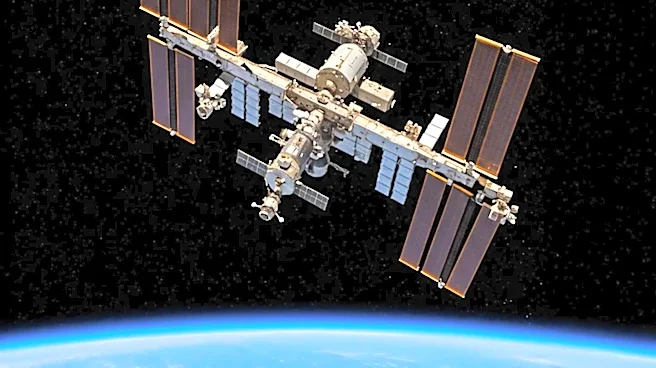
Since 2004, Bresnik has completed space flights, was the lead on the closeout crew for the final shuttle mission, has served as a lead astronaut for NASA's partnership with SpaceX and has served on missions to the International Space Station, according to the civil space program.
Now, he's preparing to lead NASA astronauts Andre Douglas and Frank Rubio as mission specialists, as well as European Space Agency astronaut Luca Parmitano as pilot, for the next phase in NASA's Artemis program. The project aims to return humans to the moon for the first time since the Apollo era and build a permanent lunar base where they can live and work. The mission, known as Artemis III, will be the second crewed test flight preceding a human moon landing attempt as early as 2028.
Knox News spoke with Bresnik in a short, exclusive interview as he continues his training leading up to next year's mission.
This Q&A has been lightly edited for grammar and clarity.
Knox News: Why did you attend the University of Tennessee Space Institute?
Randy Bresnik: It was neat because I was finishing up the United States Naval Test Pilot School and the University of Tennessee Space Institute was offering some credits for that course. And so it allowed me to pursue my master's in the year after I graduated from test pilot school and get that completed, but I was still in the school mode, the studying mode from the year of test pilot school.
It worked out great. I was able to take several courses, write my thesis on a project that I was working as a test pilot and then come down to Knoxville for a short period − 24 hours − defend my thesis, and then get back to work up in Patuxent River, Maryland.
Knox News: How was your University of Tennessee experience, and how did it prepare you for your NASA career?
Bresnik: Certainly, like any of the education I've been fortunate to get in my career, it's given me the knowledge and experience to be able to go farther than what I had been doing before, and each step built on the other.
Beyond test pilot school, getting the master's, applying all that knowledge about aviation systems within as a test pilot was certainly hugely helpful to getting accepted in NASA, and then since I've been here, working on all these developmental projects and getting NASA to the next giant leap, the next great step, has been the benefit that the nation gets from what they've invested in me to be able to get this education.
Knox News: How did you feel when you were assigned to command Artemis III?
Bresnik: As you can imagine, I was certainly excited, humbled, just very thankful all at once. You work here and you contribute, you pay it forward, you support the crews that are in training in the hopes that that experience and effort you put forward will allow you to be assigned a space mission.
And so I'm just, again, very thankful to be assigned to this mission, assigned with the crew that I'll be flying with and doing that next step getting us that much closer to putting humans again on the moon, this time for hopefully a forever period where we continue to be, and start and continue to be, a species that has more than one just planet to live on.
Knox News: How will you represent the U.S. – as well as other parts of the world with your crew – through this critical mission?
Bresnik: I think the neat part is here on Earth, there's multiple nations that are vying to go to the moon, that are looking to do human and space exploration. And it is great to see that there is complete unity of purpose, and the goal and the drive within the United States to remain the leaders in that and be the first ones to return to the moon, to build a sustained presence there, and then use that as a steppingstone to further exploration. So that's super important.
The most important Artemis mission we've said is the next one, because we have to do the next one to be able to get to the follow up one. And so to be able to be a part of that crew is just exceptionally gratifying. It's an awesome responsibility, but I know that myself and our crew, we’re up for it.
Knox News: Why is this mission important?
Bresnik: Well, certainly we have shown that we've got two flights on our SLS (Space Launch System) rocket. We've got two flights on Orion, but only one of them crewed. So we've shown that Orion can work in deep space. It can give the life-sustaining air, water, food and everything that a crew needs to be able to live and operate in space and deep space. The communication systems work, the navigations, the propulsion systems.
Now, it is doing more complex, challenging tasks of actually now taking Orion and coordinating with another launch of another heavy lift vehicle to get a lander up in space that we can actually do the rendezvous and prox ops (proximity operations) work and navigate together in space: get to the right orbit, get to the right inclination, get to the right speed, the altitude and then come softly dock our docking systems together so we can perform mated operation.
We talked about one provider, and then our mission is to finish with one and then have another HLS (Human Landing System) provider launch theirs and do the same thing again with dissimilar vehicles − three super heavy launch vehicles launching their payloads to space − and that whole operational choreography of these launches happening when they need to happen.
That would help show how we can go ahead on the next mission, Artemis IV, get a lunar lander in lunar orbit for the Artemis IV crew to dock with there, doing the rendezvous and prox ops this time at the moon − but we've already showed it can be done here at Earth − and then be able to take that lander and go down to the lunar surface and have that be the new elements and the only things we haven’t proven yet.
Knox News: What is your perspective on playing an important role in a multistage lunar mission?
Bresnik: I mean, you don't dwell on the importance of the role. There's a task that has to be done. There's risk we're buying down for follow-on missions. And I'm just fortunate enough to be one of the crew members that is going to be able to help with our crew of four to be able to do that. But we're only four people doing that, the four crew that are in the vehicle.
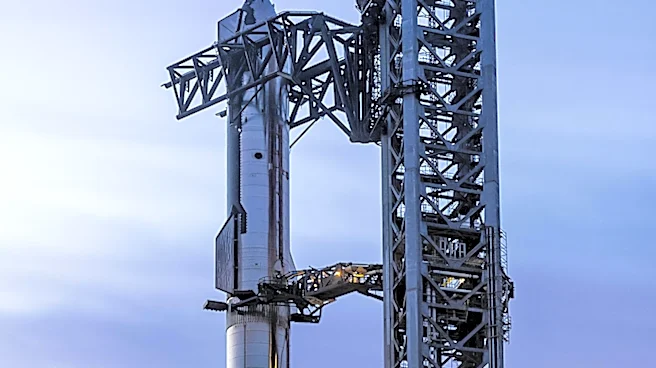
But it takes a cast of thousands here on Earth to allow us to do our part in space. And so whether it is the folks that are training us right now here at the Johnson Space Center, or it's the teams that are at Kennedy Space Center, for example, that are assembling our rocket and assembling our service module and our crew module. Or it's the folks that are writing software in Denver, or it's the Blue Origin company building their Earth orbit rendezvous vehicle or SpaceX down in Starbase building their Starship for us.
All those teams have to do all their parts to be able to put the four humans in place to actually make those particular mission elements happen. Nobody's more important than the other. None of it happens without everybody doing their part. We just have to be the one part that’s a little more visible than everybody else.
Knox News: How does it feel to be bringing humanity one step closer to landing on the moon again since the Apollo era?
Bresnik: I mean, it feels great. It's just as motivating for us that are wearing blue suits as the people out there that appreciate space flight that find it exhilarating, find it enchanting, find it just mesmerizing for the things that we've accomplished in space flight so far, and to be a part of what's coming next is just, it's a dream come true. And as a test pilot, being able to do new things with new spacecraft … it doesn't get any better than that.
I’d just like to say thanks for the interest. I'd like to thank all the people there in Knoxville that support our space program or participate in our space program. We're fortunate to have a country that values space flight and space exploration and wants to lead and put America first back on the moon and be the ones to lead all of humanity into the future.

Keenan Thomas is the higher education reporter for Knox News. Email: keenan.thomas@knoxnews.com.
Support strong local journalism and unlock premium perks at subscribe.knoxnews.com.
Get The T: All the news for you about UT in one spot every week
Learn about the latest from the state’s flagship campus. Our weekly email newsletter is tailored for alums, UT staffers, students, parents and community members.
This article originally appeared on Knoxville News Sentinel: UT alum astronaut Randy Bresnik: Investing in students benefits the nation | Exclusive