







It may seem obvious that every execution requires corrections employees to participate in a state killing. But the potentially devastating impacts of this work are largely ignored. My research explores the reality: participating in executions can cause lasting psychological harm.
Execution participants have reported nightmares, anxiety, depression, substance abuse and symptoms consistent with post-traumatic stress disorder. They have described emotional numbness, shame, guilt, and doubt. Some executioners have died by suicide. Botched executions, in which suffering is visible and prolonged, are especially traumatic. Employees cannot avoid confronting the pain they are helping the state inflict.
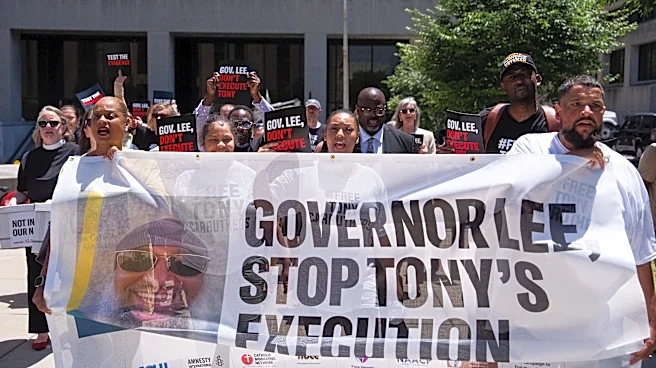
Tennessee’s horrifyingly bungled attempt to executeTony
Carruthers on May 21 illustrates that heightened risk. Witnesses reported that the IV team spent about 30 minutes trying to place the required second IV in Carruthers’ arm, hand and foot. A physician then attempted a central line, an invasive procedure involving a deep vein, which he had not performed in more than a decade. The execution devolved into a 90-minute ordeal of needles, blood, and pain. Gov. Bill Lee finally stopped the execution and issued a one-year reprieve.
Carruthers suffered the most direct harm. But corrections employees had to restrain him, assist the IV team, and follow the protocol as it collapsed around them.
The hidden workforce behind executions
In researching the people who perform the “dirty work” of executions, I found that their experiences receive remarkably little attention. Most people do not want to think about who carries out executions. Courts scrutinize how executions affect the condemned. Legislatures debate execution methods, costs and delays. But the harm inflicted on the public employees who carry out death sentences remains largely unexplored in litigation and legislative debate.
The public often imagines a single volunteer administering lethal drugs. Someone who chose the work and can walk away. That picture is incomplete.
Execution teams include officers who conduct a death watch, escort and strap down the condemned person, prepare equipment, manage witnesses, communicate with families, and yes, carry out executions. Some may be volunteers, but not always. Team members are frequently recruited or assigned execution-related responsibilities as part of their jobs. An invitation to join an execution team can signal competence and may affect career advancement. Former executioners have alleged that they faced demotion after asking to stop because of serious psychological consequences. Even voluntary participation does not prevent harm.
These problems occur nationwide. In 2023, Oklahoma corrections officials sought more time between executions because the pace was harming staff mental health and increasing the risk of error.
These are public servants carrying out a policy the rest of us authorized. We cannot outsource the killing and the responsibility for what it does to them. Yet states hide execution work behind secrecy laws, making it harder for workers to speak openly, seek support or hold officials accountable.
Preventing the gravest harms to public employees
No procedure can eliminate all the potential harm of execution work. But states can reduce the gravest risk of trauma by reviewing failures honestly, and correcting deficiencies before another execution.
Tennessee is now preparing for its first execution after what happened to Tony Carruthers. Darrell Hines is scheduled to die on Aug. 13.
Nine Republican Tennessee state senators recently asked Gov. Lee to commission an independent review of the Carruthers execution and correct its serious deficiencies. A Republican state representative sought answers from the Department of Correction as well. These lawmakers support capital punishment. They recognize, however, that any government that insists on executions owes its employees competence, transparency and accountability. Gov. Lee should welcome such an opportunity.
So far, the Tennessee Department of Correction has refused to provide any information about what went wrong in Carruthers’s execution, or the steps it is taking to prevent those problems from recurring.
Corrections officers are not disposable instruments of state policy. If Tennessee proceeds without correcting what went wrong, another botched execution will not be an unforeseen accident. It will be a choice. And its victims will include the people ordered to carry it out in our names.
Alexandra L. Klein is an associate professor of law at Washington and Lee University School of Law whose research focuses on the death penalty and criminal procedure.
This article originally appeared on Knoxville News Sentinel: Botched executions harm more than the condemned man | Opinion