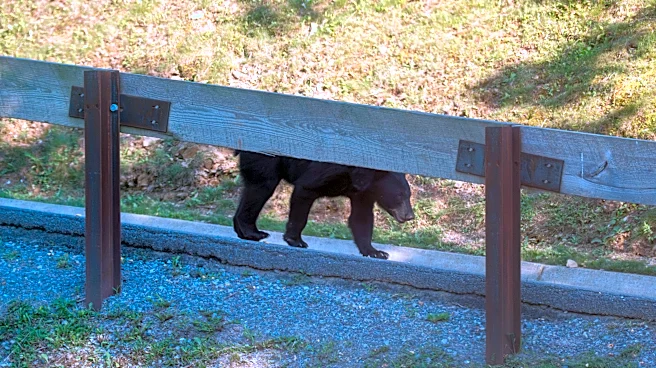






You don’t need to be in Great Smoky Mountains National Park to spot a bear, especially lately. They’re trotting around Gatlinburg parking lots, ripping sunroof windows off cars and even getting locked in motel bathrooms.
The wild scenes can make for an exciting sight and an easy viral clip on TikTok or Facebook. But it gets much less fun when a bear gets too close.
The national park has reported instances this year of bears approaching and chasing people, including one in which a bear bit a person who had entered a closed area. The increased bear activity and encounters have prompted temporary closures of trails, shelters and areas of the park.
“Don't get me wrong, (the Smokies region has) a lot of bears,” Greg Grieco, executive director of Appalachian
Bear Rescue, told Knox News. “But if you were to ask the bears, I think they'd tell you, ‘Man, someone's got to do something about all these people.’”
And that’s the crux of one of the biggest conundrums in the Smokies.
Millions of people visit every year for the mountain views, unique attractions and, yes, bears. But as tourism and development continue to grow, people and bears are increasingly sharing the same space.
Yes, there are a lot of bears and a lot of people
Sevier County has reported the most bear-related calls in Tennessee since 2020, with Blount County being the second, according to the Tennessee Wildlife Resources Agency. Knox County has seen a noticeable rise in reports, becoming one of the state's top 10 counties for bear calls in 2023 and 2025.
TWRA experts say several factors contribute to the volume of bear reports: bear populations have recovered from historic lows, tourism and human populations have grown, more people are reporting sightings and concerns, and social media and remote cameras have made bear activity much more visible.
There are about 6,000 black bears across the state, with roughly 1,900 of them in the national park. And Sevier County welcomes over 20 million human visitors a year, according to TWRA.
“There are few other places in the country with this many people and this many bears,” TWRA spokesperson Jason Harmon said.
Although the agency had not finalized 2026 year-to-date numbers, Harmon said it “has been an especially busy year, with a high volume of calls and bold bear behavior across multiple counties.”
States across the country are experiencing the same increased levels of conflicts, he added.
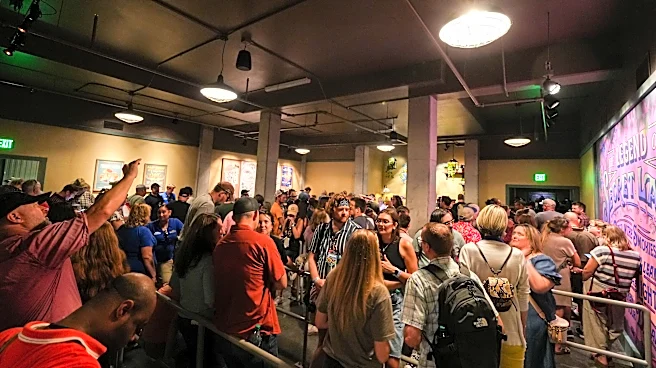
Gatlinburg has a permanent population of about 3,600 people. But every week, tens of thousandsof visitors arrive.
“When you've got 13, 14 million visitors a year and you do that on a per-week basis, how are you educating that many people and making sure they're aware?” Gatlinburg spokesperson Seth Butler said.
The city and participating partners have spent years trying to teach visitors bear safety through the Smokies BearWise Task Force, a regional effort of the national BearWise program that helps people live responsibly with bears. Visitors have access to BearWise information on refrigerator magnets in rental properties, at hotel front desks, restaurants, attractions and businesses.
Butler cringes when he sees viral bear videos. But he said those encounters tend to be outliers and examples of people not properly following BearWise guidelines or getting too close to a bear to capture a viral moment.
“Folks want to come to Gatlinburg. They want to see a bear. We recognize that,” Butler said. “You're going to see a bear. It's how do you do it responsibly.”
Bears weigh risk and reward
Most bears aren’t looking for trouble. They’re looking for food.
About 80% of human-bear conflicts in Tennessee are linked to unsecured trash or birdseed, pet food and grills, according to TWRA. The rest can be linked to other unsecured attractants that cause bears to become habituated and food-conditioned over time, leading to bolder behavior.
Bears are really good at finding food, but they don't simply smell food and blindly charge toward it, Grieco explained.
“They make calculated decisions based on if this is safe or not for me,” he said. “They weigh risk and reward.”
A bear might smell food in a car or smell barbecue on a grill, and decide it’s not worth trying to get a taste if people are congregated there. That changes, though, if a bear repeatedly finds food around people.
“When they start to see us as a very, very low risk and a very low threat to come and break into our houses, our cars, and steal our food, that's when we end up with these really bad conflicts,” Grieco said.
“And it takes a lot for a bear to get to that point,” Grieco added. “They're not born that way. They don't just come out of the woods that way.”
Bear-resistant dumpsters helped, then the challenge shifted
Gatlinburg has spent about $3 million since late 2023 on more than 480 animal-resistant dumpsters that the city owns and maintains. Butler said the program has been a game-changer, eliminating an easy human-food source.
“One of the wildlife officers with TWRA told us, just a couple weeks ago he saw a bear, it was walking toward the dumpster, didn't even look at the dumpster, just kept on walking, because they know that they can't get in them,” Butler said.
But cutting off one food source doesn’t mean bears stop looking for food in other places, such as vehicles.
“They're conditioned,” Mountain Laurel Chalets owner Tom Goodwin said. “They know exactly where to go in the car. They go in, get their food, and they leave.”
Mountain Laurel Chalets has managed cabins in the Smokies for over 50 years. Goodwin has noticed a recent increase in human-bear encounters. Businesses are having to adjust BearWise education efforts accordingly to keep visitors safe.
“We're having to think of more creative ways to educate and to help people listen because the bottom line is people are going on vacation,” Goodwin said. “They turn off listening. They turn off responsibility. They're on vacation. They're carefree and they're forgetful.”
Leaving a car unlocked while carrying luggage inside or forgetting food in the back seat or a snack pack in a console are tiny mistakes by someone with vacation-brain, but those mistakes can have major consequences.
Goodwin even recently saw a DoorDash delivery of dozens of grocery bags left on a cabin doorstep while the guests were two hours from arriving. Fortunately, he saw the delivery in time and moved the food indoors.
People often think of bears in two extremes, Grieco noted.
“The truth is in the middle,” he said. “Bears are cute … but they're also not our pets. And they're also not vicious man-eaters.”
The goal, Grieco said, is to preserve the thing people love about seeing bears without turning that fascination into something dangerous.
“People love the bears,” Goodwin added, “but we don't want humans to be a threat to the bears.”
Bear safety can't replace habitats
BearWise practices such as securing trash, locking doors, and not approaching or feeding bears make a measurable difference. But those efforts don’t really tackle another issue in a region dependent on nature-based tourism, Grieco argues.
“None of those things give a bear back its habitat,” Grieco said.
Outside of the national park, he said, bears have fewer places where they can just be bears and live without crossing roads, wandering through backyards or encountering people.
“It's hard to use the word ‘coexisting,’ because it seems very unfair to the bear to call what we're doing right now coexisting,” Grieco said. “It seems like we're tolerating them to an extent and then once they cross our imaginary lines … we run out of patience for them real quick.”
One Mountain Laurel employee has lived in Gatlinburg for over 30 years and used to see one to three bears near her home per season, Goodwin noted. Now, she’s “seeing them all the time” as they move further out into surrounding areas, looking for food.
Goodwin and Grieco say the region is reaching a point where future development should be carefully planned and regulated.
“I think it's oversaturated, overgrown, overdeveloped,” Goodwin said. “And I think it would be beneficial to have some restrictions on land development and home growth and development.”
That doesn't mean Gatlinburg should get out of the tourism business, though. “Let’s have some balance and let’s have some respect for the resources here, what’s actually bringing people here,” Grieco said.
Moving bears isn’t the answer
As more people escape to the Smokies, can bears involved in human-caused conflicts be relocated? TWRA says that’s not the best long-term solution.
Researchers tracked 50 black bears relocated from Great Smoky Mountains National Park to designated sites in the Cherokee National Forest between 2015 and 2023.
The survival rate was about 10% for those bears, according to TWRA. Between 40% and 60% continued causing conflicts after relocation, and surviving adult bears had more than a 60% chance of returning to their original home range.
Removing one bear doesn't remove the attraction that brought it there in the first place. Plus, other bears might already be using the same food source. Preventing conflicts at the source remains the most reliable approach, according to TWRA research.
“Similar to the way that people who live in areas with regular hurricanes have to build and prepare their houses and properties differently, people who live in bear country must secure attractants and follow safety guidelines to be successful and minimize property damage and safety risks,” TWRA Black Bear Program Coordinator Dan Gibbs explained.
So what does coexistence with bears actually look like?
The Smokies are bear country. The thousands of black bears are not going away. And millions of visitors are going to continue flocking to the national park and planning trips to Dollywood and other attractions – where bears can be found, too, like the one that entered a concession stand at Anakeesta Mountaintop Adventure Park in 2024.
“It's always been a place where wildlife and humans can coexist,” Butler said. “But everybody's got to do their part from the human perspective of being able to coexist.”
That responsibility, for cities, means communities investing in animal-resistant dumpsters, businesses and lodging operators reminding new – and repeat – visitors to follow BearWise guidelines, and TWRA continuing to focus on preventing conflicts rather than simply moving bears after something happens.
Responsibility for visitors and residents can be as simple as locking car doors, securing trash and giving a bear some space.
“We have to decide that we value these bears and their habitat,” Grieco said.
“Bears are less of a threat to us,” Goodwin said. “It's just we want to create an environment where the humans aren't a threat to the bears.”
Devarrick Turner is a trending news reporter. Email devarrick.turner@knoxnews.com.
Support strong local journalism by subscribing at knoxnews.com/subscribe.
This article originally appeared on Knoxville News Sentinel: More bears, more tourists: The challenge of sharing the Smokies