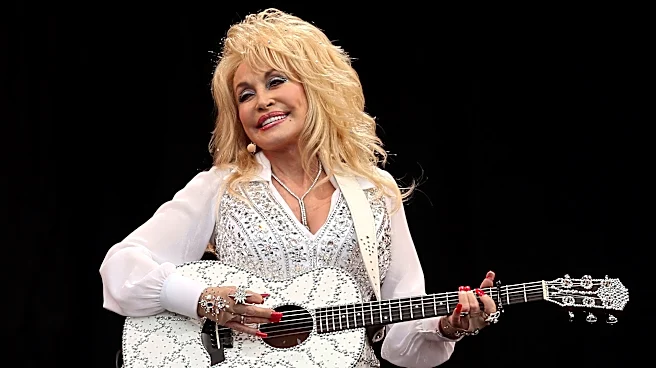



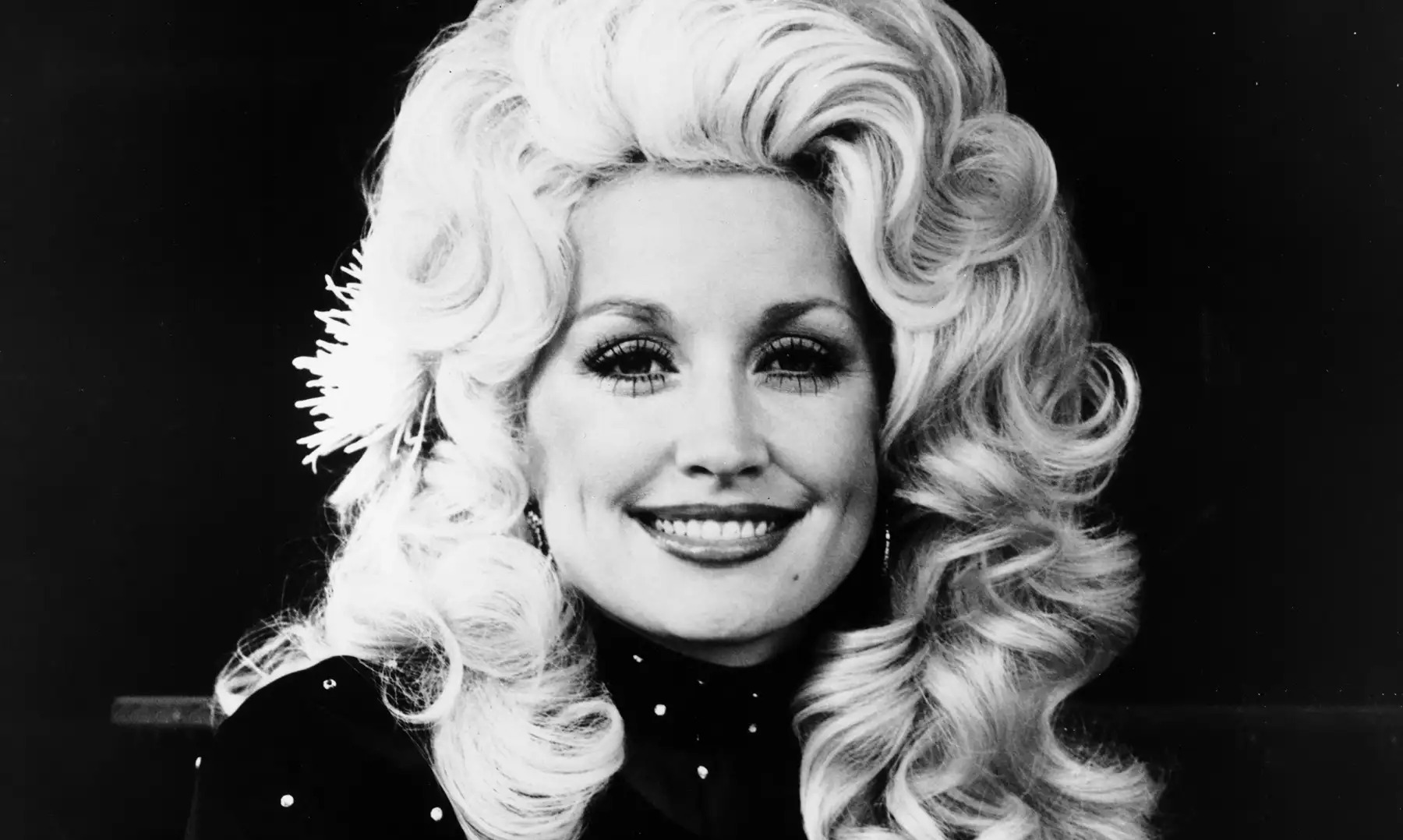
Dolly Parton and the University of Tennessee at Knoxville have history as the state’s flagship university has honored one of East Tennessee’s most influential figures in more ways than one before her death on Aug. 25.
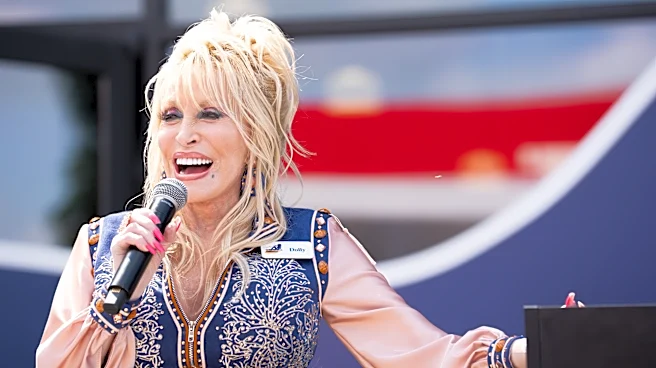
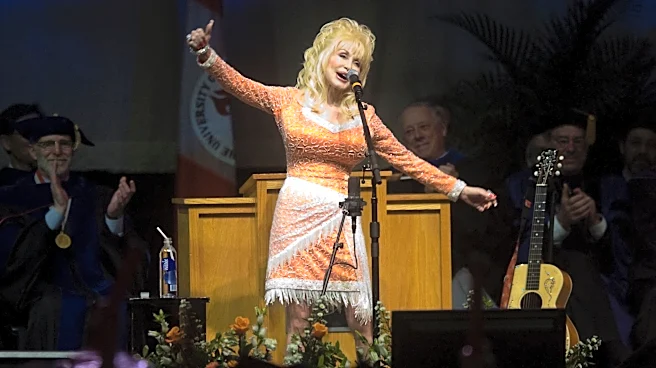
In 2009, the university tapped Parton to deliver the College of Arts and Sciences commencement speech, using the opportunity to give her an honorary degree. It was a moment celebrating her life, her impeccable songwriting and her philanthropic work with the Imagination Library.
The nonprofit organization has given millions of books to children across the United States, and UT has immortalized it in another way through journalism professor Nick Geidner, who's also the director of The Media Center and Land Grant Films.
He wanted to
tell the story of the Imagination Library, pulling from his own experiences signing up his child up for the library and seeing the joy it brought.
Thus, his documentary “The Library That Dolly Built” began production.
“From my standpoint, it was so fascinating because this was a thing — especially in our county at that point ... 80% of kids got Imagination Library — everyone that I've talked to knew of it, but most people didn't know like (the specific details) like how the books get picked,” Geidner told Knox News. “A lot of people didn't know that it was outside of Tennessee.”
Dolly Parton, Imagination Library documentary portray commitment to community
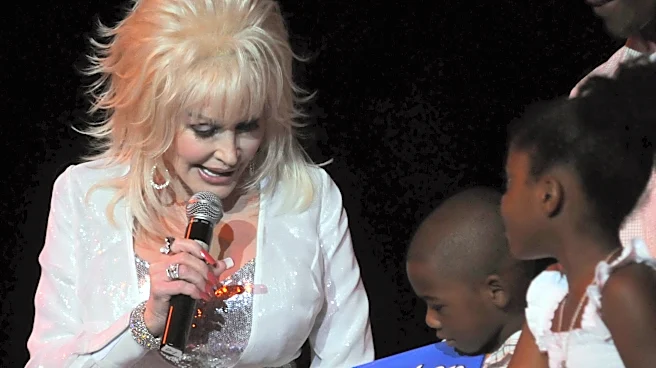
Geidner and his student crew gathered archived materials and conducted interviews, including when Parton presented the nonprofit's 100 millionth book to the Library of Congress. It was a monumental effort as the first feature-length project for Land Grant Films, and Geidner said the film, Parton and the Imagination Library are "proof that you can do big, ridiculous, audacious things that help your community."
The film was set to premiere in New York alongside a 330-movie theater rollout in April 2020, but that effort was cancelled due to the COVID-19 pandemic. Geidner worked with the library, Sony Pictures and Facebook to host an online premiere on Facebook viewed by more than a million people, raising more than $250,000.
The film has had a shelf life as the nonprofit's chapters across the country have requested to show the documentary in theaters and at events educating people, driving national interest and raising more money for the Imagination Library. Geidner estimates that this documentary "passion project" has resulted in 150,000 more books for kids.
Dolly Parton's America and the viral University of Tennessee class
Before the documentary, UT had an honors class in 2017 called “Dolly’s America: From Sevierville to the World” that used Parton as a gateway for Appalachian history.
The class went viral, and retired professor Lynn Sacco was in the limelight teaching the class. Sacco became enamored with Parton during her honorary degree ceremony, seeing Parton’s genuineness and realizing she was the perfect person on whom to center the class.
“Dolly Parton’s America is a place that values everybody, that is not based on ticking off boxes like ‘Did I see you in your pew on Sunday?’” Sacco told the Torchbearer magazine in 2020. “But it’s more based on generally a life that’s loving, caring, appreciative of others, generous, hardworking - and happy.”
The class inspired a podcast, "Dolly Parton's America," hosted by Jad Abumrad and Shima Oliaee for WNYC Studios. The nine-episode podcast featured Sacco and some of her students in a couple episodes.
The class isn’t being taught at UT as of 2026, but someone could pick up the reins and bring it back - someone like newly hired Appalachian historian and associate professor Jessie Wilkerson or history professor Tore Olsson - Olsson told Knox News.
History professor uncovers Dolly Parton's global reach
Though known for his video game history classes, Olsson is familiar with Parton through another class he taught called “County Music USA: An Introduction to Historical Thinking" and a book he's writing about country music’s relationship to the world.
He used country music in his class to discuss aspects of American history including the music industry, racial politics and the importance of region. Parton’s music made an appearance more than once, emphasizing her songwriting abilities, blending of genres and her themes of class.
The thematic resonance of her music and country music as a whole extends outside the rural, suburban and urban areas of the U.S. as listeners from around the world have become huge fans of the genre "not just in Europe, but in many other continents as well" specifically Africa, Olsson said. His book will focus on how country music can act as a bridge between rural America and the world, but his work took a backseat because of the COVID-19 pandemic.
Some research he completed before the pandemic focused on the U.S. military's role in promoting country music through the Voice of America. The radio station broadcasts pro-U.S. news and American music, including a country music program started in 1975. Olsson talked to the original hosts and found 1,404 letters written by international listeners in 1988 for a contest sharing why country music resonated with them.
Nigerian listeners sent the most letters, with three artists prominently featured: Don Williams, Kenny Rogers and Dolly Parton. Parton’s song “Coat of Many Colors” - a complicated song about poverty, opportunity and mindset - was mentioned the most in these letters.
“Her work is pop culture that has multiple meanings, and that can be used as a hook to dive into many questions, whether it's issues of gender or class or politics or race in Appalachia, the South and beyond,” Olsson said.
Appalachian expert will use Dolly Parton in her classes
While Olsson's class focused on a broader view of American history, Appalachian expert Jessie Wilkerson narrows her focus on the region extending from the southeast United States through the northeast. She has written about her relationship to the country music superstar and taught about Parton in previous classes outside of UT.
At UT, she taught Appalachian history to East Tennessean students in her fall 2025 semester course while incorporating Parton's history, work and philanthropy to study large themes of U.S. history like "the acceleration of women’s rights and debates about race and sexuality to deindustrialization in Tennessee and the place of the Mountain South in American,” Wilkerson said in an email response.
She plays Appalachian music for her students to analyze, and played one of her favorite Dolly songs, “My Tennessee Mountain Home,” to talk about class and nostalgia for a discussion on how selling nostalgia is a primary aspect of regional tourism.
Wilkerson is always thinking and researching women’s history, Appalachia and the south, and Dolly comes up a lot given her “trailblazing career” in country music. She highlighted a few ways Parton has been a force for change including singing about working women in her song “9 to 5,", supporting the LGBTQ+ community and donating to COVID-19 vaccine development.
But Wilkerson won’t shy away from the image of Appalachia that Parton created, saying “the actual history of Appalachia is much more fraught” compared to Parton’s “gauzy” yet “non-controversial” depiction while becoming a major player in the local economy.
Dolly Parton's music 'stands on its own' in music courses
While these professors have focused more on Parton as a cultural figure, musicology professor Sean McCollough talks more about Parton’s music and its importance to the thousands of students he teaches each year, predominantly in his "Music of Appalachia" and "History of County Music" classes.
McCollough cuts off his Appalachia class around the 1960s with an exception for Parton.

“She's just continued to honor where she's from in what she says, what she does, what she sings and I think that's a notable thing about her,” he said. “She’s given back to her community. She doesn't shy away from who she is or where she’s from.”
Parton shows up throughout his country music class, which launched in 2025, because of how she matched the ebbs and flows of the last 60 years of country music. She brilliantly moved between genres and "stepped up" when the moment called for it, McCollough said.
Parton’s sense of place and her eternal songwriting infused her music with staying power and made her an unforgettable musician worthy of focus within McCollough’s classes, above her business ventures and philanthropic prominence.
“Her music stands on its own beyond that,” he said.
Keenan Thomas is the higher education reporter for Knox News. Email keenan.thomas@knoxnews.com.
Support strong local journalism by subscribing to subscribe.knoxnews.com.
This article originally appeared on Knoxville News Sentinel: How University of Tennessee teaches about Dolly Parton's music, life