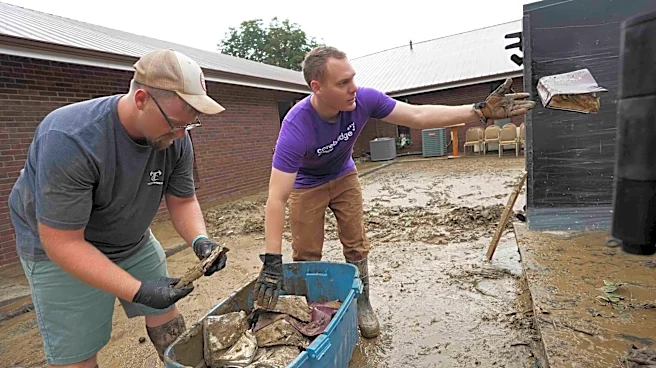







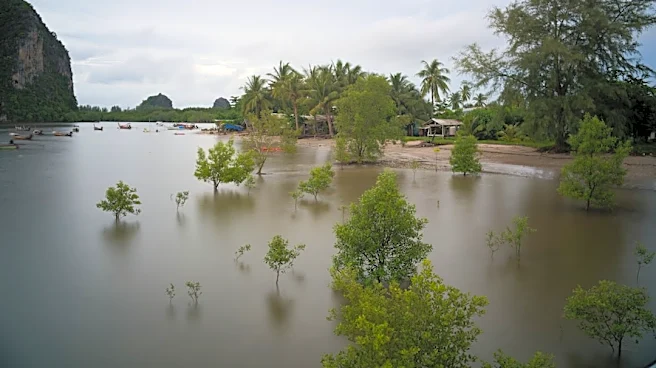
On Sept. 27, 2024, eight counties in East Tennessee were engulfed by floodwaters caused by Hurricane Helene. Homes and businesses were destroyed by swollen rivers, communities were cut off by washed-out roads and bridges, a major artery for travel between Tennessee and North Carolina was shut down, and 18 people died as a result of the storm.
Two years later, the region is still working to recover. Here's a look at how communities are still recovering and what was learned in the aftermath of the storm.
Those who died during Helene flooding
Most of the 18 East Tennessee deaths from Hurricane Helene were related to the historic flooding of the Nolichucky River, which funnels from the mountains and snakes into Unicoi County and beyond. But there were deaths from other rising streams
and other impacts from the storm, like in Knox County, where a woman died days after a storm-related power outage ended her dialysis treatment.
The final victim to be recovered wasn't found until nearly two years after the storm.
The state never released a list of names for those who died. Using a variety of sources, including talking to families and requesting autopsy reports, Knox News confirmed the names of 14 of the 18 people who died.
Washington County
- Steven Cloyd
- Nancy Tucker
- Jimmy Tucker
- Jerry Hunter
Greene County
- Boone McCrary
Cocke County
- Mike Obrist
- Jean Obrist
Unicoi County
- Sibrina Barnett
- Monica Hernandez
- Bertha Mendoza
- Johnny Peterson
- Rosa Maria Andrade Reynoso
- Lidia Verdugo
Knox County
- Kathy Ailor
Death totals by county
- Two in Cocke County
- One in Greene County
- One in Knox County
- One in Johnson County
- Nine in Unicoi County
- Four in Washington County
Tyler Whetstone
Could Tennessee face the effects of another hurricane like Helene?
Two years ago, Hurricane Helene made landfall and unleashed calamitous flooding in East Tennessee and western North Carolina. Could another historic storm like that make its way to the Volunteer State?
That's unlikely in 2026, at least. Experts correctly predicted the Atlantic Ocean could experience up to three major hurricanes between June 1 and Nov. 30. As of late September, no major hurricanes have materialized. There have only been five named tropical storms.
Colorado State University researchers predict there's a 16% chance after Aug. 4 (down from 32% in April) for at least one major hurricane to make landfall in the continental U.S., with a 9% chance along the Gulf Coast and Florida Panhandle, and a 7% chance along the East Coast.
So far, 2026 has been a historic season in that it's seen below average hurricane production based on a 30-year average, the National Oceanic and Atmospheric Administration reports. An average hurricane season, per data between 1991 and 2020, expects 14 named storms, seven hurricanes and three major hurricanes.
Caitlyn Meisner
I-40 repairs will continue for years
The mammoth effort to restore the eastbound lanes of the more than five-mile stretch along Interstate 40 in North Carolina damaged by Helene’s floodwaters has made some tangible headway.
But years of work remain - stretching into 2029 - for the hundreds of workers tasked with building the 30-foot-thick concrete barriers designed to handle another Helene-level event.
It took one year just to build the 40-foot-wide causeway needed to move manpower and material in the steep Pigeon River Gorge.
North Carolina Department of Transportation officials estimate about 21% of the roller compacted concrete walls along the route have been built.
Workers also just recently began driving “interlocking pipe piles” into the ground in areas too narrow for concrete barriers or that engineers believe require further buttressing. The giant steel tubes, 36 inches in diameter, are driven 15 feet into the ground and filled with concrete.
The interstate was completely closed for more than five months after Helene. As of now, only one lane is open in each direction at a top speed of 35 miles per hour for a route that averages daily traffic of 25,000 vehicles.
The project’s costs have ballooned from an initial $1 billion to a recent projection of $2.8 billion, though the project’s engineers say costs shouldn’t expand beyond that, since about 95% of planning for the project is now completed.
Anthony Nicotera
Unicoi Hospital begins rebuilding
Ballad Health began construction in August on the new $44 million Unicoi County Hospital to replace the hospital that was flooded during Hurricane Helene. The dramatic helicopter rescue of more than 50 patients stranded on the roof of the hospital − as debris in the rushing water punched holes in the walls below − became one of the most vivid images of Helene's arrival in East Tennessee on Sept. 27, 2024.
Ballad Health received FEMA funding to rebuild, though the effort faced uncertainty one year after Helene because of Medicaid cuts in the Big Beautiful Bill.
Now, a new hospital is being built at a different site in Unicoi, away from the original facility. Plans for the new hospital include flood-protection features designed to help shield it from future natural disasters. Ballad Health hopes to open the new hospital in 2028.
Sophia Tiedge
TVA dams stand strong today
Two Tennessee Valley Authority dams that were battered by flooding from Hurricane Helene – Douglas Dam in Sevier County and Nolichucky Dam in Greene County – are in solid shape today.
Tom Satkowiak, a TVA spokesperson, said by phone Sept. 24 that despite the ferocity of the floodwaters in September 2024, both dams worked as designed during the storm. Helene's aftermath saw repair work at the 113-year-old Nolichucky Dam, as well as lengthy debris cleanup at Douglas Lake.
Nolichucky Dam held during Helene, though fears that it wouldn’t led TVA − the nation’s largest public utility − to issue its first-ever warning that the dam could breach amid the storm. Afterward, TVA replaced the dam’s powerhouse and rebuilt access roads leading to the top of the dam, among other repairs.
Unlike Nolichucky Dam, Douglas Dam in Sevier County produces power, and the focus there after Helene was clearing debris from the lake.
Mariah Franklin
Some trails still closed in Great Smoky Mountains National Park
Great Smoky Mountains National Park has largely reopened many areas that were damaged by historic flooding in the park caused by Hurricane Helene. Even two years later, though, recovery efforts are ongoing.
Cautions and partial closures on some trails and backcountry areas because of Helene damage are still in place, according to the park’s website Sept. 24. Areas affected include trails in Cataloochee and Big Creek.
Caldwell Fork, Gunter Fork and Swallow Fork trails are “closed to all users due to significant damage,” according to the park. Backcountry campsites No. 41 and No. 42 are also closed due to Helene-related damage.
“Park staff continue to assess trail conditions following Hurricane Helene, particularly on the eastern end of the park in both TN and NC,” the park’s website states. “Most park trails are open; however, visitors are encouraged to check trail conditions on this page and/or talk to staff in the visitor centers or backcountry office.”
Park officials previously estimated remaining recovery work could cost $25 million to $35 million and include repairing damaged roads, restoring historic structures, replacing washed-out footlogs and installing a new bridge on Big Creek Trail.
Devarrick Turner
Building new bridges for Poga, Tennessee
Tiny Poga in Carter County became an island in the mountains when raging Hurricane Helene floodwaters took out the bridges that connected it to the rest of society. In the aftermath, locals built their own replacement bridges. Then came a series of temporary bridges until the final fix, totally new bridges, could be installed. Last year, the state of Tennessee and FEMA approved $10.77 million for those.
Two years after the hurricane, Jason Clawson, a volunteer firefighter who was a Carter County commissioner during the disaster, told Knox News more progress has been made and that the first permanent bridge is underway. That one is estimated to be completed next spring, while the second should be done a year after that.
Hayden Dunbar Evans
Rafting businesses stay afloat
Two years after Hurricane Helene devastated East Tennessee, the rafting businesses in Hartford have surfed back to life, clinging to the Pigeon River that carries their rafts and once threatened their businesses.
Most of the rafting businesses reopened for the 2025 season, just eight months after the local industry was forced to clean up and rebuild what was left. It was a celebratory moment as rafters once again hit the river, passing by geographical changes caused by the flooding and ongoing I-40 construction.
Those same businesses returned for the 2026 season, including Smoky Mountain Outdoors Rafting and Smoky Mountain River Rat, but a handful were not able to reinflate after the hurricane. Ober Gatlinburg’s Hartford location, Rafting in the Smokies and Rip Roaring Adventures are listed as “permanently closed,” according to Google. The same three had skipped the 2025 season due to road repairs, Knox News reported at the time.
Most of the rafting businesses are wrapping up their seasons now and will return once the weather gets warmer next year.
Keenan Thomas
This article originally appeared on Knoxville News Sentinel: What East Tennessee has lost, learned and rebuilt two years since Helene | Exclusive