



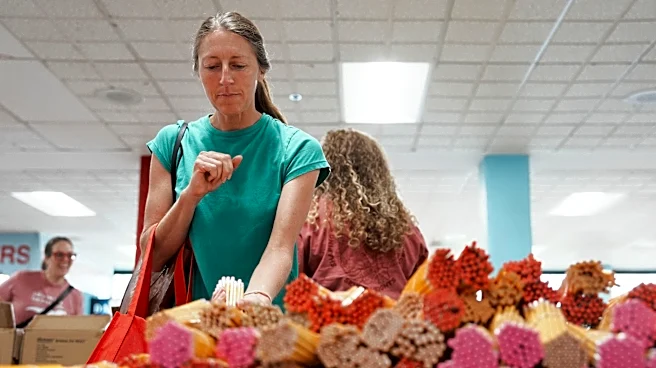

I recently had the privilege of hosting a roundtable on food insecurity at the United Way of Greater Knoxville with individuals who work tirelessly to help their communities access proper nutrition. Their work and stories were inspiring.
I left understanding two things I had never considered before: How quickly a policy change in Nashville or Washington reaches a kitchen table in East Knoxville and how Knox County’s food system depends on a network of small, dedicated organizations.
Knox County has 18 food deserts – areas where residents have limited access to affordable, nutritious food, particularly fresh and healthy options. In the 37915 ZIP code, there is no grocery store at all. One participant described paying nearly $20 for seven items
at the nearest place where food could be purchased, several of which were past their expiration date. The same items would have cost less at a full grocery store. For roughly a third of that community without reliable transportation, there are no other options for grocery shopping.
New work requirements for the Supplemental Nutrition Assistance Program, the federal program commonly called SNAP that helps eligible lower-income individuals purchase food, will take effect on Jan. 1. Roundtable participants discussed how the new requirements will work in practice and how community organizations and other partners can help individuals understand and navigate the changes. For example, one nonprofit organization leader asked how volunteers could document hours at a free medical clinic toward meeting the new requirements. The conversation underscored the important role that clear information, coordination and community partnerships can play as organizations and individuals prepare for the changes.
Meanwhile, nonprofit organizations continue to work together to meet the needs of Knox County residents. When 60,000 eggs recently became available, larger agencies could not take them, because the eggs had to be washed and packaged first. Small organizations did the washing and distributed the eggs through volunteers. Second Harvest, which serves 18 counties, is investing money into cold storage because the freezer capacity is what actually limits how much fresh food reaches a family. Those Knoxville organizations share storage, lend vehicles and route people to each other, filling the gaps so that people across Knox County can get the food they need.
Knoxville nonprofits are not only going beyond simply feeding people, but also are empowering individuals to grow their own food. Organizations are developing community green spaces and using them to teach residents to grow their own food. There is a growing effort among these organizations to look at nutrition and health holistically by empowering individuals, connecting them with wellness resources and improving access to food. This ties back to Wellpoint Tennessee’s mission of caring for the whole person and focusing on how medical needs intersect with other factors that affect health, like access to nutritious food.
The most important thing I took from our roundtable conversation is that we must keep supporting these organizations and their missions. We, as an organization and community, need to create more visibility for these organizations to showcase and share their ideas while also supporting and scaling the approaches that are proven to work. Capacity constraints limit many local community organizations, but by following their example and working together, we can tackle food insecurity across cities, counties and regions.
Addressing food insecurity can create healthier cities and communities. Together, we can build a Tennessee where no one has to go to bed hungry.
Rachel Chinetti is the president of Wellpoint Tennessee and currently leads the organization serving 540,000 members across the state.
This article originally appeared on Knoxville News Sentinel: How to build a Tennessee where no one goes hungry | Opinion