






If Tennessee doesn't make drastic changes to how it pays for roads and bridges, the state will face a $2.5 billion annual funding gap by 2047.
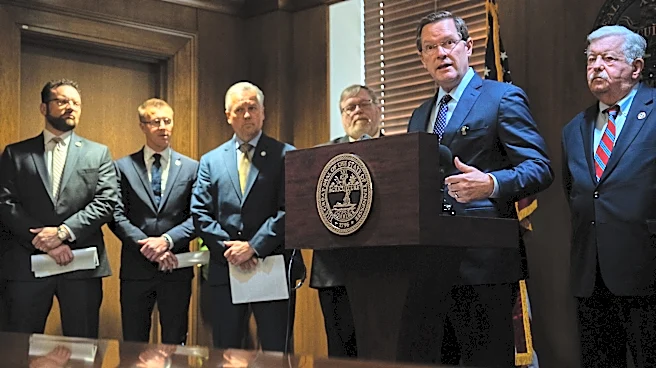
A new report outlining Tennessee's transportation dilemma is the first step to show lawmakers the urgent need to make changes as the legislative session starts in January, state Sen. Becky Duncan Massey told Knox News,
Tennessee isn't making enough tax money to keep up with the growing demands on its 95,000-mile transportation network, according to the report. Between fiscal year 2027-28 and fiscal year 2054-55, the state will need $87 billion to maintain roads and bridges and expand capacity, the Tennessee Advisory Commission on Intergovernmental Relations found.
What's driving the problem? Population growth,
traffic, freight demand and construction costs are increasing faster than transportation revenue, the report says. The problem is getting worse, not better, in a state that sets itself apart with low taxes.
"I knew changing our funding structure was going to be a big effort," Massey, a Republican from Knoxville, told Knox News. "If we don't fix the formula, I feel like, just knowing the need, it's irresponsible. It's a complicated thing because you don't want to be the legislator that does a tax increase or something."
"As far as I'm concerned, everything's on the table so nobody's having to feel like they're footing the bill to prop up our infrastructure," Massey said. "We could increase the gas tax, but that's a depreciating revenue source. We need an appreciating revenue source. (Borrowing money) is not a user-fee type of thing, but it also can't take the whole load."
Get the Daily Briefing newsletter: Keep up with the latest local politics and election news for Knoxville and Knox County
Here are ways Tennessee could raise more revenue for its roads.
Scenario 1: Increase user fees and create new sources of revenue
Tennessee heavily relies on federal funding as well as state fuel taxes and vehicle registration fees, which make up the "user-fee" model. Those sources aren't keeping up as projects get backlogged.
User fees are only growing about 1.5% annually, while construction costs increased by about 12% each year from 2021 to 2025. Gas tax is paid by the gallon and doesn't increase as inflation rises.
Currently, drivers pay 27 cents per gallon on gas and 28 cents per gallon on diesel. The tax on rental cars is 3% and there are no taxes on retail delivery or rideshare services.
"I think that entities that use the road need to have some buy-in to keeping our roads in good shape," Massey said.
The report outlined changes that could help move the needle:
- Raising the gas tax to 36 cents by fiscal year 2029-30, then annually for inflation
- Raising the diesel tax to 38 cents by fiscal year 2029-30, then annually for inflation
- Raising vehicle registration fees in phases for through fiscal year 2029-30, then annually for inflation
- Raising specialized vehicle registration fees
- Raising highway user fees to 3 cents per mile for certain trucks, then annually for inflation
- Raising rental car taxes to 5%
- Creating a rideshare fee of 50 cents per trip and a delivery fee of 30 cents, then adjust it for inflation
- Earmarking single-article vehicle sales taxes for the highway fund
Scenario 2: Transfer more money from the state's general fund
This method is similar to how the state has supplemented its transportation fund in the past. But it also "means less money is available for other state programs," the report says.
In 2023, the legislature passed Gov. Bill Lee's Transportation Modernization Act, which allowed the state to enter into public-private partnerships for toll lanes, invested $3 billion across the state for transportation projects and provided $300 million for local projects.
The new report suggests recurring transfers from the general fund of $447.6 million in fiscal year 2027-28, $628 million in fiscal year 2039-40 and $959.8 million in fiscal year 2054-55 on top of higher fuel and registration fees, a rideshare fee and rental car tax revenue.
Scenario 3: Borrowing for projects
Tennessee is one of only a few states that doesn't borrow money to pave its roads. Its "user-pay" model covers construction and maintenance with fuel taxes, registration fees and supplemental federal highway dollars.
The "user-pay" model is a fiscally conservative approach Republican leaders tout, but it prevents the state from keeping up with its needs, the report says. Delaying projects can end up costing more than borrowing in the long run.
Tennessee could leverage its AAA credit rating to borrow for "strategically important projects," the report says. That way it spreads the cost among current and future road users.
"Borrowing to finance long-term infrastructure using bonds and other borrowing tools allows states to distribute costs over time while addressing multiple infrastructure priorities concurrently," the report says. "Relying solely on current revenue to fund projects places the entire burden on current users, when the long-term benefits of those completed improvements will be enjoyed by other users well into the future."
It mentions borrowing $10 billion over the next several years, which would avoid over $7 billion in inflation costs plus cut traffic jams and boost safety and economic development. The report says the net benefit would be $1.74 billion.
What about toll lanes?
Toll lanes, often called choice lanes, let drivers choose to pay a fee for a faster lane, and they're built by private contractors.
They're are an important tool, Massey said, but they only pay for themselves and don't bring recurring revenue. Plus, there are only few spots where choice lanes make sense.
You have power: Use it
- What's next? The Tennessee General Assembly won't meet again until January, and right now is campaign season for all state representatives, some senators and candidates for governor.
- How to comment: You can find your legislator and reach out to them at wapp.capitol.tn.gov/apps/fml/lookup. You can find contact information for governor candidates on their websites if you want to get their thoughts on the issue, too.
- Who decides: Any changes to how the state funds roads would be either in the state budget, proposed by the governor and approved by the legislature, or through legislation passed by the legislature and signed by the governor.
- Key deadlines: You can choose who will participate in the discussion by voting in the Nov. 3 election. Register to voteby Oct. 5!
- Learn more: You can find the report at tn.gov. Look for the Tennessee Advisory Committee on Intergovernmental Relations website.
- Related coverage: Knox County’s buildings need major repairs — and the fix will cost billions
This article originally appeared on Knoxville News Sentinel: Tennessee has a looming problem with its roads. These solutions could fix it