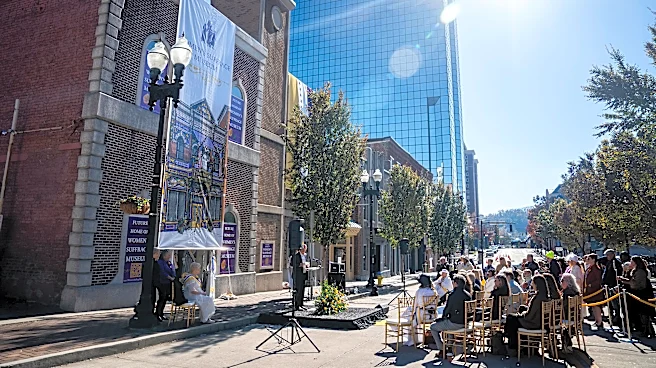


The Women's Suffrage Museum coming to Gay Street in 2028 will be the biggest museum of its kind in the world. Now we have an idea of what it will hold inside.
Supporters have long envisioned the project as something immersive and experiential. When the square footage expanded to include the adjacent 708 S. Gay St. building, Wanda Sobieski, president of the Suffrage Coalition, the nonprofit behind the museum, said with more space would come even more opportunities to show people "what it really felt like to be involved in this struggle."
Since then, the Suffrage Coalition has closed on the second structure, and more concrete plans for the museum are coming together. We now know visitors will take on the role of women involved in the suffrage movement
and experience key moments in women's fight for the vote.
What will the Women's Suffrage Museum - Events & Culture Center be like?
When you arrive at the museum, you'll be given a voting card that places you in the story of suffrage as a woman involved in the movement, said Mary Kellogg-Joslyn, who is serving as executive producer and director of museum development. She's well suited to bring the museum's elements to life as the co-founder and former co-owner of the Titanic Museum Attraction, which has a location in Pigeon Forge and is known for its hands-on setup.
You'll then continue through the museum as that woman, experiencing marches led for the vote, protesting outside the White House and even being arrested for fighting for women's rights. You'll also celebrate the passing of the 19th Amendment. Along the way, the stories will be amplified with hundreds of artifacts showcased at the museum.
In addition to these exhibit elements, the space also will feature a dining and event space, a library and even a bridal suite.
Johnson Architecture has been chosen to spearhead the project's architectural design.
East Tennessee is 'where suffrage came of age'
As the site of the Seneca Falls Convention, upstate New York tends to get the credit as the birthplace of women's rights, but Sobieski likes to call East Tennessee the place where suffrage came of age.
That's because of the pivotal role East Tennessee played in securing the vote for women.
"We're where that final vote came from that made it a reality and not just a dream," Sobieski told Knox News in an earlier conversation.
By August 1920, 35 states had ratified the 19th Amendment, which would give women the right to vote. One more state's support was needed to reach the majority, and that month, the Tennessee General Assembly convened to vote, according to the National Park Service website.
The decision came down to the stance of young Harry T. Burn, from Niota, about an hour outside of Knoxville. He entered the General Assembly chamber sporting the anti-suffragist red rose on his lapel, but Burn ultimately voted in favor of ratification after a letter from his mother, Febb Burn, urged him to "be a good boy" and support women's right to vote.
And with that, three-quarters of the U.S. had passed the 19th Amendment, and Tennessee, a rural Southern state, cinched women's right to vote.
Hayden Dunbar Evans is the storyteller reporter. Email: hayden.dunbar@knoxnews.com. Instagram: @knoxstoryteller.
Support strong local journalism by subscribing at subscribe.knoxnews.com.
This article originally appeared on Knoxville News Sentinel: Here's what visitors will experience at the Women's Suffrage Museum