








Somewhere in Tennessee, a family will one day sit across from a healthcare professional they have never met. They may be facing a difficult diagnosis, welcoming a new baby, recovering from an injury or searching for answers about their health. They may never know where the doctor, nurse, therapist or other healthcare professional caring for them received their education. But there is a good chance that person was Made in Tennessee, through the education and training provided by the University of Tennessee Health Sciences.
Preparing the next generation of healthcare professionals takes more than dedicated faculty and talented students. It also takes a commitment to providing the spaces, technology and hands-on experiences that prepare them for
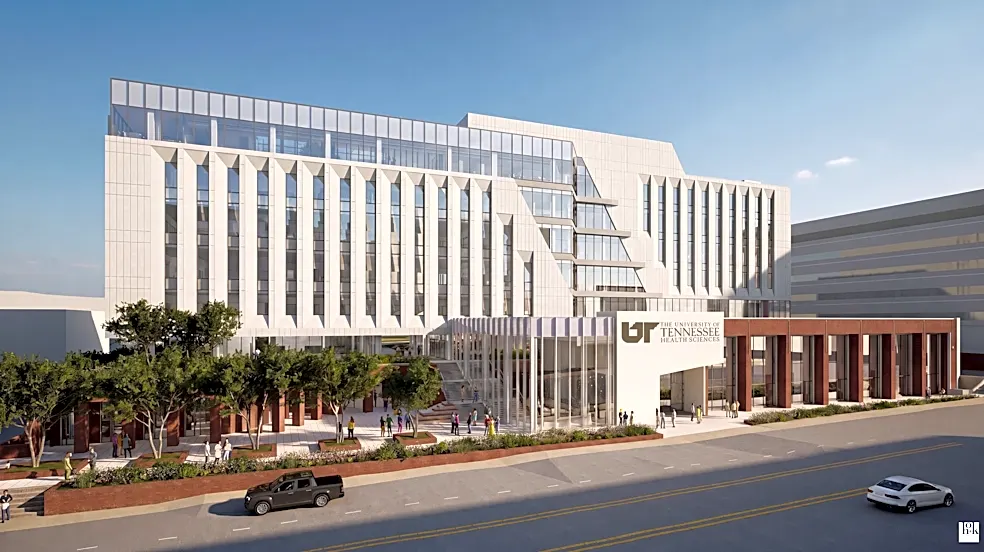
the challenges they will face. That commitment is taking shape through Tennessee's investment in the new College of Medicine Interdisciplinary Building (COMIB) at UT Health Sciences, which will help prepare future healthcare professionals to serve communities across the state.
At the recent groundbreaking, Ophelia Pilkinton, president of the College of Medicine Class of 2027, put it this way: “Somewhere, right now, there are patients we have never met, patients who do not know our names and don’t know what their futures hold,” she said. “But someday, one of those patients may sit across from one of the students who learns in this building. That is what we are breaking ground for today.”
Ophelia’s words capture the purpose of this investment: preparing more healthcare professionals to care for Tennesseans in the moments that matter most.
The Tennessee General Assembly committed $311 million toward the $350 million project, marking the largest state-funded capital investment in Tennessee higher education history. The building will allow UT Health Sciences to expand its annual medical school class from 175 to 250 students and double annual enrollment in its Physician Assistant Program from 30 to 60 students.
During the building’s first five years of operation, UT Health Sciences expects to educate 1,450 more physicians, physician assistants and other health care professionals than it could without the building. Each represents another professional who could one day help a Tennessee family navigate a cancer diagnosis or manage a chronic illness.
Although the building will stand in Memphis, its mission extends across the state. UT Health Sciences students will learn in the new building, but will train in Memphis, Nashville, Knoxville, Chattanooga, Jackson, the Tri-Cities and communities throughout Tennessee. Their education will prepare them to care for patients wherever their careers take them across our state.
The need is real and growing. Tennessee faces a projected shortage of thousands of healthcare professionals by 2030. Expanding educational capacity, modernizing learning environments and preparing the next generation of doctors, nurses and other caregivers to work together will help Tennessee tackle that challenge.
We thank the state of Tennessee for making this generational investment possible. This commitment shows what state leaders and public institutions can accomplish when they work toward a shared goal: improving lives and strengthening communities across Tennessee.
We now have an opportunity to build on that commitment. Through its Be the Catalyst campaign, UT Health Sciences seeks $50 million in private support to help complete the building and advance the educational programs and resources that shape the future of healthcare. We have already secured more than $20 million toward that goal, putting us nearly halfway there. We invite healthcare partners, businesses, alumni and friends to join this effort.
The building is expected to reach full occupancy by 2030, helping us build on the greatest decade in UT’s history and make the next one even greater.
Ultimately, this building’s legacy will be measured by the lives of the people its graduates serve. Across Tennessee, patients will have more healthcare professionals prepared to guide them through life’s most important moments. Those patients may never visit Memphis or know the story behind this investment. But in hospitals, clinics and communities across our state, they will experience its lasting impact through the hands and hearts of those whose futures were Made in Tennessee.
Randy Boyd is president of the University of Tennessee System. Peter Buckley is UT Health Sciences chancellor.
This article originally appeared on Knoxville News Sentinel: Next generation of healthcare professionals will be 'Made in Tennessee' | Opinion