






In August 1784, the American Revolution was over, or at least the war was.
Only the year before, the Treaty of Paris had formally recognized the independence of the United States. Americans had rejected government from the distant capital of London, proclaimed that political authority rested upon the consent of the governed, and fought a long and protracted war to establish a new nation. But for settlers living west of the Appalachian Mountains, those principles immediately raised other questions. Issues like who would provide security on the frontier, who really governed if the government was still far away and unable to enforce its laws, and at what point do people have a right to form a local government.
In August 1784 - 242 years ago in August - delegates
gathered at Jonesborough and unanimously supported the creation of a new state made from the western counties of North Carolina. This experiment in state formation and local governance would become known as the State of Franklin. Franklin is sometimes remembered as an historical curiosity, the “lost state” that nearly became America’s 14th state. But viewed in the context of the American Revolution, it holds something much more revealing. Franklin demonstrated that the political ideas unleashed by the Revolution did not simply stop when peace was declared in 1783.
The people of the western Appalachian settlements had good reasons to feel remote from their state government. The mountains separated them from North Carolina’s political center, communications were difficult, and settlers believed that officials who lived along the coast in the east could hardly represent or administer their interests. It was unfeasible that they could adequately provide courts or any realistic type of defense, or really be responsive in any way. When North Carolina voted in 1784 to cede its western territory to the national government, western settlers suddenly faced uncertainty about what would be come of them.
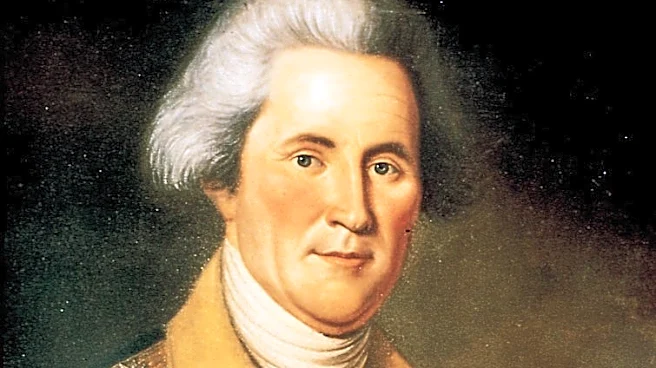
Their answer was a familiar one. They would govern themselves. At this meeting in August , they elected their own state officers. The governor was to be the famed and Revolutionary war hero John Sevier, Landon Carter was chosen as the Speaker of the Senate, Thomas Talbot was selected to be the State Clerk, and William Cocke was to be the leader of the planning committee. It was Cocke who was sent to the Continental Congress to plead for statehood. The impulse for self-government echoed the arguments Americans had made against Britain only a decade earlier. Government existed to serve the people. Political communities possessed rights of their own. When existing institutions failed to represent local interests, people could create new local and therefore accountable ones.
In addition to creating elected officials, the Franklin government created three original counties in which they could collect taxes: Washington County, Sullivan County and Greene County. However, by 1786 the Franklin legislature created four new counties: Wayne County (present day Carter County), Spencer County (later renamed Hawkins County), Caswell County (later formed part of Jefferson County) and Sevier County. A fifth county, named for William Blount, was added in a different session.
Its constitutional debates even raised questions about who should be permitted to hold political office. The temporary government reduced or eliminated some of the property qualifications that had been inherited from North Carolina, demonstrating how quickly revolutionary ideas about political participation were moving even along the frontier.
The State of Franklin also revealed the limits of revolutionary liberty. The western settlers’ assertion of their rights to self-government existed alongside an aggressive effort to occupy lands claimed by the Cherokee. Franklin officials negotiated the Treaty of Dumplin Creek (1785), which opened more south of the French Broad River, but Dragging Canoe’s faction of Cherokee refused to recognize. It was also not recognized by the U.S. federal government because it was in conflict with the subsequent Federal Treaty of Hopewell (1785). As a result, the federal government demanded some 3,000 settlers leave Cherokee lands. The State of Franklin completely ignored the federal treaty, which created to further violence between settlers and the Cherokee, and even sparked a notion that Franklin might join with the Spanish empire.
The unsettled issues of the frontier highlighted the fact that Franklin itself was not united. Many western residents continued to recognize the government of North Carolina. Rival governments, courts and officials operated in the same communities. The dispute eventually became a bitter political struggle between Sevier and John Tipton, culminating in armed confrontation called the Battle of Franklin. By 1789, the Franklin movement effectively collapsed.
But the idea behind it did not disappear. North Carolina eventually ceded its western lands to the United States in 1790. These lands became the Southwest Territory, and six years later the people of the region achieved, through the federal system, much of what the Franklinites had attempted on their own. On June 1, 1796, Tennessee entered the Union as the 16th state.
The State of Franklin therefore belongs to the history of the American Revolution, not merely its aftermath.
The Revolution had proclaimed powerful ideas about representation, popular sovereignty and the right of people to shape their own governments. Franklin showed how those ideals continued to work themselves out long after the fighting had ended. In the mountains and valleys of what became East Tennessee, the language of self-government took on new meaning as settlers confronted the realities of life on the frontier. At the same time, Franklin exposed the limits and contradictions of those revolutionary principles, particularly when the settlers’ claims to liberty and self-determination collided with Cherokee sovereignty and land rights.
The State of Franklin ultimately failed, but the ideas that inspired it did not. They continued to shape the political culture of the region and, eventually, the creation of Tennessee itself. In the Appalachian mountains, the Revolution’s ideals were still being tested around the notions of who would govern and on what terms.
A. Warren Dockter is president and CEO of the East Tennessee Historical Society. This article is part of a series commemorating the 250th anniversary of America's independence.
This article originally appeared on Knoxville News Sentinel: The State of Franklin exemplified Revolutionary ideals | Opinion