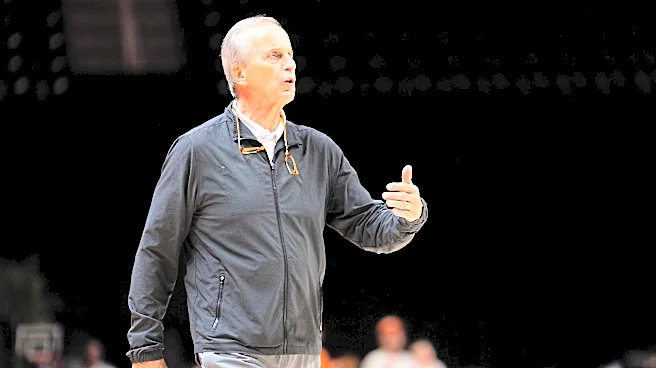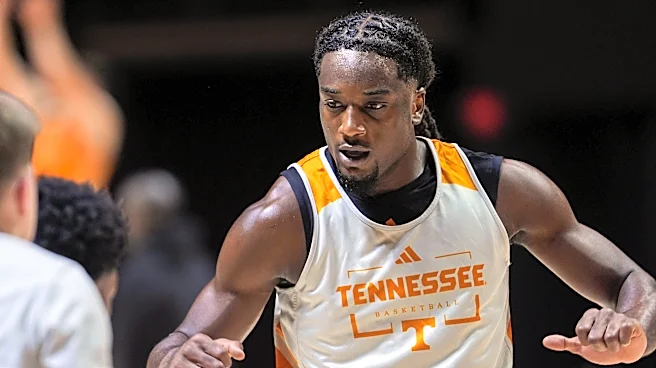

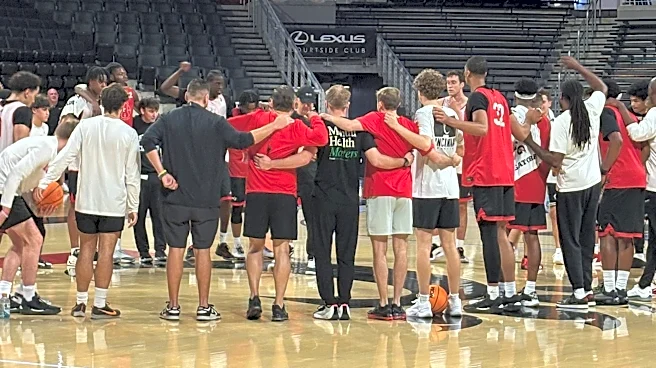
Tennessee basketball combined to score 139 points and make 49 3-pointers over 30 minutes of play in an intrasquad scrimmage. And it was clear three days later that the defensive lapses were still on bothering coach Rick Barnes.
"We're going to find a way to guard somebody," Barnes said on Oct. 6. "If you go out and you don't defend the way we want to, it'll be like Grand Central Station at the scorer's table because we're going to find a way to defend somebody."
With 13 new players on his roster for the 2026-27 season, Barnes and the coaching staff has spent large parts of the summer and early fall trying to teach the team how to play championship-level defense.
UT finished last season ranked 14th among Division I teams in adjusted defensive efficiency
by KenPom. Since 2020, the Vols have never been worse than fifth. It's still been almost a decade since UT last allowed opponents to score more than 70 points per game for a season.
Defense has been a calling card for the Vols as they've notched six straight NCAA Tournament appearances and three consecutive Elite Eight runs.
“There are some givens that we think that you have to have when you're thinking about the end of the year, wanting to put yourself in position to be in the NCAA tournament, knowing it is a one-game elimination deal. We've got to be able to guard somebody," Barnes said.
There is a tradition of sound defense that Barnes is unwilling to compromise on, but he might have to live with some growing pains with his new roster.
Because, while the Vols aren't lacking for defensive potential, the issue had been getting nine new transfers and four freshmen to communicate more efficiently with one another. They come from a variety of different schools and systems, and the staff has had to strip down bad habits and replace them with Tennessee's distinct defensive philosophy.
"It takes a little longer. Unless your retention level was extremely high, and ours was not ... it's going to take you a little longer to find that rhythm, that groove," assistant coach Gregg Polinsky said. "And those teams that really care and are committed, have a sense of purpose, those are the ones that are going to end up being really good."
There has been notable progress recently, Barnes and other assistants said. Only within the past month have the Vols really started to turn a corner with their communication and understanding of the scheme.
"I think the improvements I'm starting to see is a little bit more communication," assistant coach Earl Grant said. "It's a lot of new players, right? So there's a lot of new terminology. So getting the guys I understand terminology over the last six weeks is probably the reason why we communicate better because we actually know what they're saying."
Their improvements have been well-timed, because the start of the regular season is rapidly approaching.
UT faces Xavier in its first exhibition game on Oct. 15 (7 p.m. ET, SEC Network+) at Food City Center. Now the players have to add learning scouting reports to the enormous task of meeting the coaching staff's lofty expectations for fundamental defensive play.
"I think we're not 100% where we want to be, but if you would ask me five weeks ago, we'd have been like 40% there," Grant said. "I think we're 70% there now. So we got two more weeks before we play anybody else. Maybe we can close that gap to 80%."
Stephen Thompson covers Tennessee Volunteers men's basketball. Email him at stephen.thompson@knoxnews.com and follow him on X @stephenethom.
This article originally appeared on Knoxville News Sentinel: Why Tennessee basketball's defense off to a slow start and it's bothering Rick Barnes