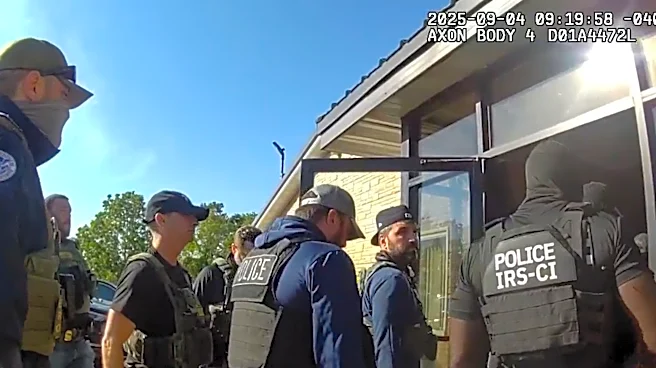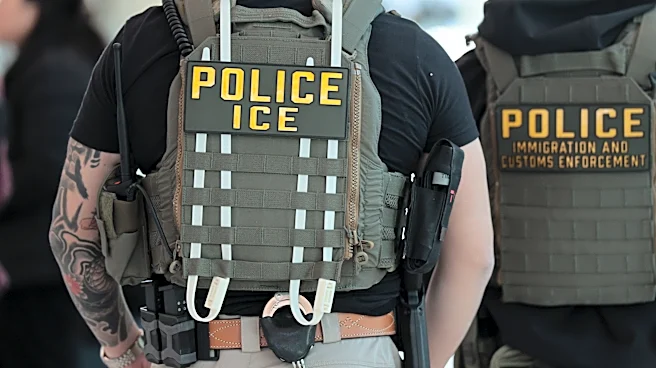






New Knox County Sheriff Brent Gibson is moving forward with an expansion of Immigration and Customs Enforcement's 287(g) program, empowering local deputies trained by ICE to enforce federal immigration laws while performing routine police duties.
"Sheriff Gibson has had preliminary discussions with ICE regarding the 287(g) Task Force Model, and KCSO is moving forward with that process," KCSO spokesperson Justin Pratt wrote in an email. "The Sheriff’s Office will also continue its participation in the existing 287(g) Jail Enforcement Model. Additional details will be provided as the process moves forward."
The move does not come entirely as a surprise. Gibson told Knox News prior to his election he wanted KCSO to move forward with the more hawkish
approach offered by the federal government.
"What we don't want to happen is we don't do anything about it, and then all of the sudden ICE is in Knox County and just going and doing the things they're doing in other big cities that are refusing to police their immigration," Gibson said in April.
Section 287(g) of the Immigration and Nationality Act authorizes the Department of Homeland Security to enter into written agreements with local police departments so qualified officers can "perform certain functions of an immigration officer," according to a standardized federal memorandum of understanding.
KCSO was an early adopter of the program's jail enforcement model in 2017, entering into an agreement with ICE that allows deputies to identify and investigate potential immigration violations of people in jail who have pending or active criminal charges.
Designated deputies at the Knox County jail have a wide purview, including the authority to interrogate people about their immigration status, serve warrants of arrest for immigration violations and to detain and transport people subject to removal to other ICE facilities.
In 2018, KCSO signed an intergovernmental service agreement, often called a bed contract, with ICE which reimburses the county for ICE detainees. The agreement allows the county to accept ICE holds from around the region, effectively making the jail a deportation hub for the region.
What is the task force model?
The task force model is a more proactive approach to immigration enforcement.
Designated deputies are granted numerous immigration powers, akin to those of an ICE agent.
These include, but are not limited to, the authority to interrogate people about their right to be or remain in the U.S., and to arrest people an officer believes are in the U.S. in violation of the law and are likely to escape before a warrant can be obtained.
Deputies also can take and consider evidence, prepare charging documents and execute warrants for immigration violations.
Deputies nominated by KCSO for the program must be U.S. citizens with at least two years of law enforcement experience. They must also be vetted by ICE and able to qualify for federal security clearances.
ICE training includes discussion of the terms and limitations of their agreement, the scope of immigration officer authority, relevant immigration law, ICE use of force policy, civil rights laws and the detention of aliens.
There are also discussions of public complaint procedures, liability issues and obligations under federal law. Training can be conducted in-person or online.
Those who are certified will be authorized to perform the immigration functions for an initial period of two years.
The standard task force model agreement requires that participating deputies be under ICE direction and supervision while using their immigration authorities. Deputies are required to "contact an ICE supervisor at the time of exercising the authority" or soon after.
Tennessee agencies mandated to join 287(g)
State lawmakers passed a bill earlier this year that requires all Tennessee law enforcement agencies to enter into at least one kind of 287(g) agreement with the federal government, or risk losing state funding.
As of Sept. 8, ICE has signed 2,466 287(g) agreements in 39 states and two U.S. territories. ICE has signed task force model agreements with 1,737 agencies in 33 states and two U.S. territories.
Out of 99 Tennessee agencies with agreements, 41 have adopted the task force model, according to ICE data.
Concerns about an expanded agreement with ICE
Immigrant advocates worry the task force model may distract police with civil immigration enforcement instead of its public safety responsibilities, said Meghan Conley, a University of Tennessee professor and member of Allies of Knoxville's Immigrant Neighbors.
"The sheriff's office already has every authority to enforce laws related to public safety," Conley said.
Though she was not surprised that KCSO is adopting the model, Conley said the sheriff's office is not considering potential civil liability and a hesitation to report crimes to law enforcement.
"People that see something are less likely to come forward," Conley said.
The United States Supreme Court issued an emergency order last year that allowed federal agents to continue stopping people on the basis of appearance, language, accent or workplace.
But Gibson pushed back on racial profiling concerns in the leadup to the election.
"The problem is, what everybody thinks we may do is go out and just start looking for Hispanic people," Gibson said. "That's absolutely not what we're going to do. We don't do it now."
This article originally appeared on Knoxville News Sentinel: Knox County Sheriff's Office takes steps to expand its ICE partnership