





Some of Knoxville's most prominent properties have been waiting decades for a second chance. While some redevelopment projects are finally gaining momentum, others are still struggling to get off the ground.
The city and Knoxville's Community Development Corporation recently found success in opening the new Knoxville Police Department headquarters
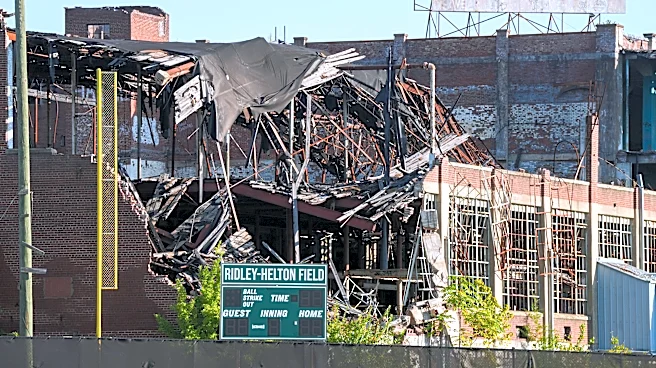
at the former St. Mary's Hospital site and helping to redevelop land east of the Old City for Covenant Health Park.While sites like the Standard Knitting Mill just northeast of the stadium have stalled, long-vacant properties such as the former KPD headquarters and the McClung Warehouses site are finally taking their first steps toward redevelopment.
Here's a look at who's driving redevelopment in Knoxville
and where you can expect to see growth in the coming years.
Who redevelops underutilized land in Knoxville?
Knoxville's Community Development Corporation, or KCDC, acts as the public housing authority and the city's redevelopment arm. It can enter into agreements with private developers to redevelop public property and other sites throughout the city where redevelopment would have a public benefit.
With approval from Knoxville City Council, developers can receive tax incentives that help make projects financially feasible, particularly on dilapidated properties or in underdeveloped areas where being the first to invest carries added risk.
Some of KCDC's most notable projects included the 2001 redevelopment of Market Square and North Waterfront improvements along Volunteer Landing near downtown. Leaning on KCDC CEO Ben Bentley, the city is again looking at opportunities around the North Waterfront, along Magnolia Avenue and in other growing parts of the city.
Get the Daily Briefing newsletter: Keep up with burgeoning growth and development in Knoxville and Knox County
Downtown Knoxville projects on vacant sites are moving forward
The former McClung Warehouses site on West Jackson Avenue and the former KPD headquarters on Hill Avenue are being primed for full-scale redevelopment projects.
The KPD headquarters was set to become a state-of-the-art Knoxville Science Museum before plans fell through in 2025. Following the setback, the city is holding a community input session 10 a.m.-1 p.m. Sept. 12 at 800 Howard Baker Jr. Ave. to discuss possible future uses for the site.
Meanwhile, KCDC has identified a developer to revitalize a key gap in downtown: the site formerly home to the McClung Warehouses, which were destroyed by fires in 2007 and 2014.
The city acquired the former warehouse land and a nearby public parking lot shortly after the fires, and Bentley said KCDC plans to share details about the project by the end of 2026.
Recent Knoxville successes usher in new residents, businesses
The Sanitary Laundry building, the former St. Mary's hospital site and the 200 Block of Gay Street have all shown the breadth of development the city can attract.
The Sanitary Laundry building on North Broadway sat vacant for decades before McCarty Holsaple McCarty Architects pursued an adaptive reuse strategy to build out a new company headquarters. Knox News previously reported the city contributed $350,000 for the building's cleanup and in 2024 approved a PILOT, or payment-in-lieu-of-taxes, an incentive that freezes a property's tax value for a set period to make projects more financially feasible for developers.
St. Mary's Hospital in North Knoxville closed in 2018 and has since been repurposed to accommodate the city's new Public Safety Complex while attracting Lincoln Memorial University's College of Dental Medicine and the McNabb Center's EmPATH facility. A 170-unit affordable housing complex recently was approved for the site with help from the city's affordable housing fund and KCDC vouchers.
Lone Tree Pass, another mixed-use development along the 200 block of Gay Street, has been under development through Hatcher-Hill Brokerage LLC since 2023. Residents are moving into condos, and restaurants are set to occupy retail space.
KCDC and the city aided the 200 Block redevelopment by creating a Tax Increment Financing district, or TIF, an incentive that uses future tax revenue generated by a project to help pay for public improvements or support redevelopment costs.
City faces roadblock with Standard Knitting Mill redevelopment
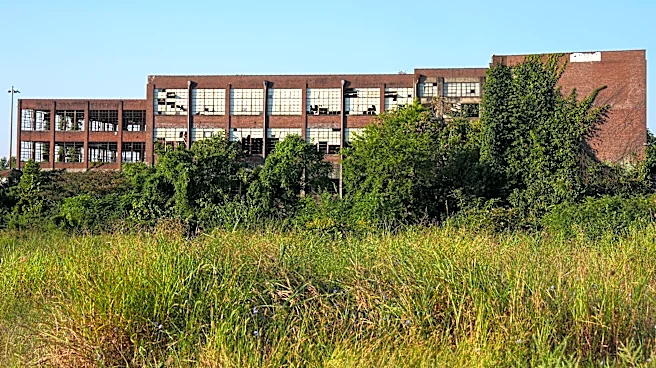
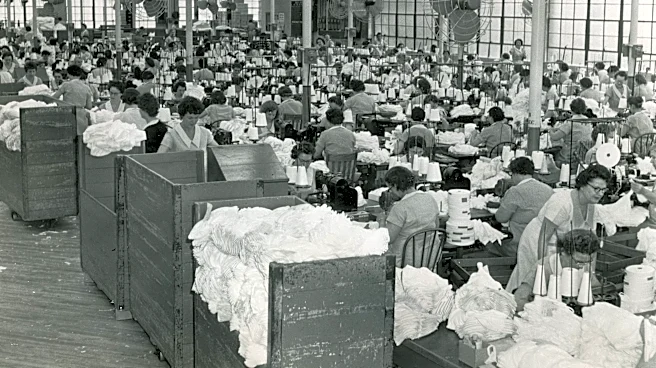
WRS Inc. Real Estate Investments in 2019 purchased the Standard Knitting Mill in the Magnolia Warehouse District, just northeast of the Old City, and shared plans for a mixed-use development. The firm released renderings but never completed any substantial construction work.
Bentley told the Knoxville City Council at an Aug. 27 meeting the developer dropped out, and the property is now listed for $8.5 million.
The South Carolina-based developer was facing millions in added costs from an unmarked KUB water line and the absence of textile mill tax credits in Tennessee like the ones in South Carolina. WRS also had to contend with pandemic-related challenges and extensive environmental remediation required to clean up the property.
In early 2022, two separate fires less than eight hours apart caused substantial damage to the site.
KCDC prioritizes a pedestrian-friendly Knoxville waterfront
Waterfront connectivity has been a topic of discussion for KCDC since its 1973 inception. When it helped transform parts of Volunteer Landing in 1995, KCDC laid the groundwork for continued waterfront redevelopment.
The city is now asking KCDC to draft a plan for a North Waterfront redevelopment area. This project zone encompasses the University of Tennessee at Knoxville's future Neyland Entertainment and Maplehurst Innovation districts. The redevelopment plan would prioritize pedestrian connectivity downtown, campus and the waterfront.
KCDC also is searching for a developer to transform 15 acres along the South Waterfront at the base of the future pedestrian bridge connecting South Knoxville to UT's campus. A request for qualified developers was due Aug. 7.
Shifting focus to Magnolia Avenue and Chilhowee Park
Last year, the Knoxville City Council approved a plan to use collected tax dollars along the Magnolia Avenue corridor and Burlington to upgrade the north and south sides of Magnolia Avenue, Chilhowee Park and the Knoxville Zoo.
This initiative doesn't target specific parcels. Rather, it creates incentives for future developments.
To improve aging infrastructure along the corridor, the city just approved a third phase for the $3.1 million Magnolia Avenue streetscape project. As for Chilhowee Park, an advisory group was created to hold workshop events to discuss the site's future.
The Chilhowee Park Advisory Group will hold a "setting the framework" meeting in September, while KCDC is tasked with implementing the large-scale plan.
Sophia Tiedge is the growth and transformation reporter for Knox News. Email: sophia.tiedge@knoxnews.com
Support strong local journalism and unlock premium perks at subscribe.knoxnews.com.
This article originally appeared on Knoxville News Sentinel: What's next for Knoxville's most talked-about vacant properties?