






In times when the volume is loud and political and social turmoil is intense and personal, I cling to what Tennessee taught the whole country in 1920: that one more person doing the right thing can actually change the course of history.
In the despair of seemingly hopeless, deep division in families and communities, it is tempting to say that your one little voice won’t be listened to, so there is no reason to try. But that is not how tides are turned.
The Suffragists understood what it would take to turn the tide. Just as a steady drip of water on a marble slab will eventually wear it away, so all the steps taken against daunting odds can demolish the boulders that stand in the way of progress.
Tennessee history gives one of the best examples
of the power of one in the story of Febb and Harry Burn from just down the road in Niota. Febb Burn, mother of four children, was not particularly happy with her eldest son’s decision to enter politics and become the youngest in the Tennessee House of Representatives. She did not want to be drawn into the controversies of the day by people accosting her, seeking her help to influence her son. Her solution was to refuse to try to influence him on any of the issues before the legislature. That is, until the most substantial change to American democracy was pending before the Tennessee legislature: the right to vote for women.
In August of 1920, that highly controversial issue came to the Tennessee, just one state short of the needed ratifications to make it law.
The Senate easily passed the Amendment, though after a brutal debate. The highly controversial amendment was going to the House for a ratification vote where her son, Harry T. Burn, served and the result was too close to call. The thought that Tennessee might vote against that amendment weighed heavily against her sense of what was right, causing her to break her promise to herself. She intervened in a moment that looked hopeless. She did the only thing she could think off to try to resist the pending storm: she sat down and wrote a heartfelt letter to her son urging him to do what was right – vote for suffrage!
He had worn the anti-suffrage symbol - the red rose (not the pro-suffrage yellow rose) - throughout the special session, believing that defeat of the amendment was what his constituents wanted. When his mother’s letter arrived the morning of the Tennessee House vote, he paused to read the letter. Torn between what he believed was the right thing to do, and his duty to represent his constituents, he stood to vote, still wearing the anti-suffrage red rose, hesitated slightly, then he switched his vote. He broke the tie and made Tennessee the “perfect 36” state: the final necessary ratification that made the 19th Amendment to our Constitution binding law!
That historic vote is the living proof that one more vote, one more letter and one more person doing the right thing can make all the difference.
In 1920, Tennessee took a courageous stand and ushered in a real democracy for over one half of the country that had been forced to the sidelines for 144 years. We must repay our debt to the courageous, persistent, and devoted women and men who at great personal sacrifice gave so much so we could have a better democracy by paying it forward to the next generation. We must preserve the stories, learn from the stories and build a more perfect union for them. The March must never end or be forgotten.
Our Women’s Suffrage Museum - Event and Cultural Center is one giant step in the right direction. Help us keep the march going.

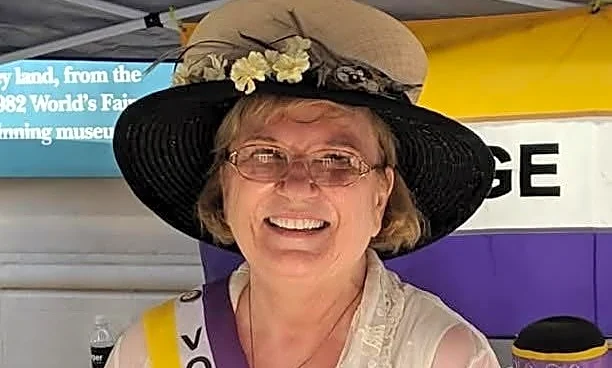
Wanda Sobieski is the founder and president of The Suffrage Coalition, a nonprofit dedicated to locating, preserving and celebrating the history of the women’s suffrage movement, including with the establishment of the Women’s Suffrage Museum in downtown Knoxville.
This article originally appeared on Knoxville News Sentinel: Febb Burn proved one more person can make all the difference | Opinion