







In educating students, which path is best, the easy way, or the hard way?
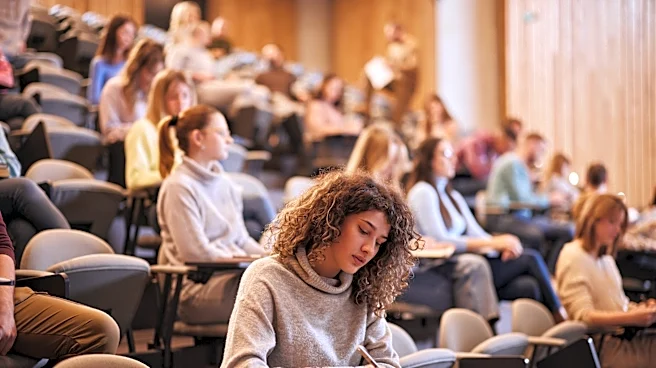
Dr. Harold Black told his University of Tennessee senior-level finance students they’d have to take their exams on test papers he’d handed out; they couldn’t use a calculator or computer. He told them that if they understood the problems they could solve them and show their work.
Students were, Black says, “mortified.” One of them told him, ‘We haven’t had to do basic math hardly ever. We’ve always been able to use calculators.’”
Black, a UT professor emeritus of finance, has a distinguished record in academia, business, and government. In 1962, he was among the first Black students to integrate the University of Georgia; UGA has a named professorship in his honor, and a student dormitory
bears his name. A partial list of his accomplishments: Black has held professorships at UT and three other major universities, has served as the Nashville FDIC branch chairman, and he’s been on the board of two of America’s largest financial institutions.
After putting aside retirement to teach the class at UT’s request, Black was shocked by what students couldn’t do. “I gave them a very simple problem of basic division, asking (without allowing the use of calculators) what’s five percent of $50,000? The vast majority couldn’t do it. The most common answer was $1,000 or $10,000 (the answer is $2,500). They were giving me all sorts of answers, and actually could not do basic math.”
Dropping the use of student SAT and ACT test scores in college admissions hit a peak in 2020, in part because they were called unfair, as not all students had the same advantages and schools. According to a growing number of educators, that’s when things really started going downhill. Educators are pushing back even in the philosophically liberal bastion of California.
In an open letter to the University of California State Board of Regents, 2,300 math professors asked for a return of the SAT test as an admissions tool, unused since 2020, for science, technology, engineering, and mathematics applicants. Supporting that position, an article in EdSource by three California math teachers smacked down the idea that “inclusiveness” is a substitute for learning: “This is not a deficit of intelligence. It’s not a function of privilege. It is what happens when decades of public school K-12 mathematical foundation-building and imagination-building are abandoned for frameworks that make adults feel good because they think they are being inclusive, but they are actually just failing to build students’ adaptive abilities to think for themselves through harder and harder math problems.”
Unqualified students are being shoved up and out of high schools, but are still going to college. In another California example, Inside Higher Education reports that a working group revealed “the number of first-year students with math skills below a middle school level increased nearly 30-fold since 2020, when the system first suspended its standardized testing requirements.”
The University of Michigan has devised a different program to help students feel good about themselves, announcing that first semester transcripts of freshmen students in the College of Literature, Science, and the Arts, won’t show course letter grades, in part to “curb the mental health crisis unfolding among college-aged individuals."
Most college freshmen have reached age 18. Forty-eight U.S. states have established 18 as the age of majority, at which college students are adults and can make adult choices: vote, move out of their parents’ homes over parental objections, be drafted, take on financial responsibilities, sign a contract, and more – but letter grades and grade-point averages in their external transcripts endangers their mental health? In response, a USA Today columnist wrote, “Michigan seems to think college is for coddling students – not preparing them for the rigor of real life.”
A lack of high college standards may be contributing to graduates’ stumbles in the working world, as detailed in Fortune magazine: “Employers’ gripe with young people today is their lack of motivation or initiative - 50% of the leaders surveyed cited that as the reason why things didn’t work out with their new hire.
“Bosses also pointed to Gen Z (persons born between 1997 and 2012) being unprofessional, unorganized, and having poor communication skills as their top reasons for having to sack grads.
“Leaders say they have struggled with the latest generation’s tangible challenges, including being late to work and meetings often, not wearing office-appropriate clothing, and using language appropriate for the workspace."
Dr. Harold Black says public schools and universities should set high standards and challenge students to reach and surpass them, not seek ways to make their lives easier, setting them up for lifelong struggle or failure.
The question is what’s more important, that students feel good about themselves, or be challenged to grow and excel? It’s a choice with two paths: the easy way or the hard way. The easy way has been winning. So far.
George Korda is a political analyst for WATE-TV, hosts “State Your Case” 5-7 p.m. Sundays on WOKI-FM Newstalk 98.7 and is president of Korda Communications, a public relations and communications consulting firm.
This article originally appeared on Knoxville News Sentinel: Making education easier for students makes life harder | Opinion