






The scent of roasting JFG coffee drifted through the Old City as thousands of pounds of Knoxville-made flour rolled out of the nearby White Lily mill and another neighborhood fixture, Lay Packing Company, processed bacon bound for breakfast tables across the South.
For more than 75 years, these three companies formed a breakfast trifecta in the Old City. If you lived in the South before the 2000s, there's a good chance the downtown Knoxville neighborhood gave you your breakfast.
For much of the 20th century, the area now known for its nightlife produced and shipped staples that helped people across the region start their day, long before national brands dominated grocery shelves.
While one of those factories is gone and the other two have been
converted into apartments, Knoxville's role in shaping the South's breakfast tables hasn't completely faded. In many ways, those brands still linger in the region's tastes, traditions and loyalties.
Behind the biscuits is White Lily Flour, Knoxville's secret ingredient
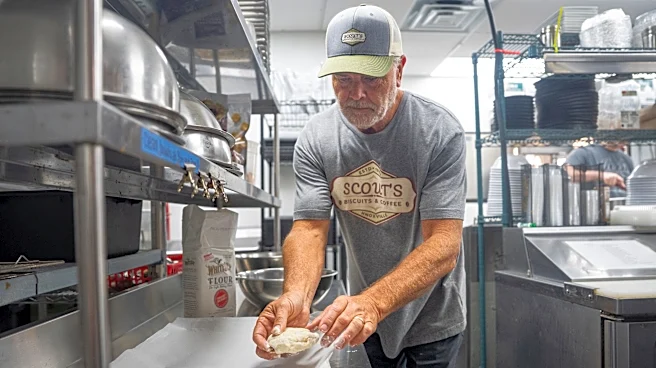
Perhaps no Knoxville food brand has left a bigger mark on Southern breakfast than White Lily. At Scout's Biscuit Company in Powell, the flour – much harder to source outside the South – is a must-have in the restaurant's secret biscuit recipe.
Owner Wayne Koontz drew an unexpected comparison between his biscuit spot on Emory Road and the crime drama "Snowfall" about the crack cocaine epidemic of the 1980s. Koontz has a certain appreciation for the series' portrayal of a character who's very tight-lipped about the process of making the drug, and he has a similar philosophy when it comes to biscuits.
"I know it's weird," he told Knox News with a laugh. "But I always say, you gotta protect your recipe."
Biscuits, according to Koontz, are "not something easy to make." He has perfected his recipe since learning to bake them as a student at Halls High School, and he uses White Lily in his secret formula for two main reasons. The first has to do with baking science. The second is because it's local.
Born in Knoxville, White Lily Flour has made biscuits better for more than 140 years, with much of that time spent at its North Central Street factory that opened in 1884. Koontz chose White Lily partly because of its lower gluten content, an attribute that exists because the flour is milled from soft red winter wheat, creating a product that is lighter in texture and lower in protein than the flour made by competitors.

The city and the region's biscuit reputation owes no small debt to White Lily Flour, which outlets from The New York Times and The Atlantic to Southern Living and Garden & Gun have long credited with helping create the South's light, flaky staple.
White Lily was started by J. Allen Smith, who moved from Georgia to Knoxville in 1878 and opened a grain business, according to his 1920 obituary in the Knoxville Sentinel. In 1883, he helped start the mill at the corner of Depot Avenue and Central Street, which became the J. Allen Smith Company.
By 1920, it had become one of the biggest flour mills in the South. And by 1926, the Knoxville Journal reported, White Lily was being sold internationally.
Although White Lily stopped being produced in Knoxville in 2008 − two years after the company was purchased by J.M. Smucker Co. in 2006 − the brand remains beloved, whether for its unique baking qualities, its East Tennessee roots or both. One Knox News reporter has even driven bags of White Lily more than 1,800 miles home to Idaho at her mother's request.
The Old City breakfast corridor that helped feed the South
White Lily, JFG and Lay were all operating within a few blocks of one another by the 1920s, as the Old City had become a hub for Knoxville manufacturing due to its proximity to the railroad.

While the "Best Part of the Meal" sign still glitters atop the gray apartment building that once served as a JFG warehouse, longtime Knoxvillians remember when the brand's presence was more than just visual; it was olfactory.
JFG's story begins in Morristown at the J.F. Goodson & Co. wholesale grocery plant, owned by James Franklin Goodson and two business partners, according to Knoxville News Sentinel archives.
His son, Floyd P. Goodson Sr., started a coffee business within the company in 1921 and named it after his father. He brought the business to Knoxville five years later, starting a plant at 530 E. Jackson Ave., before the company moved in 1936 to the West Jackson Avenue building that still bears its name today.
By 1965, JFG had grown to have an approximately 300-mile distribution radius from Knoxville, reaching much of the Southeast, including Alabama, Georgia, the Carolinas, Virginia, West Virginia and Kentucky. That same year, the company merged with New Orleans-based William B. Reily & Co.
Reily Foods continues to produce JFG products today, with local operations in the Marble City neighborhood at a Mynatt Avenue warehouse that JFG announced in 1958.
Reily, which also still produces legacy JFG products such as JFG Mayonnaise and JFG Salad Dressing, has maintained a close relationship with Knoxville through the years. It temporarily relocated its headquarters here in 2005 amid the turmoil and destruction brought on by Hurricane Katrina.
Though production has moved from Jackson Avenue, JFG's connection to the city never completely disappeared. At Pete's Restaurant in downtown Knoxville, owner Jake La Grander serves regular and decaf JFG coffee with free refills. He told Knox News it's a hit with both locals and visitors trying it for the first time.
"JFG's got a great product. The coffee's delicious, just simple, decent. Just great flavor that people tend to like that kind of fits across all palates," he said. "We can't take credit for that. We just are smart enough to use the good stuff."
For La Grander, that loyalty is tied in part to local pride, a sentiment that also explains why another Old City brand found a second life after its factory closed.
Food City resurrected the Lay brand several years after the Old City plant shut down in 2002. While the line no longer includes sausage and bacon, shoppers can still find Lay-branded bologna and wieners on store shelves.
Lay Packing Co. was created in 1921 after the success of Lay Market, a butcher shop started in 1907 by T.L. Lay.
The company grew into a regional powerhouse. With its Johnson City and North Carolina facilities in Asheville and Charlotte, Lay supplied meat across six states with brands including Three Little Pigs and products such as Old Timer Sausage and Touchdown Beef Franks.
Lay was the official meat provider of the 1982 World's Fair and by 1985 was distributing products across eight states, generating $75 million in annual sales.
The Lay stockyard and processing equipment slowly deteriorated during the nearly 20 years between the plant's closure and demolition. But for many people across the region, Lay still "represents hometown pride and nostalgia," said Steve Holloway, vice president of meat and seafood operations for Food City.
Breakfast after the boom: Times change, biscuits remain
Today, the 225,000-square-foot Lay operation that once sprawled across six acres of the Old City has been replaced by Covenant Health Park, where hot dogs are enjoyed by baseball fans rather than made. Less than half a mile away, the silos of the former White Lily factory still rise above the neighborhood, while apartments now fill both the old mill and the former JFG warehouse.
Another sign of the times: Disco Chicken and Donuts is preparing to open at the baseball stadium with its namesake offerings, sides and biscuits on a menu that is entirely gluten-free.
It's a different kind of food entrepreneurship than the kind that once filled the Old City, but new restaurants are still finding ways to build businesses around biscuits more than a century after Knoxville began producing White Lily Flour.
A stone's throw away, Matt Robbins serves biscuits in sandwich form at his downtown restaurant, Matt Robb's Biscuits, known as much for its food as its long lines of eager customers. The most popular is a blueberry biscuit sandwich, whose sweetness is balanced by bacon, egg and cheese.

In addition to Scout's and Matt Robb's, places like Pete's and Aretha Frankenstein's are known for their biscuits, and the International Biscuit Festival drew crowds of around 20,000 people to Knoxville for nearly a decade.
While the steamed sandwich may be the closest thing Knoxville has to a signature dish, Robbins argues the South's signature food very well could be the biscuit. If he's right, Knoxville certainly has a claim as the capital of biscuit country.
JFG might tell us it's "the best part of the meal," but in these parts, the best meal is breakfast − and Knoxville is one of the most influential breakfast cities in the South.
Hayden Dunbar Evans is the storyteller reporter. Email: hayden.dunbar@knoxnews.com. Instagram: @knoxstoryteller.
Support strong local journalism by subscribing at subscribe.knoxnews.com.
This article originally appeared on Knoxville News Sentinel: How one Knoxville neighborhood, three brands shaped the Southern breakfast