



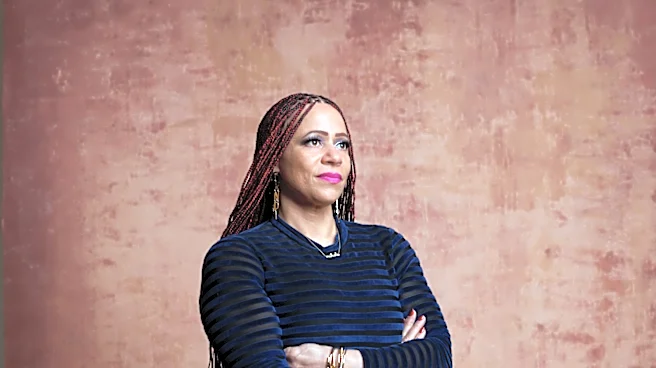


Brad Carr is breathing a sigh of relief now that Knox County Schools' special education improvement plan has been rolled out to families. But the actual work is just getting started.
The long-awaited strategic plan is the culmination of decades of work to revamp the department's practices
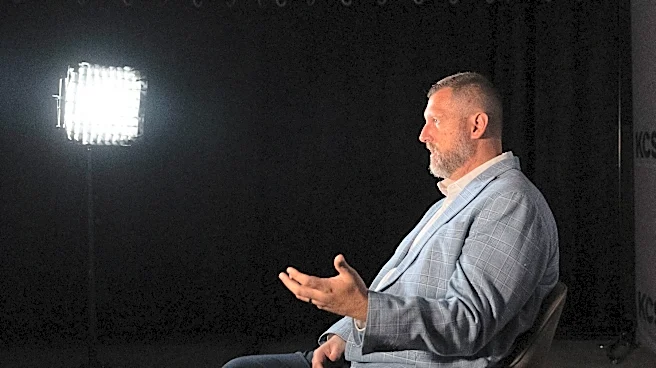
and treatment of students. Carr will be at the forefront after becoming the administrator in charge of special education in 2025.Carr sat down with Knox News last week to discuss the new plan, to explain what its rollout will look like and to address some parents' concerns about what the changes will mean for their students.
This Q&A has been edited for length and clarity.

Knox News: What does high-quality instruction mean? Can you share how KCS is defining that
internally?
Carr: There are a couple of elements to that. The first piece is high-quality instructional materials, or you may hear "HQIM" quoted out there. We've got to have materials that we know are vetted, are grade-level appropriate, that type of thing, right? And then we would think about high-quality teacher moves, then high quality student product, or student work, student engagement. There's lots of behavioral things from the teacher and student side that we could look at and measure, and then classroom culture would also make up that high-quality instructional piece. Materials, culture, teachers and students, the interaction of all those things would indicate to us whether instruction is high quality or not. I think the big thing here that is important is that it's grade-level instructional materials and interaction.
Get the Daily Briefing newsletter: Keep up with the top news about Knox County Schools
Knox News: How will you keep your staff accountable? Will you personally be out in classrooms observing? How do you make sure these initiatives are actually put into practice?
Carr: I will definitely be in classrooms as time moves forward and obviously the things that are in the plan specific to instruction will be things that I look for. When we think about accountability, though, that's built-in through layers in the plan when we talk about staff training, principal capacity increasing and things like that. Accountability really has to live at each building level. And that's true in any setting, but especially for us because we're a large district. Our school-based leadership has to be a crucial piece of that accountability.
But absolutely, me and our department, our team in special education and inclusive services from the district absolutely will be out in classrooms looking for those things. Our district facilitators and supervisors, they are in classrooms every week. Every week, they're doing walkthroughs for at least half a day, and then reporting back trends that they see. We're getting into that practice of making sure our people are out in classrooms.
At this point, I've done school visits to certain places weekly, but those are high-level conversations for me. Those classroom visits are for our folks that work closest to teachers and principals for now. Over time, we'll develop trends that will inform training, inform feedback and then eventually produce the accountability.
Knox News: How are you planning to receive feedback from teachers? What are the supports in place for them?
Carr: A couple of ways. One is, as we go out and visit, we want to hear from principals, we want to hear from teachers, everybody at the school-based level. We want to hear from them and have personal interaction, but also through surveys and things like that we can look at and really quantify what are the responses that we're getting, what are the trends that we're seeing from their feedback, what are the areas that they feel like they need more training, more support. Then of course, what things are not working and then it'll be incumbent upon us to dig into why it's not working.
And it may point back to those things that are training and support and how do we organize our staff at the district level. But I do think that we have to have our ear to the ground constantly, our eyes in classrooms constantly and be listening for that feedback.
Knox News: Some parents I’ve spoken to fear the individuality of individualized education plans is lost in this plan. How are you and your staff making sure individual needs are being addressed?
Carr: I think that's fair anytime we say that we've got this districtwide anything when it comes to special education, right? But I mean, there's layers to that, too. The truth of the matter is every district in America is monitored federally based on the same measures. Really when we talk about teacher and principal capacity and we talk about the core belief and thinking that the best decisions are made closest to the students, to the kids, that is all centered around individualization.
When we make decisions, it has to be individualized to every kid. Thinking about growing the capacity of school-based staff, it's really about helping them understand what resources are available, how do we pull on those resources, how do we look at data and that type of thing to make sure that we're looking at this student individually at this time, taking into account what are parents saying. All those data pieces have to be there for us to be making individualized decisions.
But the measures, the outcomes that we're looking at, those have to be things that we consider as a group. When we've got over 10,000 IEPs in the district, we have to be able to look at how are we serving this subgroup of kids as a whole. Those are really important pieces that align to how we're measured federally, how we're funded federally, all those things, but also are going to inform how we get down to the individual level and help build school base capacity.
At the end of the day, what we want for every kid is to be making progress forward on whatever their goals are in their IEP and on the things that we say we're educating them for.
Knox News: How will the department use the parent advisory council? What will they have access to review and suggest to KCS?
Carr: That's laid out, that we're going to audit what materials we have, we're going to get input on what materials we need. And then as we prepare those materials, then obviously we'll run that back through the filtering of that council as well.

Knox News: What’s the plan to root out the culture of resistance parents so often point to as the cause of issues?
Carr: I think we have to be careful with that term. I'll just say it's something that I've heard a lot before too, right? I would agree that there's this sense amongst at least a group of parents and maybe a larger group of parents. I don't know. We know there's a subset of parents that feel that way, right? I think we have to strike a balance there, too, where we need to make sure there's consistent practices in place that make sure that we're responsive to parents, that they're included in the process and the planning for their kids, that the information that they're bringing to the table is being considered, that it's being implemented, especially when it's appropriate. But we can't fall into the trap of just agreeing with everything.
There's going to be this rub, I think, for a little bit where we may still hear about the culture of resistance early on. But we're making solid decisions that are accounting for every piece of information that we have. We've got solid reasoning for why we're doing those things. We just have some folks that disagree, right? Over time, when we look at parent experience surveys, when we look at the number of due process filings and administrative complaints that we're getting, we've got to look at: are the numbers going up or the numbers going down? What's happening within those situations that are causing the number to go up again? I don't know that we'll never have a due process filed against us or we'll never have an administrative complaint filed against us. I think if you talk to any district around our state or our country, those things happen on occasions, right? When they do happen, we do have to look at OK, have we been inclusive of the parent? Have we made sure that we're addressing that concern? Because their input's super valuable always, but it may not be the only thing driving the decision. We've just got to make sure that we're responsive to that.
I think the process is really where we have to focus on our approach, our professionalism. Those are things that we have to focus on. Over time, we've got to (ask), are we doing the right thing? Are we seeing relationships get better between the district and parents? Part of that, too, is arm school teams to make as many decisions as possible. What we typically hear right now is parents feel like their school-based team is their partner and the district is not the partner. Typically, that mitigates a lot of disagreement.
Knox News: What does success look like in a year for students and their families? What does it look like in five years?
Carr: I think within a year, we can point to our school-based staff (who) knows the direction we're headed. They know the steps that we're taking. Parents are aware of those things as well. And we are starting to see a little bit more alignment between the district and parents. I think that's the short term. We're still looking toward face time with teachers at school. It's going to happen this year, but it's really hard to measure and hold everybody accountable for something that they have to learn as well. Deep learning and really close familiarity with where it is we're going and how we're going to get there would be a really nice year one (goal).
We've laid out annual benchmarks. How close we get to those things will be an indicator of are we moving forward. But I think, ultimately, any time you're leading change, it has to be not just "are the numbers going up," but are the people involved in the process aware of where we're going, do they understand where we're going, while we're going there?
Anytime change comes about, there's this level of anxiousness on everybody's side. I think it should be expected that we're going to have emotions, a lot of questions that have to be answered. We just presented the plan a couple of weeks ago. There's lots of questions right now. That's normal. We're not in an abnormal place right now.
We're not going to wait five years to tweak that, and we're not going to wait until the end of every year to tweak that. As we start to get feedback and see data come in from all these places, it's incumbent upon us as leaders to say, "Let's make the adjustments now."
Knox News: Why did KCS choose Michelle Flynn to lead the special education department? What is the structure of the special education department? How much oversight is there over teachers?
Carr: As we've done a reorganization, we've taken on a whole other team in our behavioral supports team. We did need to reorg to make sure that we were addressing the leadership structure within those teams. Michelle Flynn is the director of special education, so she obviously reports to me. She has tons of experience, tons of quality experience across two different states. She's been here in Knox County for quite some time.
As we looked at what do we need in a leader, she had those qualities to say, "Hey, we can look at the system level, we can step back and consider multiple perspectives, we can put concrete plans in place and we can communicate those effectively." So those are qualities that she possesses that definitely suited her for that role.
Knox News: Some parents feel this plan only targets high-functioning students with IEPs. How do you plan to include students who may not be able to take grade-level courses due to medical conditions or intellectual disabilities?
Carr: You're right, if you look at excellence in foundational skills, we're really looking at the math and English rate of proficiency on a state test. And a lot of our students that are highly impacted are on some type of alternative assessment. Staff and principal capacity still engages the full continuum of services, right? Because those folks are involved in meetings from a young age all the way through high school about what's the right programming for students that they have. Most all of our students start out in general education and decisions are made to increase hours or change programming or whatever. Teachers and principals have to be involved in that. That's number one there.
Secondly, anything that we're looking at with staffing has to include, are we staffing those programs effectively? When we think about our career empowerment preparation, all that is really just about making sure that students are future ready. That includes every student along that continuum. We know that our most highly impacted students also have a future that's beyond Knox County Schools. Guaranteed experiences, that's for them. It may look different. It can be tailored to them. That's something that we've worked on very hard and very closely with our college and career readiness department over the course of the last couple of years. They know that that means everything from a kid that's getting consultation services to a student that's in CDC and they're self-contained most of the day. We're still going to go out. We're still going to have guaranteed experiences that align with what they need. And then we think about transition plans, which was also in that kind of future-ready mold for our students with IEPs. That includes every student from gifted to, again, our most highly impacted students.
They all have a transition plan that says these are the things that we think they need for their future. These are the things they're interested in. We want to align those things. Then we want to make sure we've got services and experiences that align as well.
Caitlyn Meisner is the K-12 education reporter for Knox News. Email tips and story ideas to caitlyn.meisner@knoxnews.com.
This article originally appeared on Knoxville News Sentinel: KCS special ed chief says better classroom oversight is coming | Exclusive