
This is Tennessee's best rushing season of the Josh Heupel coaching era in one hidden stat that doesn’t appear on a box score. But it’s the focal point in the running back film room.
The Vols average 3.65
yards rushing after contact. That means when a ballcarrier is hit by a defender, he gains almost 4 more yards on his own.
It’s the highest yards-after-contact average in any season under Heupel as the 14th-ranked Vols (4-1, 1-1 SEC) prepare to play at Arkansas (2-3, 0-2) on Oct. 10 (4:15 p.m. ET, SEC Network).
Granted, UT has played only five games, but it’s a great start in the metric that running backs are judged on.
“That’s the No. 1 deal that we look at when we come in the film room on Monday: How many yards did we get after contact?” UT running backs coach De’Rail Sims said. “How many yards did we end up generating after contact on our own? It’s always the first point of emphasis.”
Sims calls it “pads plus two” — the objective of gaining 2 yards after contact. But UT’s running backs have almost doubled that goal, led by DeSean Bishop.
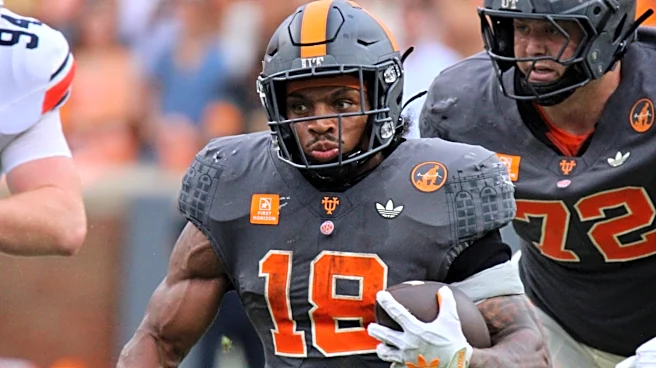
Bishop, a former Karns High standout, has rushed for 540 yards this season. But 354 of those have come after contact, a total that ranks 10th nationally.
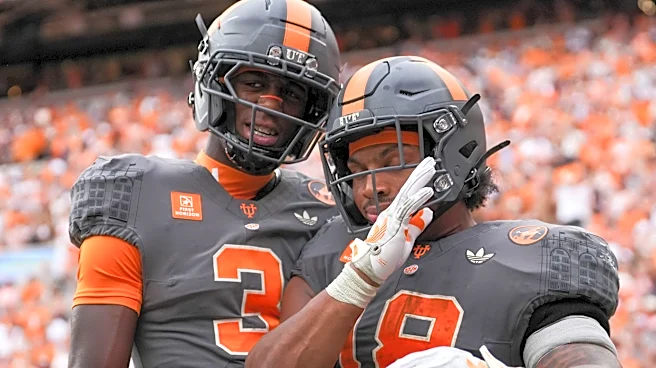
Daune Morris has gained 148 of his 299 yards rushing after contact.
Here how Tennessee has excelled in yards after contact
According to Pro Football Focus, 59% of UT’s rushing yards this season (767 of 1,309 yards) have come after contact. That’s around the median percentage among Heupel’s six seasons.
But the Vols’ 3.65 yards after contact per rush is the highest average in that stretch. For now, it tops the 3.58-yard average of 2024, when SEC Offensive Player of the Year Dylan Sampson led the way.
Here’s the year-to-year breakdown:
- 2021: 3.23 yards after contact per rush
- 2022: 3.45 yards after contact per rush
- 2023: 3.08 yards after contact per rush
- 2024: 3.58 yards after contact per rush
- 2025: 3.11 yards after contact per rush
- 2026: 3.65 yards after contact per rush
How DeSean Bishop could run through Arkansas rushing defense
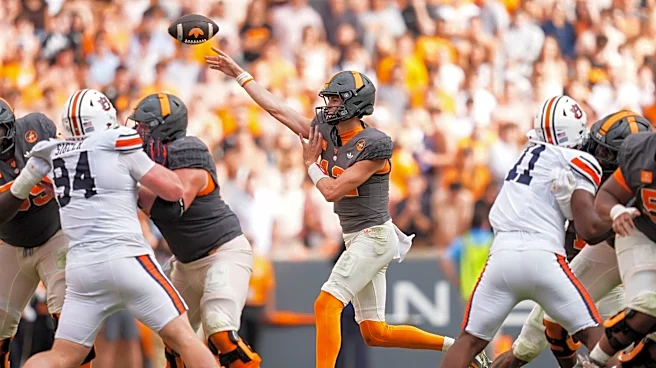
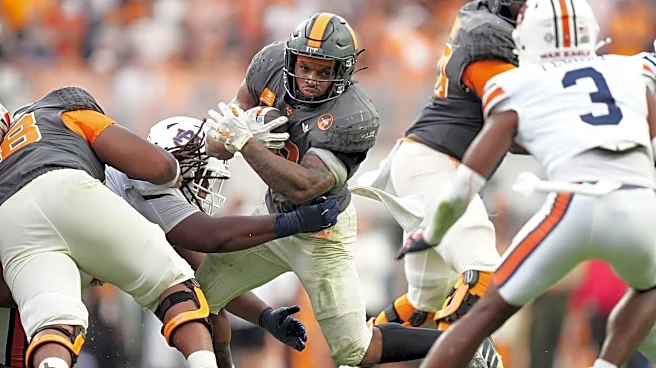
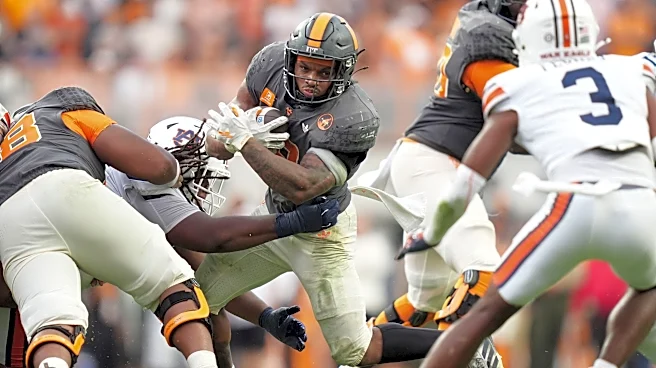
Tennessee’s high point was in the 24-14 win over Auburn on Oct. 3. It averaged 4.65 yards rushing after contact in that game.
Bishop especially bounced off defenders and broke tackles en route to long runs. He rushed for a career-high 220 yards and three touchdowns. He gained 158 of those yards after contact.
“Sometimes you get to looking at the total amount of yards that we rush for,” Sims said. “But, man, it’s really about how many yards we rushed for after contact. I think that tells the whole story (for running backs).”
The upside is that Bishop, Morris and others are equipped to earn those extra yards.
The downside is that issues on the interior offensive line have forced those running backs to sometimes fight through contact at the line of scrimmage. That could take a toll later in the season.
However, the Vols could increase their overall rushing output against Arkansas, which has the SEC’s 14th-ranked rushing defense, allowing 146 yards per game.
And the Razorbacks have allowed 15 rushing TDs, tied for the most among 136 FBS teams.
Adam Sparks is the Tennessee football beat reporter. Email adam.sparks@knoxnews.com. X, formerly known as Twitter@AdamSparks. Support strong local journalism by subscribing at knoxnews.com/subscribe.
Get the latest news and insight on SEC football by subscribing to the SEC Unfiltered newsletter, delivered straight to your inbox.
This article originally appeared on Knoxville News Sentinel: Josh Heupel's Tennessee RBs have never been better in this hidden stat