



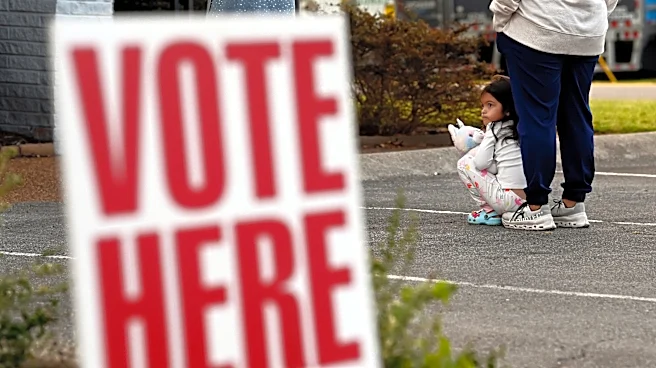


The 2026 election is underway. Voters will choose their U.S. senator, governor, all members of the Tennessee House, and half the members of the state Senate. There are also three questions regarding amending the state constitution. Moreover, voters in three of Tennessee's home rule cities will consider changes to their charters, the local government version of a constitution.
Let's start local, with charter amendments in Knoxville, Memphis, and Mount Juliet. Only the 14 home rule cities, plus Nashville, can submit changes to their voters. The other cities, operating under state charters, can pursue special legislation: the city council votes to submit a request to the General Assembly for special act legislation, which then requires final approval
by the city council.
Memphis voters face a few proposed charter changes dealing with personnel matters. There's little apparent controversy here. There's more drama in the middle part of the state. In a most unusual move, Mount Juliet is seeking to relinquish its home rule status so it can request special legislation to enable impact fees for new development. Local approval would then be required. The state doesn't otherwise authorize cities to enact such fees. Voters will have to decide whether the possible benefits of this change outweigh the costs of losing home rule status.
The remaining home rule charter amendment is in Knoxville, where voters will decide whether to adjust their charter to align city council elections with those for mayor and municipal judge, requiring runoffs only when no candidate receives a majority in the first election. This is common practice in American government at all levels.
Proponents point to the unnecessary voter confusion and expense associated with the present system. This commonsense change preserves the requirement that elected officials must have the support of a majority of their constituents. There's simply no good reason to repeat an election once a clear decision has been made. There is organized support for this change, including a campaign website, knoxvilledecides.com. There is some opposition based on the presumption that having a second election, regardless of a majority in the first, favors candidates with limited resources to pursue grassroots strategies.
Amending home rule charters is a relatively simple process. Amending the Tennessee Constitution is anything but simple. It's among the most difficult to amend by design. Any proposed amendment must be approved by two sessions of the General Assembly, the second by a two-thirds supermajority in the House and the Senate. After meeting these requirements, it goes on the ballot. But even here, a simple majority of votes cast on the issue is not enough. The "yes" votes must be over 50% of the total votes cast for governor. If someone votes for governor and leaves the ballot blank for an amendment, it is the same as a "no" vote.
Three state constitutional amendments are on the ballot throughout Tennessee. The first has drawn the most interest, along with some pushback. It would affect bail, giving judges the option to deny bail to those accused of committing any among a long list of serious crimes. It requires the judge to justify bail decisions. Present language includes a right to bail in all but capital cases.
The second proposed amendment would prohibit future legislatures from instituting a state property tax. The state once had one, but it's been gone since being repealed in 1949. There's clearly been no appetite among Tennessee lawmakers to reinstate it. This takes it off the table for the future, much as was done in 2014 with the state income tax.
The third amendment would create constitutional rights for crime victims and their families, similar to "Marsy's Law," implemented in other states. It adds rights to those previously approved in 1998, including increased notice and participation as the perpetrator moves through the criminal justice process.
All these appear at the lower end of the ballot. They're important and deserve voters' full attention.
William Lyons is Professor Emeritus of Political Science and associate director of the Institute of American Civics at the Howard Baker School of Public Policy and Public Affairs at the University of Tennessee. He also served as chief policy officer for Knoxville Mayors Bill Haslam, Daniel Brown and Madeline Rogero. The opinions expressed are those of the author and do not necessarily reflect the official policy or position of the Institute of American Civics or the University of Tennessee.
This article originally appeared on Knoxville News Sentinel: This election is also about Constitution, charter amendments | Opinion