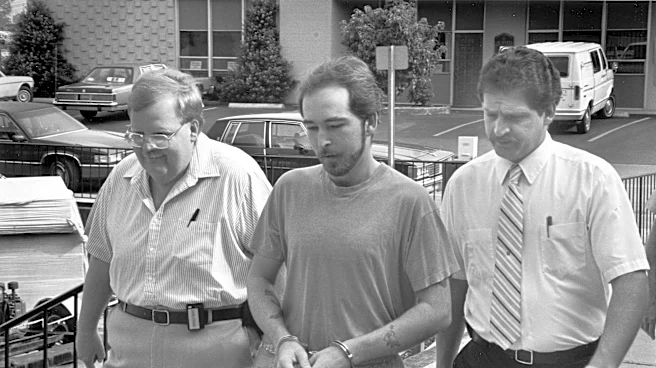








Gov. Bill Lee has granted a reprieve of execution to Gary Wayne Sutton until at least Oct. 7. But what comes next is unsettled.
Immediately after the botched execution of Christa Pike, the governor halted executions through the rest of the year, which meant Sutton was no longer scheduled to die Dec. 3.
After Pike lived through through lethal injections, Lee said U.S. Attorney Ed Stanton would head a review of the failed execution and what changes were needed to ensure the protocol is lawful and actually effective. They did not announce how long that will take or what it might mean for Sutton and other death row inmates.
As a result of the turmoil, Sutton's new execution date has not been set.
“We are grateful to Governor Lee for granting this reprieve
to Gary while the state continues to investigate its execution protocols,” said Johnna Henry, Sutton's attorney with the Tennessee Office of the Post-Conviction Defender. “The state has serious work to do as it tries to understand how its supposedly failsafe and humane execution procedures have failed twice in less than six months, catastrophically and torturously.”
Sutton, 61, has been on death row since 1996. He and his uncle, James Dellinger, were convicted in the 1992 murders of siblings Tommy Griffin and Connie Branam in Blount County. Dellinger died of natural causes in prison in 2023 at age 71.
Sutton's attorneys continue to fight in court over what they believe were serious flaws in their client's prosecution. A decision on whether a judge will hear evidence about Sutton's intellectual disability is pending with the Tennessee Supreme Court.
The attorneys argue there was no direct evidence linking him to the crimes, that prosecutors ignored evidence that pointed to other suspects and that the medical examiner who testified at trial was later discredited and stripped of his license.
“While Gary’s stay of execution is temporary for now, it does give us more time as we continue our work to clear his name and present evidence of his intellectual disability to a court," Henry said. “For more than three decades, Gary has maintained his innocence, an assertion that’s supported by the family and friends who know him best. Beyond that, Gary’s well-documented intellectual disability renders him ineligible for the death penalty by both state and federal law."
Executing a person with intellectual disability is prohibited under both federal and state law. In 2002, the U.S. Supreme Court ruled that executing people with intellectual disabilities violated the Eighth Amendment prohibition against cruel and unusual punishment.
The nonprofit Death Penalty Information Center said 144 people have had death sentences vacated since 2002 due to intellectual disabilities.
Anthony Nicotera covers public safety for Knox News. Email: anthony.nicotera@knoxnews.com
This article originally appeared on Knoxville News Sentinel: What comes next after Gary Sutton's execution reprieve in Tennessee