

HALLS
Scruffy’s Cafe pairs cat adoptions with mental health support
Al Lesar, Shopper News
Talisa Roach was obsessed with a cat cafe before cat cafes were cool.
In January 2020 Roach was frazzled from her job as a case worker in the criminal justice system. She took a snowboarding trip to Denver to try to regain her perspective.

While there, she started missing her cats. She googled “What to do with cats in Denver” and a listing for a cat cafe came up. It didn’t take her long to visit.
“Once I went to the cat cafe, I couldn’t stop thinking about it,” Roach said. “I saw this as what I’m supposed to do with my life. This was my calling.”
Though lacking business experience and connections, Roach got home from Denver and made it happen. Complicating matters were the COVID-19 pandemic that was in the process of shutting
everything down and she being laid off from her job.
“The first thing I needed was a location,” Roach said. “It was hard to find someone who would allow animals in their building.”
Roach said she toured 10 buildings and nine landlords said no. The 10th, who owned the building at 1015 Broadway in Fountain City, said he would love to see a lot of cats in there.
At first, Roach thought he was being sarcastic.

Homes found for about 1,200 cats so far
Once the location was secured, things fell into place. Roach said friends started a GoFundMe to help her with the costs of getting the building in shape.
By June 2020 Scruffy’s Cafe was up and running. It has evolved from a doughnuts-and-coffee experience with a roomful of cats to a full-service cafe featuring sweets from Butter Me Up Bakery along with a variety of specialty coffees and drinks. Anywhere from 15-25 adoptable cats are there on a daily basis.
Roach partners with Feral Feline Friends of East Tennessee, a cat rescue. Since its opening, about 1,200 cats have been adopted from the cafe. A $100 fee, sent directly to the rescue, covers each cat's expenses in preparation for adoption.
Scruffy’s Cafe is open 11 a.m.-7 p.m. Tuesdays-Fridays and 10 a.m-7 p.m. Saturdays and Sundays. A cover charge of $10 during the week and $12 on weekends is charged. That goes toward the cats’ food and other upkeep.
The importance of good mental health
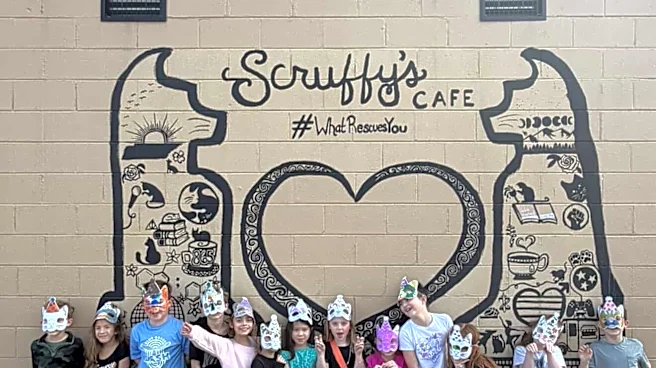
Scruffy’s Cafe is more than just an opportunity to play with cats.

Staying true to her background in mental health, Roach has tried to make the cafe a safe place for those going through difficult times.
Throughout the facility, there are reminders of the importance of mental health. Also, there’s the “Codeword Blue” project that addresses an immediate crisis someone may be facing.

“No questions asked, someone can come in free of charge and stay as long as they need,” Roach said. “This gives them a chance to figure out what their next step might be toward a stable solution. I’m someone who has always wanted to help people.”
Special events are big attractions.
One of the most popular is Catnip and Paint Night. Clients start with a blank canvas. They put the colors they’d like to use on the canvas. It’s all sealed in a plastic bag, and catnip is sprinkled on top of the bag. Cats roll around on the bag and do the painting.
Cat yoga, paint by numbers and crocheting are other events.

NORTH KNOXVILLE
Knoxville’s pawpaw festival draws hundreds to celebrate native fruit
Jack Coker, Shopper News
If you have never eaten a pawpaw, you might be surprised to learn that one of North America’s most unusual fruits is growing wild in the woods around East Tennessee.
The pawpaw, Asimina triloba, is a native understory tree found throughout the eastern United States that is particularly at home in Appalachian forests. Its large green fruit contains soft, custard-like flesh, with a flavor often compared to banana and mango. Despite being the largest edible fruit native to North America, it remains unfamiliar to many Americans.
Chris Irwin would like to change that. “I am a plant nerd,” he said. Irwin, along with Joy Grissom and Lenny Zonda, organized the Knoxville Pawpaw and Wildcraft Festival. The second annual event was held Aug. 30 at Trailhead Beer Market in South Knoxville.
For Irwin, the idea began with a simple question: Why didn't Knoxville, sitting in prime pawpaw country, already have a festival celebrating the fruit? Last year, the organizers found themselves with an abundance of wild-harvested pawpaws and decided there was no reason to wait. “Six days before we had the Pawpaw Festival, we were both sitting on a mountain of pawpaws that we wildcrafted,” Irwin recalled. “Rational people would wait a year, but we decided to just go ahead.” They created a Facebook event, expecting a modest gathering. Instead, more than 100 people showed up. “Gardeners, foragers, wildcrafters, all our folks,” Irwin said.
This year's festival, on Aug. 30, was considerably larger. Irwin estimates about 500 people attended, including visitors who traveled considerable distances. “There are people who tour pawpaw festivals,” he said. “We had people from all over the country.”

Part of what makes pawpaws so intriguing also makes organizing a festival around them difficult. Once ripe, they deteriorate quickly. The University of Tennessee at Knoxville recommends eating them within about three days at room temperature. That meant the festival's supply could not be stockpiled weeks beforehand.
“Thursday, Friday and Saturday we had crews out on boats in their boots, wildcrafting all we could to get enough for the people,” Irwin said. “We did it.”
Irwin thinks the fruit's scarcity is partly responsible for its newfound popularity. “They’re part of our cultural heritage and there's a resurgent interest in that,” he said. “Also, they’re the ultimate foodie food. You’re not going to be able to go to Kroger and buy them. You have to be in the know. There's a little bit of mystery about them.”
For those interested in finding your own, look for pawpaw trees in moist, wooded areas, especially along creek bottoms, riverbanks and forest edges, where they often grow in patches. When the fruit is ripe, it will give slightly under gentle pressure, develop a strong, sweet aroma and may begin to fall from the tree.

The festival has a practical side, too. Pawpaw enthusiasts compare fruit from different trees, looking for exceptional flavor, size and other characteristics that might be worth propagating. Also, everyone who enjoyed pawpaws at the festival unknowingly contributed to Irwin's next crop.
“I gathered up all the seeds people had spit,” he said. He plans to grow seedlings fromthem and give the pawpaw trees away at next year's festival.
And there will be a next year.
“Oh yeah, we’re already talking about it,” Irwin said. “We just sort of need to regroup.” The organizers are considering more music and possibly expanding the event to celebrate other regional fruits, including muscadines.
In the meantime, Irwin will continue planting. “In a good weekend I can plant about 30 pawpaws,” he said. “My goal is that if anybody wants a pawpaw, they can go get an arm full wherever they're at.”
Knoxville may have found its own Johnny Appleseed. Only this one plants pawpaws.

BEARDEN
The roller coaster of Bill Battle's final season as UT football coach
John Shearer, Shopper News
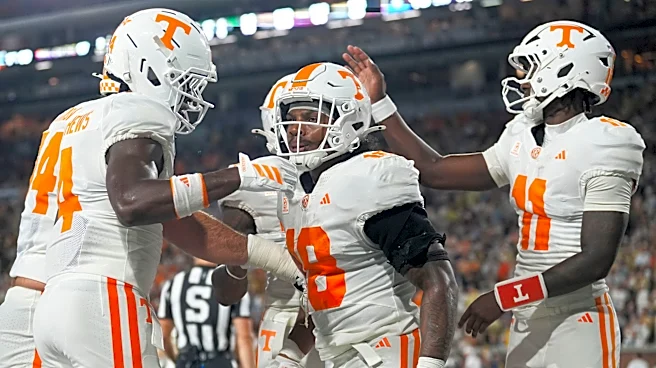
The University of Tennessee at Knoxville's football team is enjoying a good start to its 2026 season amid the celebration of the 100th anniversary of the beginning of Gen. Robert Neyland’s successful stint as head coach.
But 50 years ago, all was not well with the UT football program. After a 6-5 record and two straight seasons of just above .500, head coach Bill Battle resigned, despite an overall successful stint. Former star player Johnny Majors was brought in as the coach to begin what became a slow rebuilding program.

However, 1976 was also a year in which the Vols still managed to find some joy amid the disappointments, such as the embattled coach Battle being carried off the field by the players as a show of respect three times, including after the last game.
As the Shopper News looks back at that season of a half-century ago, we see a year in which the Vols had more ups and downs than a roller-coaster ride at the nearby Silver Dollar City before it became Dollywood. And the same was true with the team's luck.
First game of 1976 season was a bad omen
The first game was maybe the biggest downer of the year, a 21-18 loss on Sept. 11 to Duke and coach and future South Carolina athletic director Mike McGee as a school-record crowd of more than 82,000 showed up. The upper deck in the southeast corner of Neyland Stadium had been completed, and anyone from any section could see the Vols were having trouble, primarily with their kicking game. That proved true with a miscommunication at the end after kicker Jimmy Gaylor thought a field goal attempt was going to be a fake.
The reality of a possibly tough season was easily conveyed by the fans, however. But the following Saturday in the only night game at UT that year, the Vols quickly rebounded with a 31-0 drubbing of Texas Christian University. Gaylor had with four extra points and a field goal, and star receiver Larry Seivers caught a long pass from Randy Wallace. All-purpose player Stanley Morgan shone as well, along with running back Bobby Emmons.
The fortunes of the Dr. Jekyll and Mr. Hyde-like Vols unfortunately turned bad again the next Saturday, Sept. 25, against winless Auburn in front of a regional ABC television audience that kept the attendance at Birmingham’s Legion Field to only about 45,000. Despite 124 yards rushing by UT’s Kelsey Finch, Auburn won, 38-28, off the running and passing of Auburn quarterback Phil Gargis.
But next week was a high moment, literally, as coach Battle was carried off the field in a heart-warming 21-19 victory over Clemson after the fans were beginning to call for his firing. The victory had come after tackle Pert Jenkins intercepted a two-point try late by future NFL quarterback Steve Fuller. Seivers, from nearby Clinton, also had a school-record 11 catches.
On Oct. 9, the season appeared to finally be turning in the right direction after the Vols beat Georgia Tech, 42-7, at Atlanta’s Grant Field. During that game, Morgan reached a milestone of scoring more total career points than any Vol but the great Gene McEver.

On Oct. 16 in front of a national television audience in the days when top SEC teams were on TV only about three times a year, the elusive good feelings disappeared again. And it unfortunately came against rival Alabama and legendary coach “Bear” Bryant, 20-13. Despite having saxophonist Boots Randolph performing with the band, the Vols were singing the blues after Crimson Tide quarterback Jack O’Rear led his team to victory and Alabama standout Mike Kramer blocked a Craig Colquitt punt.
This all came even though the Vols had their own proverbial horses along with the usual Tennessee Walking Horse roaming the sideline after Frank Foxx gained 131 yards and Greg Jones came up with 25 tackles.
The next Saturday, also at Neyland Stadium, Florida coach Doug Dickey enjoyed his first victory since leaving UT as head coach after his Gators came from behind to beat Tennessee, 20-18. Tennessee did mount a comeback late with quarterback Joe Hough coming in for the injured Randy Wallace and leading them down the field late for a score.
A brief reprieve before the end
By then, Battle was really beginning to feel the proverbial heat that had been building for more than two seasons. After a bye week and a close presidential election victory by Jimmy Carter over Gerald Ford, Tennessee had a close 21-14 victory over what was then known as Memphis State at the Liberty Bowl Stadium on Nov. 6. It had come after a UT fan heckled Battle at halftime, and the players ended up carrying their coach off the field for the second time of the season after their strong second-half showing.
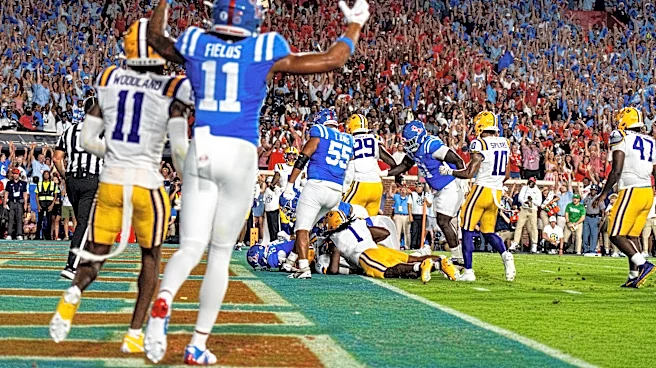
On a very cold homecoming afternoon at Neyland Stadium on Nov. 13, the Vols beat a somewhat solid Ole Miss team, 32-6, in what some thought was the best UT performance of the season. Senior Stanley Morgan by then had accumulated 236 points and 39 touchdowns over his career.
With slim bowl hopes, the season would turn sour once again the next Saturday, Nov. 20, as Kentucky won 7-0 at Neyland Stadium to end the Wildcats’ drought against the Vols stretching back more than a decade. It would also mark the beginning of the end of Battle’s time at Tennessee, as he resigned a few days after the game.

He was able to coach Tennessee one more time, though, and the Vols would come out with a 13-10 victory over also-struggling Vanderbilt at Nashville’s Dudley Field on Nov. 27. And coach Battle would again be carried across the field by his players, who had evidently not given up on him as a person, although many fans had as a coach.
That scene would mark an upward trajectory for the rest of Battle’s life overall, as he would go on to a successful business career in collegiate licensing and become athletic director at Alabama during a successful Tide football run under Nick Saban.
But that season figuratively had gone up in smoke amid a newspaper photo of future coach Johnny Majors smoking a cigar after clinching an undefeated regular season. He was on his way to the national championship at Pittsburgh before coming back home to his alma mater in Tennessee.
The storied but up-and-down history of Tennessee football was in the transition phase as America’s bicentennial year drew to a close, and new chapters were soon to be written.

FARRAGUT
Farragut Art Fest helps kids develop their confidence, creativity
Nancy Anderson, Shopper News
The rain may have moved the fifth annual Farragut Art Fest inside, but it could not dampen the creativity or excitement of the young artists who filled the gym Sept. 12. Produced by Farragut Parks and Recreation, the festival gave about 200 children a chance to create, explore and discover that sometimes the biggest masterpiece is the confidence they gain in themselves.

Program Coordinator Kalei Fisher said, “The Art Fest is popular because the kids have freedom of expression. It’s just fun to get your hands messy. We’ve got the paint, the sand and all sorts of fun stuff kids like to do.
“The kids are exposed to different types of art. They gain confidence doing new things. I know when I was a kid when I think of art it was crayons, pencils and paper and that’s about it. Maybe some scissors and glue. This type of event gives exposure to other kinds of art and creativity. Hopefully we will spark their creativity and they will go even farther than what we offer here. They can go home and bring that creativity with them,” said Fisher.

Kids gain confidence in art because they have control. A child chooses the colors, tools, markers and when the work feels finished. That autonomy helps them trust their own decisions rather than wait for an adult to tell them the “right” way to do it.
The Art Fest gives a child the ability to see the results of their efforts. From a blank sheet of paper for watercolor to bits and pieces of Lego and mask building, the child gets to say, “I did that.”

Encouragement goes a long way. Each creation has a story, and when asked a child is happy to tell it. When met with a “Good job!” the child gets a sense of accomplishment and pride.
Rachel Malone, Recreation and Event Manager for Parks and Rec, said, “I think the Art Fest does provide confidence. They can go from activity to activity and the more they do, the more confidence they gain. It exposes them to different mediums of art and what it is they like most. It’s a great way to expose kids to hands-on learning and be creative,” she said.
The Art Fest featured a wide variety of art mediums, but perhaps the most popular was the face painting provided by Farragut High School and Hardin Valley Academy Honor Society seniors. They had to gain confidence in their own abilities first but ended up creating elaborate designs.
Info: www.townoffaragut.org

POWELL
For Powell teacher and artist, creativity is meant to be shared
Al Lesar, Shopper News
Bigger is better in the type of art Sonia Summers loves to create.
From sidewalk chalk art to large murals, the Powell native loves to share her talent with the public. As the summer wore down, she spent two weeks creating a 25-foot by 11-foot piece of art paying homage to the Great Smoky Mountains at Foothills Mall in Maryville.
“I’ve always loved public art,” Summers said. “People aren’t used to seeing art in public. It can make people pause and come out of their routine. When I’m (creating) it, I’m meeting people where they’re at.”

Summers has another mural at Strong Alley Graffiti Gallery near Market Square in downtown Knoxville. It’s a portrait of herself and her son as rock climbers. Her son is learning with a harness in a gym and she is on a mountain.
“It depicts the growth of child to adult,” Summers said.
'Adapt with a survival mentality'
Summers’ lifelong love of art has gone through an evolution. After graduating from Knoxville Catholic High School, Summers majored in drama at the University of Tennessee at Knoxville. Her original plan was set design. She was a cartoonist for UT’s student newspaper, the Daily Beacon.
As time went on, she shifted to a focus on art and illustration.
“The mentors that I’ve had told me an artist always has to adapt,” Summers said. “You have to have a survival mentality: ‘This is who you are.’”
She and her husband spent some time in Birmingham, Alabama, near his family and returned to Powell in 2019. She made a slow return to the art world, winning a sidewalk chalk art competition to get her name out there among area artists.

With the COVID-19 pandemic in full force, Summers used social media to connect with other artists with tips to handle the physical demands on the hands, knees and eyes that comes with chalk art.
“I love performance art because you’re creating an experience,” Summers said. “People are walking by watching you create something.”
For something large, like the mural, Summers used a tool called the doodle grid that helps her overlay artwork using marks as a reference point.

Teaching is another calling
Besides her own artwork, Summers is in her third year as an art and drama teacher at Chesterton Academy of St. Margaret Clitherow in Knoxville. She’s also the school’s rock-climbing coach.
Chesterton Academy is a classical high school in the Catholic tradition. This year’s enrollment is more than 30 students.

“I might teach a class in ancient art history,” she said. “Then another teacher would have lessons on ancient literature. It all ties together.”
The teaching end of the spectrum is one Summers has come to embrace.
“I have a passion for transference,” she said. “The way we teach and the things we try to get across to the students keep the subjects fresh.
“Even when someone comes to me and says they’re not an artist, I tell them to be patient and see what we’re doing.”

This article originally appeared on Knoxville News Sentinel: Shopper Blog: Scruffy’s Cafe pairs cat adoptions with mental health support