
Two nearby, recently established Tennessee state parks offer visitors insights into one of the most controversial – dare one say “divisive” - issues in the history of the western hemisphere
Above the confluence
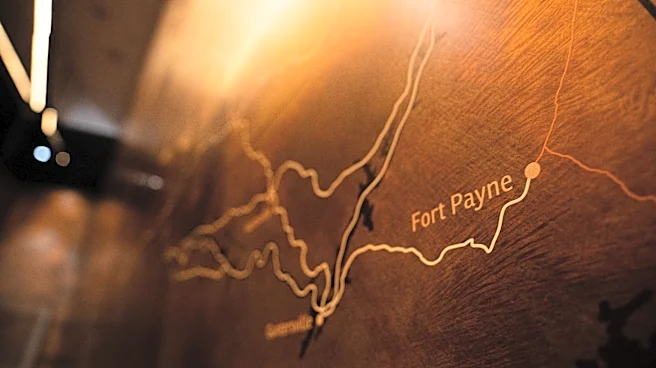
of the Tennessee and Clinch rivers, the restored Fort Southwest Point is two miles from I-40’s Exit 352. Fifty miles further down Highway 58 at the confluence of the Hiwassee and Tennessee rivers is Cherokee Removal State Park. Together they reveal much about our nation’s foundational story: the U.S.-Native Americans encounter.
For me, both stories are deeply personal. A paper about the Trail of Tears for an eighth-grade essay contest was my first attempt at writing for a larger audience. More importantly, Fort Southwest Point is barely a stone’s throw from the farm where I was raised, where I returned in 1987, and where I have resided ever since.
As a boy, I never questioned the marker alongside highway 58 that proclaims the fort was established “to protect settlers and travelers from the Indians.” Set by a local DAR chapter in 1936, it fit what I and most Americans knew about Indian-U.S. relations at the time.
Reinterpretation of the fort’s history began in the early 1970s when a UT history graduate student uncovered records deep in the National Archives. Subsequent archaeological digs and broader accounts of the Cherokee story and other native people’s encounters with mainstream Americans largely affirm that student’s revisionist findings and inform today’s Fort Southwest Point story.
The Cherokee were latecomers who arrived in the region just ahead of Europeans. As agile cultural actors, they helped the latter adapt to this new land even as their selective adjustments to the newcomers impacted their own culture in mixed ways.
When settlers flooded across the Appalachians in the 1770s, most Cherokee joined the British in the American Revolution. In response, John Sevier and “Overmountain men” brutally assaulted Cherokee villages. Fort Southwest Point was established in 1792 as a joint effort by the struggling new United States government and determined, land-hungry residents of its Southwest Territory. From then until 1801, the DAR marker’s message was largely accurate.
Meanwhile ever-resilient, culturally agile Cherokee rebounded. “Progressives” intermarried with whites, selectively embraced aspects of Christianity and white material culture, developed their own alphabet, and mastered the newcomer’s economy. These accomplishments earned resentment from Cherokee “traditionalists,” less successful white neighbors, and elite whites.
But, before that trio undermined Cherokee progressives' attempts to retain their homeland, Congress passed a series of long-forgotten laws that that shaped U.S.-Indian relations until the Jackson administration that sought to reduce the costs of frontier violence. Thereafter, national officials (rather than local authorities) oversaw Fort Southwest Point. The 1801 arrival of Colonel Return Jonathan Meigs in the dual roles of military agent and superintendent of the Cherokee Agency cemented the fort’s new role.
Over the next six years, Colonel Meigs and Southwest Point troops periodically removed settlers who illegally occupied Cherokee lands. Meigs also oversaw “civilization programs” that encouraged Cherokee to adapt white ways. He was neither an “Indian hater” nor a “woke” 21st century multiculturalist - but reflected yet transcended his times and won Cherokee respect.
After Meigs decided to move the Cherokee Agency downstream to the confluence of the Hiwassee and Tennessee Rivers in 1811, Fort Southwest Point was abandoned. As the 1936 DAR marker reveals, mystery and myth enshrouded its history.
Meigs remained Cherokee Agent and trusted friend of the Cherokee until his death in 1824. A decade later, the site he chose for the Cherokee Agency became a staging ground for the Trail of Tears. Visitors to the new park there today experience that tragedy’s painful details.
The stories presented at the two new state parks raise questions about ongoing attempts to whitewash history and more specifically Tennessee legislators’ banning of “divisive concepts” from state public schools. Obscuring complicated details of Cherokee-White relations undermines history’s more nuanced, credible and instructive messages about the American encounter with Native Americans.
Might the presumed protectors of our youth in Nashville be as cynically opportunistic as they are historically ignorant?
Dr. Mark Banker is a retired teacher, active historian, and weekly columnist for the Roane County News. He taught at Knoxville’s Webb School from 1987 to 2016 and can be reached at mtbanker@gmail.com.
This article originally appeared on Knoxville News Sentinel: Two state parks spotlight 'divisive concepts' in history | Opinion