





As one of the authors’ bosses, Tennessee Gov. Bill Haslam, used to say: "Doing hard stuff is hard."
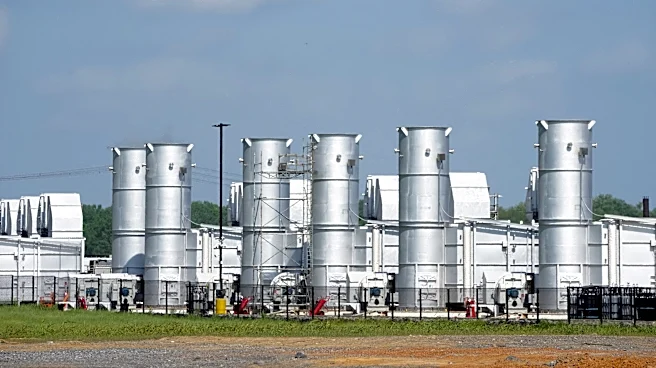
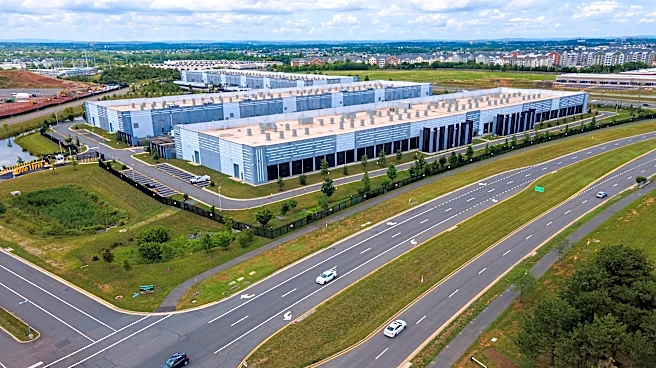
Of course, talking about stuff is easy. And lots of people are talking about data centers. We have to have them. Artificial intelligence requires them – but so do nearly every aspect of modern life, from online banking and streaming to hospitals, social media, and much of the digital economy we rely on daily.
Data centers have to go somewhere. But to a whole lot of people, the answer to where they should go is: somewhere else. Unless we want to bury our collective heads in the sand, it's increasingly obvious that data centers, and the means to power them, are essential to the country’s future. If the U.S. isn't up to the task, China is all in on
being the dominant player.
Government is supposed to be about governing. That seems simple enough, except that it’s increasingly not. Public decision-making is more and more about signaling one virtue or another to a political base. The immediacy of social media reduces complex issues to slogans. That’s part of the recipe for a successful campaign, but not so much for serious decision-making about public policy challenges.
A.I. is a national priority. But it's a much harder sell as a state or local one. It's always easier to have data centers go somewhere else. They hardly make a neighborhood more desirable. The taxes they produce certainly can enhance communities. But it all has to be done the right way.
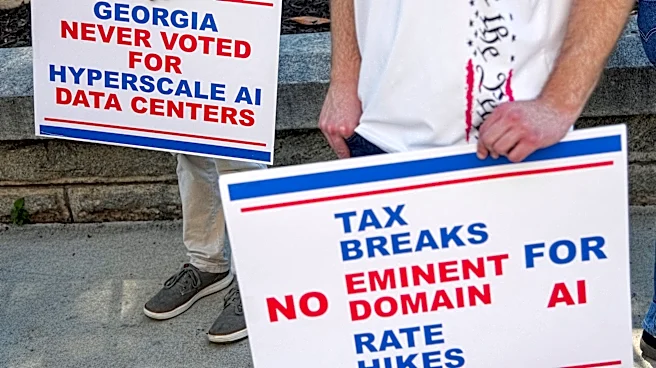
But it's not that easy. Data centers consume a lot of electricity, eliciting understandable concerns about the impact on residential pricing. As with so many things it can be complicated. Some research suggests data centers actually caused retail electric rates to “fall modestly” between 2015 and 2024 by allowing utilities to spread the grid’s fixed costs across greater electricity use. That cuts against conventional wisdom and deserves scrutiny - but it underscores how the impacts aren’t as one-directional as the loudest objections assume. Add to that the noise, and, depending on the design, the large volumes of water some facilities consume - albeit often less than a golf course or farm - and it shouldn’t be surprising that residents organize and put pressure on local governments to restrict or prevent their construction in their jurisdictions.
That pressure is already showing up. Nashville stopped a data center planned on property adjacent to the city’s zoo. Mayor O’Connell then announced plans to use eminent domain power for a yet-unspecified public use of the property. Knoxville Mayor Kincannon was joined by council in issuing a one-year moratorium pending a Planning Commission recommendation regarding best practices. Recently, New York Governor Kathy Hochul issued a one-year moratorium on large data centers.
Even in the best of circumstances, it's tough to locate energy facilities in the United States. It’s not a matter of ideology; it’s the legal framework that allows challenges at every turn and litigation regarding every decision. It takes us forever to build things. Any new batch of regulations can add years to a very protracted process, with multiple opportunities for litigation.
Time is of the essence here, not only for the data centers but for the power needed to run them. Nuclear power is clearly a major part of the answer. Small reactors are now feasible. Nuclear power has become a national and state priority. But like data centers themselves, a national priority doesn't guarantee local acceptance, where projects will face local scrutiny, as, of course, they should.
John Ganz coined the term "middle finger politics" to concisely, if not elegantly, sum up the stew of negative partisanship and toxic populism that can focus intense antipathy to a policy or project. Data centers are the latest addition - opposed reflexively, on category rather than specifics, from both right and left.
This puts those in charge of policy at all levels under the gun. Any solution is going to involve some compromise, even if only on the margins, but today’s political culture looks askance at common ground. So far, that substantial swath of territory is occupied by opponents.
This puts federalism to the test. Can states and their local governments find the path through this maze of challenges? The starting point is good policy that influences design: Closed-loop systems minimize water usage. The power problem is solvable and can be further mitigated by requiring data centers to power down or reduce consumption during peak-demand periods. Noise can be reasonably regulated and land use rules can ensure they aren’t located in residential areas. New revenue can be directed to affected areas.
In about a year, most moratoriums will expire. The need for data centers and concerns about their impact are not irreconcilable. But reconciling them will require substantive policymaking. Elected officials will face tough choices. That’s what governing is all about.
Hancen Sale is a Knoxville-based writer and political commentator and an appointee to the board of the Tennessee Housing Development Agency.
William Lyons is Professor Emeritus of Political Science and associate director of The Institute of American Civics at the Howard Baker School of Public Policy and Public Affairs at the University of Tennessee. He also served as Chief Policy Officer for Knoxville Mayors Bill Haslam, Daniel Brown and Madeline Rogero. The opinions expressed are those of the author and do not necessarily reflect the official policy or position of the Institute of American Civics or the University of Tennessee.
This article originally appeared on Knoxville News Sentinel: We need data centers, and they have to go somewhere | Opinion