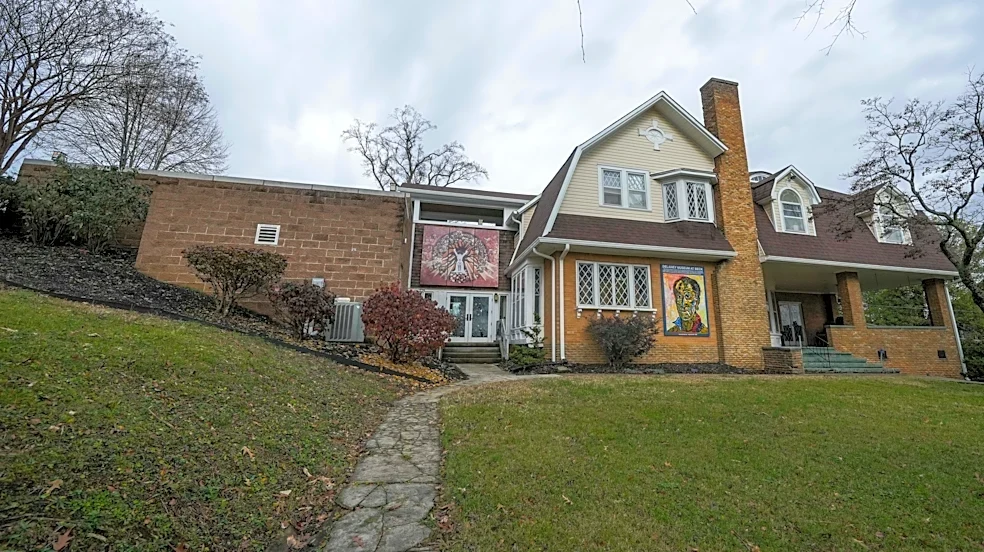











I work in a house nearly 115 years old, where my office was once a bedroom for relatives and guests who stayed alongside the families who called it home. Sometimes I think about the people who lived here, the lives they built, and the stories these walls could tell. At times, I feel the presence of those who came before me, a reminder that history is never as distant as we imagine.
At the Beck Cultural Exchange Center, located at 1927 Dandridge Ave., history is more than something we preserve. It is something we continue to discover. Among our more than 50,000 artifacts are stories of people who shaped Knoxville, including Rachel Johnson Giles, a woman whose final hours unfolded in this very house.
Rachel lived at 221 E. Church Ave. but died here
on Feb. 13, 1952, at age 82. Her cousin, Helen Mae Lennon, was helping care for her. Knowing that Rachel spent her final hours where I now work changes how I experience these rooms. History is not only found in documents and artifacts. Sometimes it is connected to the very place where we sit.
Before Beck became an institution, three families called this house home. James and Alice Saxton Cowan built it in 1912. Dr. Edgar F. and Helen Mae Lennon purchased it from the Cowan estate in 1946. The third and final family,James and Ethel Beck, bought the house after urban renewal displaced them from their large home in the Mountain View area. Their name now identifies our institution, which preserves these histories.
Rachel was Helen Mae Lennon’s cousin and the niece of Cal Johnson. Born into slavery in 1844, Cal Johnson built substantial wealth through business ventures, leaving an estate worth millions of dollars in today’s terms. His parents, Cupid and Harriet Johnson, had several children, including John, Rachel’s father. Rachel was among the relatives still living when Cal died in 1925, and she shared his view of real estate as a means of building wealth.
Shortly after his death, Rachel purchased the former home of John H. Morrell at 221 E. Church Ave. Morrell had been a prominent druggist, merchant and civic leader. But Rachel’s purchase challenged Knoxville’s racial boundaries. White residents occupied the 100, 200 and 300 blocks of East Church Avenue, and her arrival provoked outrage. A threatening letter, signed “The Silent 5000,” demanded that she leave, declaring, “Our motto is action now and talk later.” Rachel replied that she would sell the property for what she had paid.
She was a businesswoman who did much of her work from home. She invested in real estate, including a rental property on East Vine Avenue near Patton Street, which she bought from Cal’s estate for $3,600. She also served as a Fifth Ward election clerk and participated in the annual Community Chest Drive, raising money for people in need.
Rachel was a longtime, prominent member of Shiloh Presbyterian Church, which was founded in 1865 and, during her lifetime, was located at East Church Avenue and Lithgoe Street. In 1967, the church was sold and demolished as urban renewal reshaped Knoxville.
Rachel’s story continued after her death. In 1957, the Knoxville Housing Authority condemned her East Church Avenue home as part of its Slum Clearance Project. KHA offered $5,050, while a jury of view appraised the property at $7,500. Family members testified that it was worth more. The final award was $8,975.
When I sit in my office, knowing Rachel spent her final hours in this house, history feels close. Here, I am reminded that urban renewal took her home and church and transformed the community she knew, but it could not erase her life or the legacy she left behind. Remembering Rachel is an act of Sankofa, the African principle of reaching back to recover what must never be lost and carrying its wisdom forward for future generations.
They took the land, but Rachel Johnson Giles’ legacy outlived it. Each time we speak her name, we claim the inheritance of history.
The Rev. Reneé Kesler is president of Beck Cultural Exchange Center and the city of Knoxville's historian of African American History.
Learn more online about Beck, East Tennessee's repository of Black history and culture: beckcenter.net.
This article originally appeared on Knoxville News Sentinel: Rachel Johnson Giles and the inheritance of history | Kesler