



Before the first whistle blew, University of Tennessee at Knoxville researchers scrambled in the 11th hour to prepare soccer pitches across 16 North American stadiums hosting the 2026 FIFA World Cup in a range of time zones, climates and elevations.
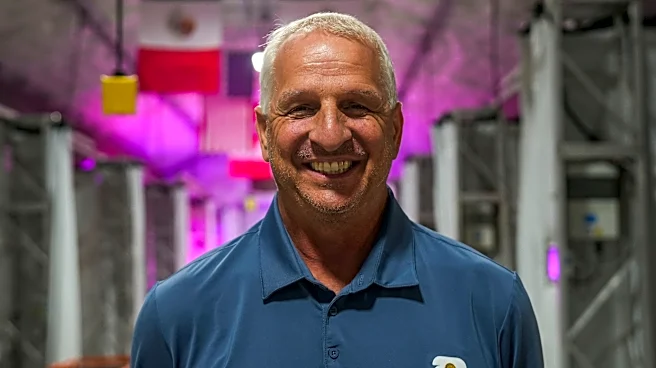
John Sorochan, a distinguished professor of turfgrass science and management at UT, had FIFA's high expectations to worry about: "It would be a failure if we had to replace any grass between any games in any of the stadiums," he said.
But as players ran, cut, kicked and tackled on the turf, his concerns began to melt into relief. Not only did FIFA not have to replace turf, Sorochan told Knox News, but pitch managers at several stadiums found "the pitch got better as the tournament went on."
As UT researchers
wrap up their final reports, the tournament's success is already shaping UT's next chapter with FIFA.
FIFA officials have signaled their desire to continue working with UT. Before this year's tournament, Sorochan completed a research visit to Morocco − one of six countries set to host the 2030 World Cup − to help identify potential challenges, obstacles and opportunities in the host country.
"Hopefully, we'll have something to do with the 2030 and 2034 World Cups as well," he said in his first sit-down interview after the tournament. "That's our goal."
University of Tennessee's 'biggest challenge' for 2026 FIFA World Cup
Sorochan visited four stadiums during the tournament and many more leading up to kickoff June 11. That included three of the five domed stadiums, where he measured grow light uniformity and determined how much the lights needed to move across the field.
The consistency of the turf at indoor stadiums needed to match the consistency of the turf at outdoor stadiums. This was UT's "biggest challenge" throughout the research, he said.
Sorochan credits much of the World Cup's turf success to the field managers and grounds crews who arrived several hours before kickoff to ensure the turf wasn't overworked. Sorochan's role, he said, "was more so sitting back at home from like a command center and just being on a thread going back and forth with each of the stadiums."
"It was more of just looking at everything from a 30,000-foot view," he said.
Thanks to UT's push to incorporate sod grown on plastic, allowing the roots not to get overly stressed before installation, the stadium surfaces "looked flawless from the beginning to the end of the tournament," Sorochan said.
The tournament pitches were hybrid, as required by FIFA − 95% natural grass with stitched-in synthetic fibers. Turf managers' responsibilities include mowing the fields and finding the right balance of water and fertilizer, ensuring the grass receives neither too much nor too little.
How University of Tennessee is planning for future World Cups
Sorochan was able to turn off the scientific side of his brain to attend a couple matches with his family.
"I've always been a person that's gone, and I'm always looking at the grass when I'm watching the game," he said. "I actually got myself enjoying the games and taking the games in, because I was so relaxed about the condition of the pitches."

He was encouraged by praise from commentators and teams, including the U.S., as well as postgame questions about pitch quality. As for criticism from Brazil, France and others, he sees this as an opportunity to better educate teams, players and coaches about how local environments and the time of day might affect playing surfaces before the next World Cup.
While fields were watered before matches and at halftime, factors such as heat, low humidity and wind can dry out grass differently from stadium to stadium.
"It's not the grass' fault," he said. "It's the environment."
Sorochan and FIFA relied on the fLEX Device, a tool he co-created to mimic how players come in contact with turf to determine the surface's playability. His team also used LED grow lights to develop consistent playing surfaces in UT's turfgrass research facility, which was funded and built by FIFA.
The 2026 World Cup experience has led to new research areas, Sorochan said, including "the next generation of grow lights." He's already started collecting data for the 2031 Rugby World Cup in the U.S.
Another idea coming out of the 2026 tournament (and looking ahead to 2030) focuses on sustainability: a closed-loop water system that would capture and recycle water generated within stadiums, such as air-conditioning condensation and restroom wastewater, to be used for field maintenance.
The interest in UT's turfgrass program has ebbed and flowed since 2016, with nearly 40 students enrolling in the 2025-26 school year. UT's work in the World Cup has sparked some of that interest and brought more attention to the university as a whole.
"The engine's always running here," Sorochan said.
Keenan Thomas is the higher education reporter for Knox News. Email: keenan.thomas@knoxnews.com.
Support strong local journalism and unlock premium perks at subscribe.knoxnews.com.
Get The T: All the news for you about UT in one spot every week
Learn about the latest from the state’s flagship campus. Our weekly email newsletter is tailored for alums, UT staffers, students, parents and community members.
This article originally appeared on Knoxville News Sentinel: Exclusive: After World Cup run, Tennessee turf experts plan for encore