










The Universal Language of Value
The 4Cs—Cut, Color, Clarity, and Carat—are the universally accepted standards for judging a diamond's quality. Established in the mid-20th century by the Gemological Institute of America (GIA), this system was revolutionary. Before the 4Cs, there was no
consistent way to evaluate a diamond. A jeweler in New York might use different terms than one in London, making it nearly impossible for consumers to know what they were buying. The GIA created a common language that could be trusted globally, turning the subjective process of buying a beautiful stone into a precise science.
Cut: The Sparkle Factor
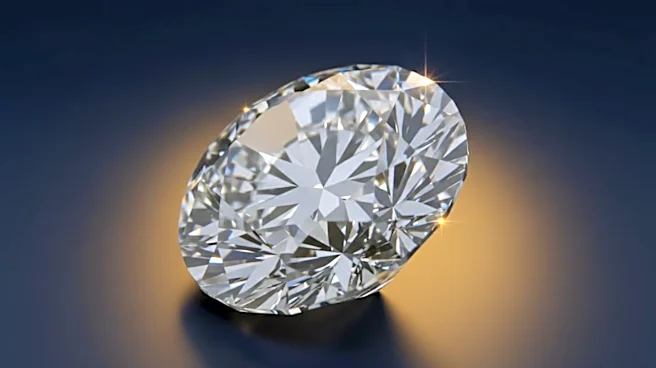
Many people mistake cut for a diamond's shape (like round, oval, or princess). But in the 4Cs, cut refers to how well a diamond's facets interact with light. It is the only one of the 4Cs directly influenced by human craftsmanship. A well-cut diamond will gather light and reflect it back to the eye, creating that mesmerizing brilliance, fire, and scintillation everyone looks for. A poorly cut diamond, regardless of its color or clarity, will look dull because light leaks out the bottom or sides. This makes cut arguably the most important factor in a diamond's visual beauty.
Color: The Beauty of Absence
When gemologists talk about a diamond's color, they are usually referring to the lack of it. The GIA color scale grades diamonds from D (completely colorless) to Z (light yellow or brown). A truly colorless diamond is like a drop of pure water, allowing light to pass through it and create a rainbow of sparkle without any interference. Because they are the rarest, D-grade diamonds are the most valuable. However, diamonds graded G through J are considered "near-colorless" and can offer excellent value, as the tint is often undetectable to the naked eye.
Clarity: A Diamond's Fingerprint
Clarity measures the presence of tiny imperfections on the surface (blemishes) or inside the diamond (inclusions). These are natural characteristics that occurred while the diamond was forming deep within the earth, making each stone unique. The clarity scale ranges from Flawless (FL), where no inclusions are visible under 10x magnification, down to Included (I), where flaws are visible to the naked eye. Many diamonds have inclusions that are too tiny to be seen without a jeweler's loupe, making grades like VS (Very Slightly Included) and SI (Slightly Included) popular choices that balance beauty and budget.
Carat: More Than Just Size
Carat is the most straightforward of the 4Cs: it is a measure of a diamond's weight, not its visual size. One carat is equal to 200 milligrams. Because larger diamonds are found less frequently in nature, a one-carat diamond will cost more than twice as much as a half-carat stone of similar quality. However, two diamonds with the same carat weight can appear to be different sizes depending on their cut. A well-cut diamond can appear larger than a heavier, but more deeply cut, stone. The combination of the 4Cs determines a diamond's final value, not just carat weight alone.